12 Creative Organic Kitchen Ideas That Create a Stylish and Functional Kitchen
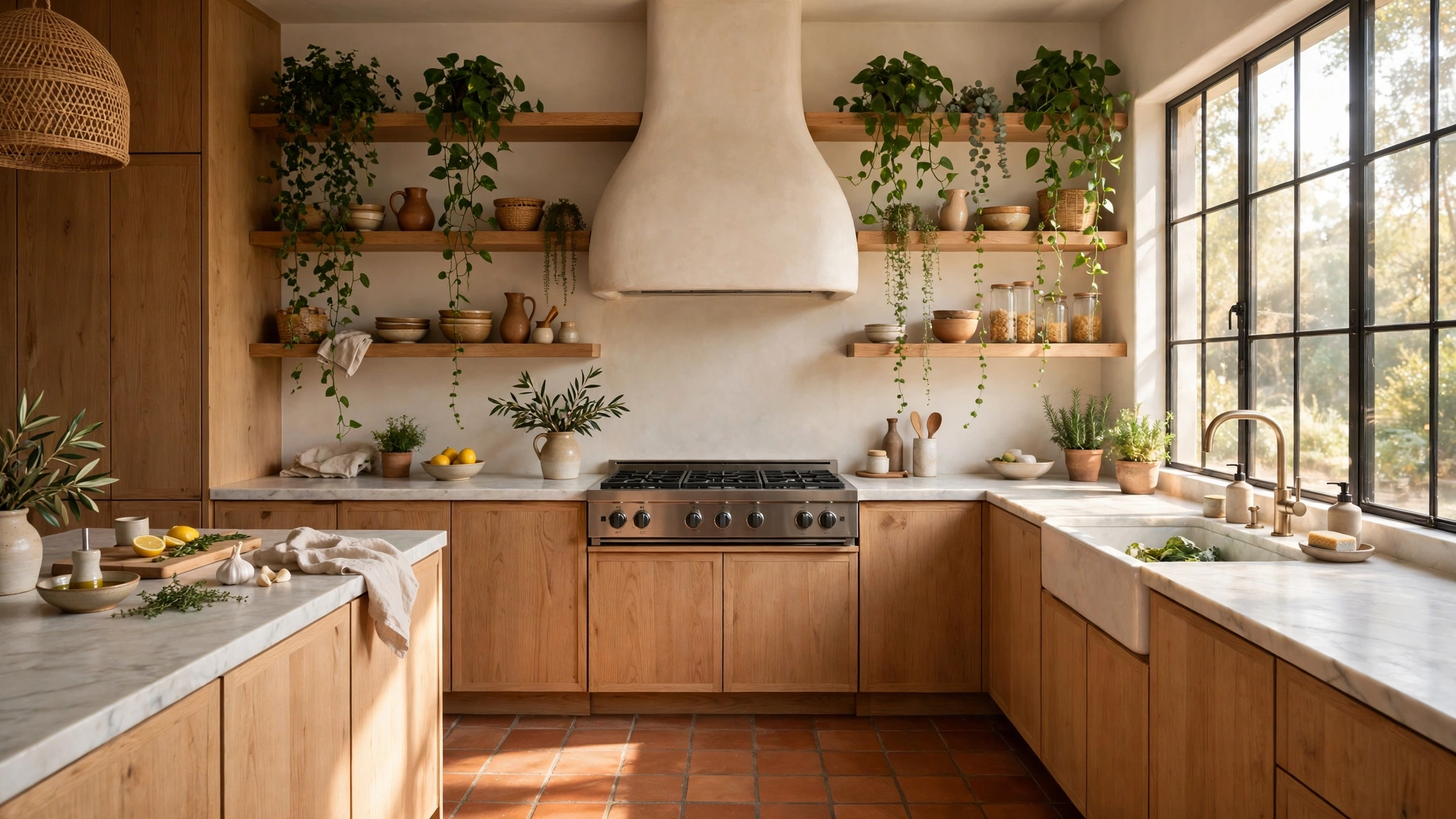
An organic kitchen feels different the moment you walk in. Instead of glossy surfaces and sharp synthetic finishes, you get the warmth of real wood grain, the cool weight of stone, the softness of linen and the life of green plants. It is a style built on natural materials and honest textures, and it never really dates, because nature never goes out of fashion.
The best part is that you do not need a full renovation to get there. Swapping a few finishes, layering in wood and clay, and letting plants and daylight do the heavy lifting can transform even a plain, builder-grade kitchen into a calm, earthy space that works beautifully every day. So where do you start if you want a kitchen that looks stylish, functions effortlessly and feels connected to the outdoors?
1. Ground the Room with Natural Wood Tones
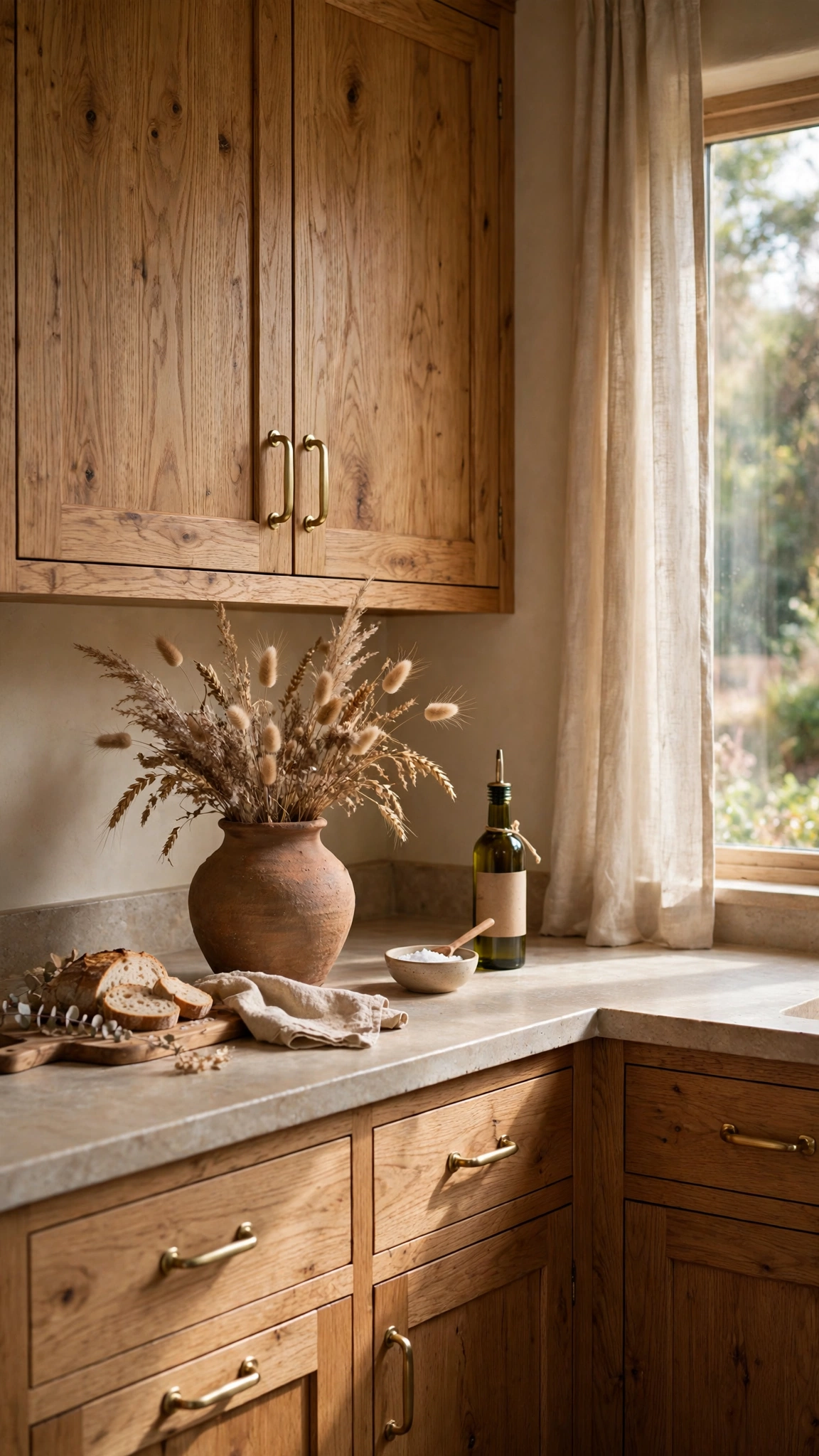
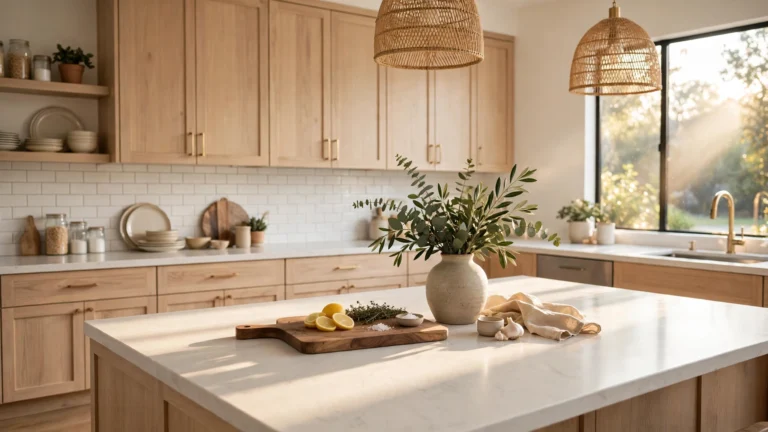
Wood is the foundation of every organic kitchen. White oak, walnut and ash bring warmth, grain and a sense of craft that painted or laminate cabinets simply cannot copy. Even keeping your existing boxes and refacing them with real wood veneer doors changes the whole temperature of the room.
Aim for a mix rather than a match. A slightly deeper wood on the island with paler oak on the perimeter cabinets, or wood lowers paired with soft plaster-look uppers, keeps the palette layered and collected instead of showroom-perfect. Let the grain show — oil and matte finishes protect the surface while keeping that raw, touchable feel.
Refacing or adding wood end panels is a mid-range project, often a few hundred dollars per cabinet run, and far cheaper than a full replacement. If the budget is tight, start with a solid wood island top or a reclaimed timber shelf and build from there.
Tip: Warm woods love warm light, so pair your timber tones with window ideas that lean rustic and sun-washed, like these cozy farmhouse kitchen window ideas that keep the glow soft instead of stark.
2. Grow a Living Herb Garden Right at the Window
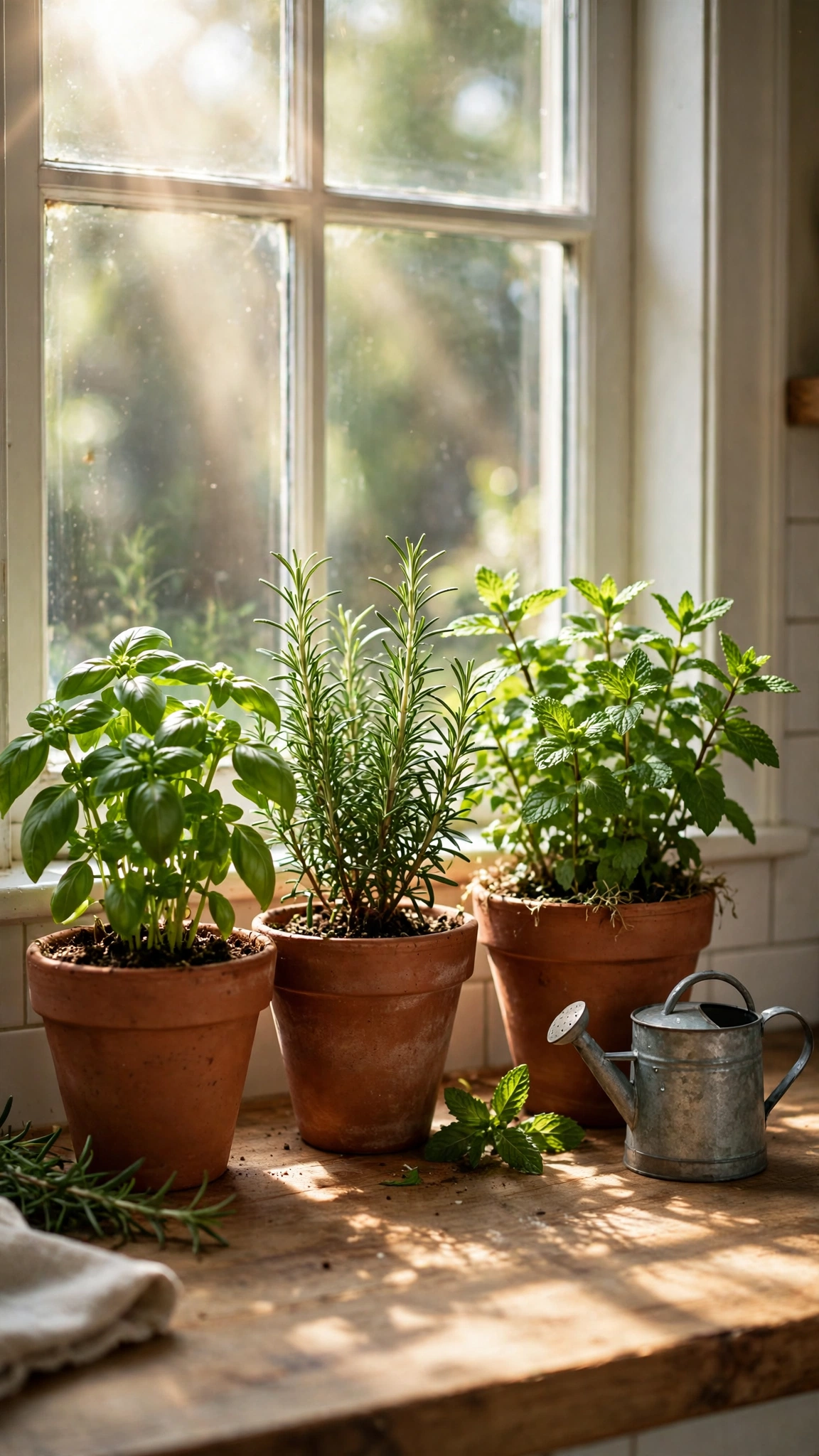
Nothing makes a kitchen feel more alive — or more organic — than food growing within arm’s reach of the stove. Basil, rosemary, thyme, mint and chives all thrive on a sunny sill, scent the room naturally and save you money on those plastic supermarket herb packs every single week.
Group the pots rather than scattering them. A simple wooden tray or a long terracotta planter corrals everything into one lush green moment, catches drips and makes watering a two-minute job. Terracotta is the classic choice for a reason: it breathes, ages beautifully and its earthy color suits the organic palette perfectly.
Start with three or four pots for around the cost of a takeaway lunch. South or west-facing windows give the six-plus hours of light most herbs want; if your window faces north, a slim LED grow strip under the cabinet above does the job almost invisibly.
Tip: Not sure which plants suit your light and space? These kitchen window plant ideas cover everything from trailing pothos to full herb collections, so you can build your green corner with confidence.
3. Install a Garden Window Above the Sink
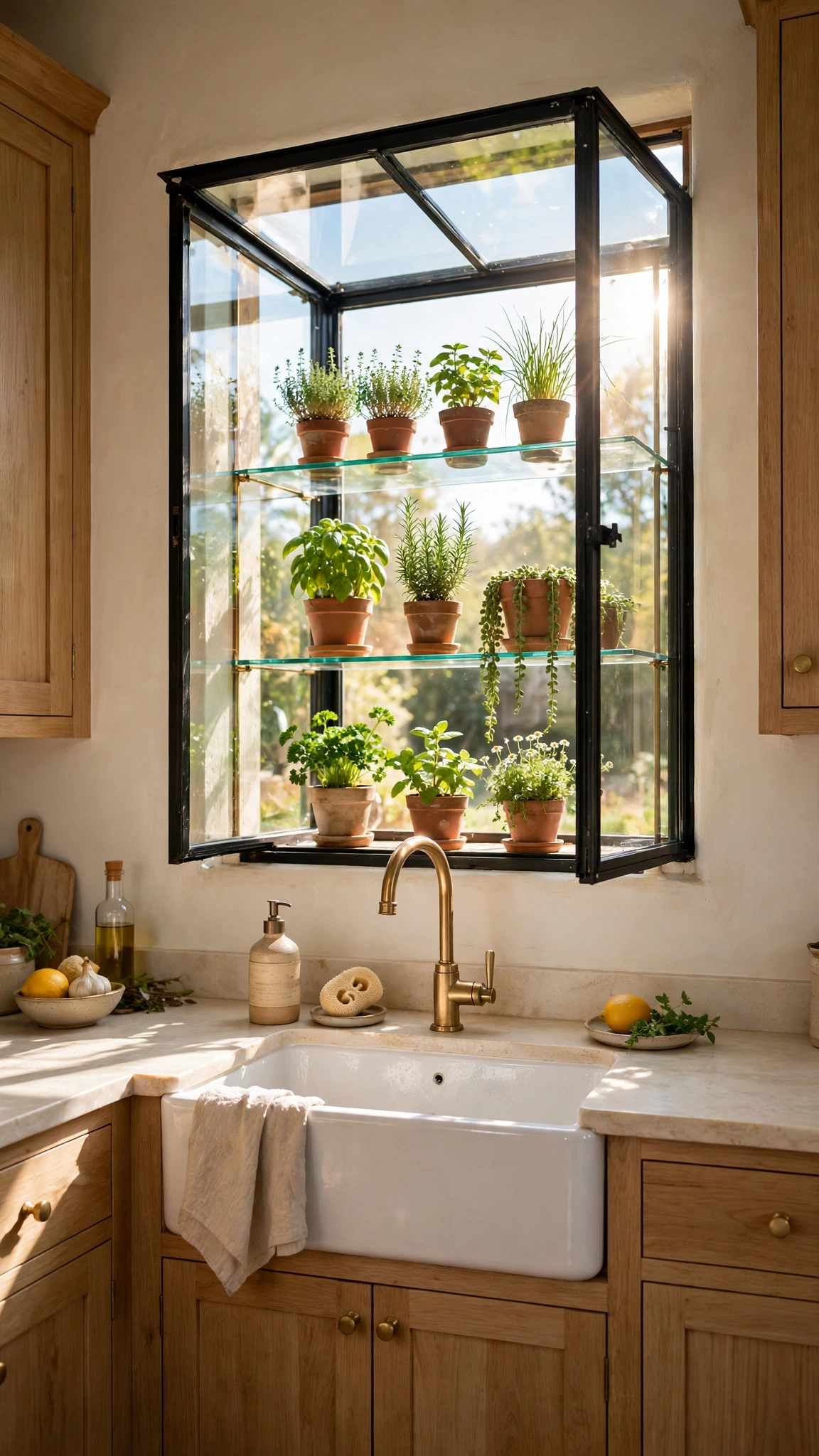
A garden window projects outward from the wall, wrapping your sink in glass on three sides. It floods the hardest-working spot in the kitchen with light, creates a miniature greenhouse for herbs and orchids, and makes washing up feel noticeably less like a chore.
Because it adds a shelf-lined pocket of space where there was only flat wall, it is a genuinely functional upgrade too. Glass shelves hold plants without blocking the light, and the extra depth gives you room for a soap dish, a small radio or a row of seedlings in spring.
Garden windows are a bigger investment — typically a professional install in the low thousands depending on size — but in an otherwise plain kitchen they become the single feature everyone comments on. Choose a frame finish that matches your cabinetry hardware to keep it feeling intentional.
Tip: If a garden window is on your wishlist, browse these unique kitchen garden window ideas first — they show the shapes, shelf layouts and plant styling that bring the outdoors in most successfully.
4. Swap Upper Cabinets for Open Wooden Shelves
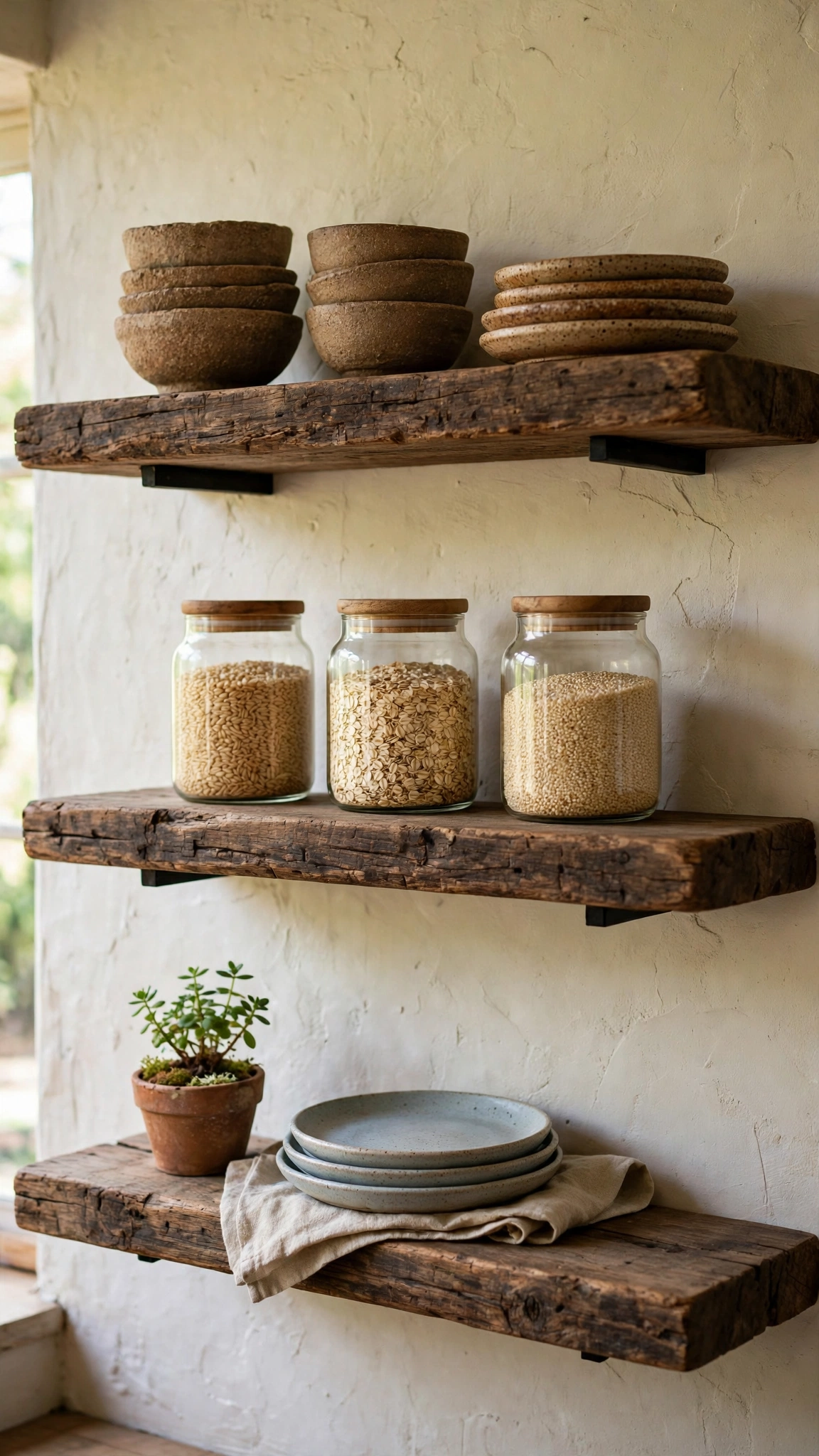
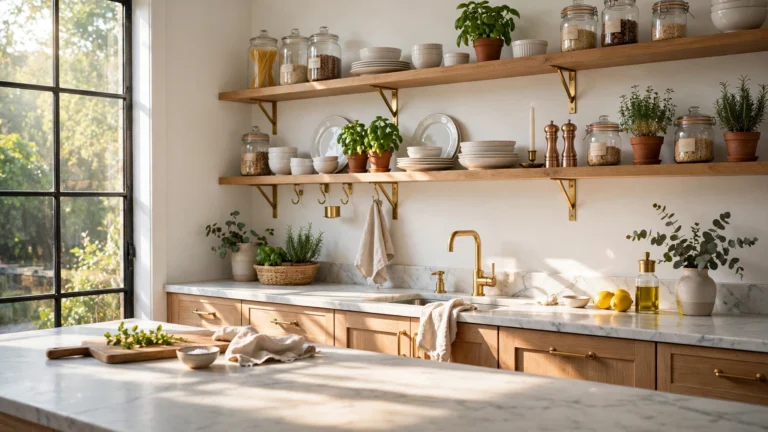
Removing a run of upper cabinets and replacing them with thick wooden shelves opens a kitchen up instantly. Everyday dishes, stoneware and glass jars become part of the decor, and the room breathes in a way boxed-in cabinetry never allows. It is one of the defining moves of the organic look.
Keep the styling honest and useful: stacks of the plates you actually eat from, a row of jars for grains and pulses, one or two handmade pieces and something green. Hidden steel brackets give chunky timber shelves a floating finish that looks custom even when the wood came from a reclamation yard.
Two solid wood shelves usually cost less than a single new wall cabinet, and fitting them is a comfortable weekend DIY job. Just be realistic about dust — if you cook with a lot of frying oil, keep open shelves on the wall furthest from the hob.
Tip: Shelving near a window needs its own styling logic so it doesn’t fight the light — these genius kitchen window shelf ideas show how to add storage around the glass without darkening the room.
5. Keep Counters Clear and Styled with Natural Pieces

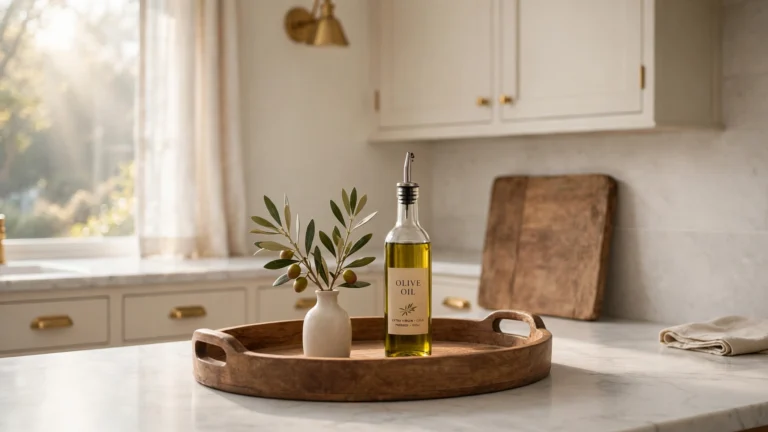
An organic kitchen never fights for your attention with clutter. Counters hold only what earns its place: a beautiful board, a crock of wooden utensils, a bowl of fruit, perhaps a small plant. Everything else lives behind doors or in drawers, which also makes the daily wipe-down blissfully fast.
Choose worktop pieces in natural materials so the functional items double as decor. End-grain wood boards, stoneware crocks, woven baskets for onions and garlic, and a linen cloth draped over the oven handle all add texture without adding visual noise.
This is the cheapest idea on the list — it mostly costs a ruthless decluttering afternoon. Spend a little on two or three quality natural pieces rather than a trolley of matching accessories, and the whole kitchen will look calmer by evening.
Tip: The trick is a system, not just a tidy-up — this guide on how to decorate kitchen counters without clutter walks through exactly what to keep out, what to hide and how to group what’s left.
6. Style the Sill with Terracotta, Wood and Stone

The window sill is prime organic territory — a small stage that catches the light all day. A tiny grouping of natural objects here does more for the room’s mood than most people expect: one clay pot, one piece of wood, one smooth stone, arranged with breathing room between them.
Think of it as a still life that can change with the seasons. Spring brings a jam jar of garden cuttings, summer a bowl of tomatoes ripening in the sun, autumn a small pumpkin or a bundle of dried grasses. Because the footprint is tiny, refreshing it takes minutes and costs nothing.
Keep the groupings odd-numbered and low so they never block the light or crowd the window’s opening. If your sill is narrow, a single beautiful object — a handmade bowl, a sculptural piece of driftwood — works better than three squeezed-in pots.
Tip: For proportion and placement help, these kitchen window sill decorating ideas show how to get that finished, deliberate look rather than a random row of bits and pieces.
7. Carve Out a Sunlit Breakfast Nook
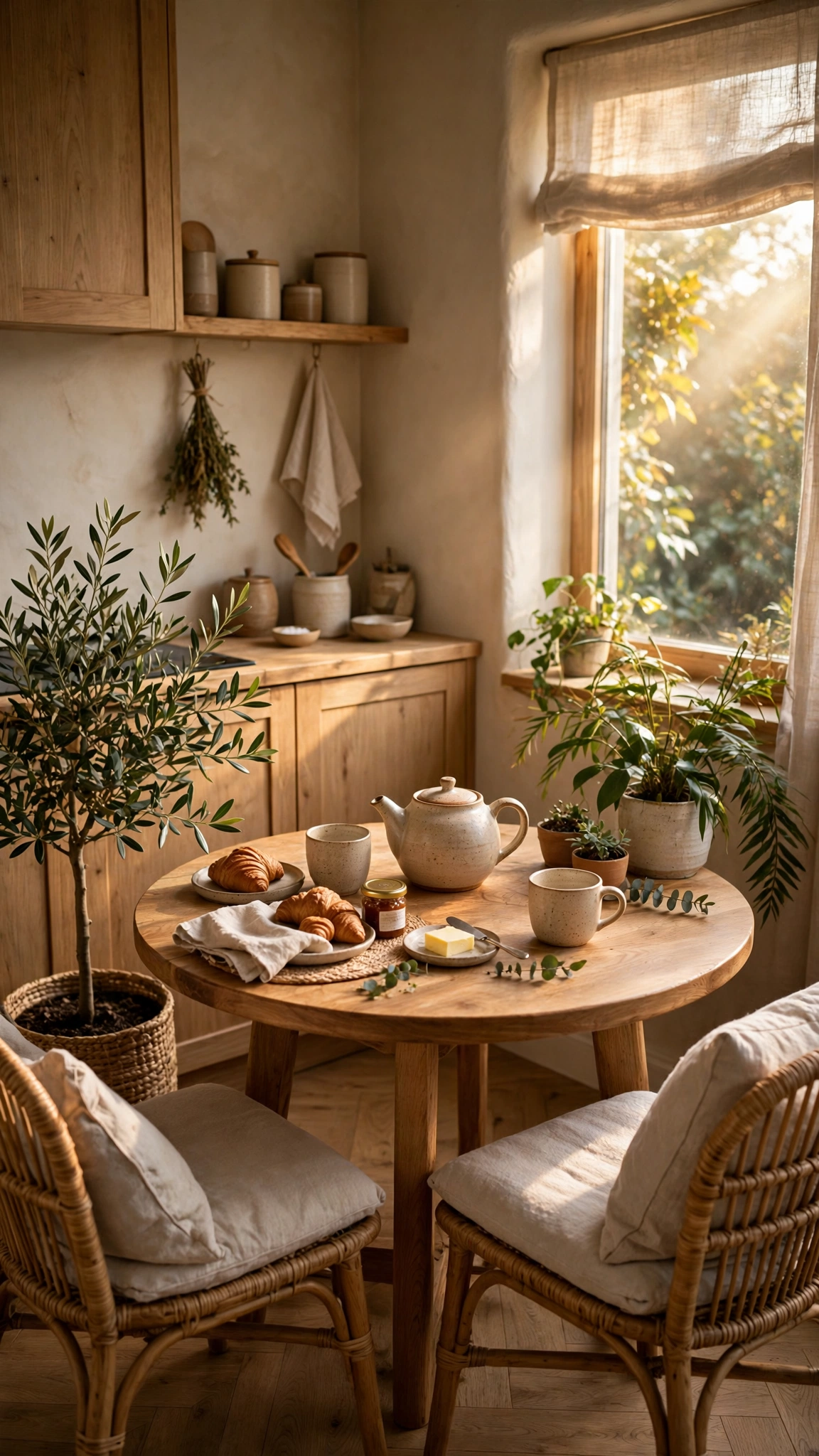
A small nook with a round wooden table and a pair of woven chairs turns an underused kitchen corner into the most loved seat in the house. It is where coffee tastes better, laptops feel less like work and weekend pancakes stretch into long, lazy mornings.
Natural materials make the nook: a solid timber or pedestal table, rattan or bentwood chairs, linen cushions in undyed flax tones and a jute rug underfoot to define the zone. A low pendant in woven seagrass above the table completes the picture and gives the corner its own pool of warm evening light.
You only need about a square metre and a half of floor. A secondhand table, two chairs and a rug can come together for a few hundred, and banquette seating built from plywood and foam cushions is an affordable DIY alternative that also hides storage inside.
Tip: Placement matters most — the nook should hug the light. These cozy kitchen window breakfast nook ideas are full of layouts for corners, bays and even tiny galley ends.
8. Choose a Handmade-Look Tile Backsplash

Perfectly uniform tiles read as manufactured; tiles with wobbly edges, glaze variation and slight color shifts read as crafted. Zellige-style tiles, handmade-look ceramics and natural stone mosaics bring exactly that soulful imperfection to an organic kitchen, especially in warm ivory, sand, clay and sage tones.
Run the tile all the way to the ceiling or the underside of open shelves for a designer finish, and choose a grout color close to the tile so the overall effect is a soft, continuous surface rather than a busy grid. The way uneven glaze catches window light changes beautifully through the day.
Handmade-look porcelain keeps the price friendly — often comparable to standard metro tiles — while genuine zellige and stone sit at the premium end. Either way, the backsplash is a contained area, so even a splurge material rarely covers more than a few square metres.
Tip: Where a window interrupts the tiled wall, the junction needs care — these high-end kitchen window backsplash ideas show how to wrap tile around glass and sills so it looks designed, not patched.
9. Layer Lighting with Woven Natural Pendants
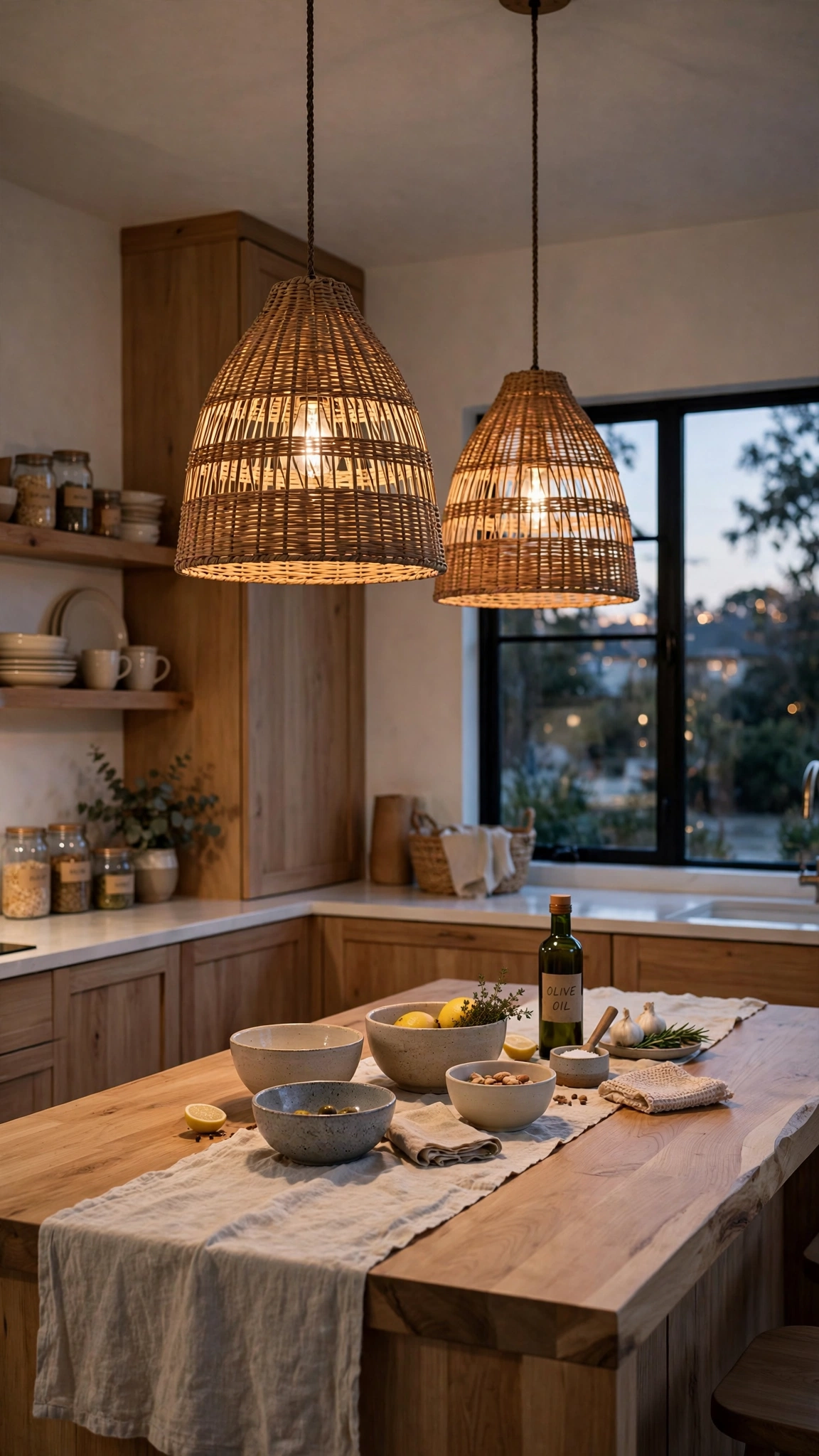
Overhead fluorescents are the enemy of the organic mood. Layered lighting — woven pendants over the island, a warm lamp glow in the nook, soft under-shelf strips — gives the kitchen the same golden gradient you get outdoors at the end of the day, and it makes natural materials look their absolute best.
Rattan, seagrass, bamboo and woven cane shades are the natural choice: they filter light through their weave, cast beautiful patterned shadows and add a sculptural, handcrafted element overhead. Group them in odd numbers and hang them lower than you think — about 75 to 90 centimetres above the worktop.
Woven pendants are widely available from around thirty dollars each, so this layer is achievable on almost any budget. Put everything on dimmers if you can; the ability to drop the light at dinner time is what turns a working kitchen into an evening room.
Tip: Pendants should support the daylight, not compete with it — these stunning kitchen window ideas are a great reference for maximizing natural brightness so your woven shades glow against light, not gloom.
10. Dress the Windows in Linen and Bamboo
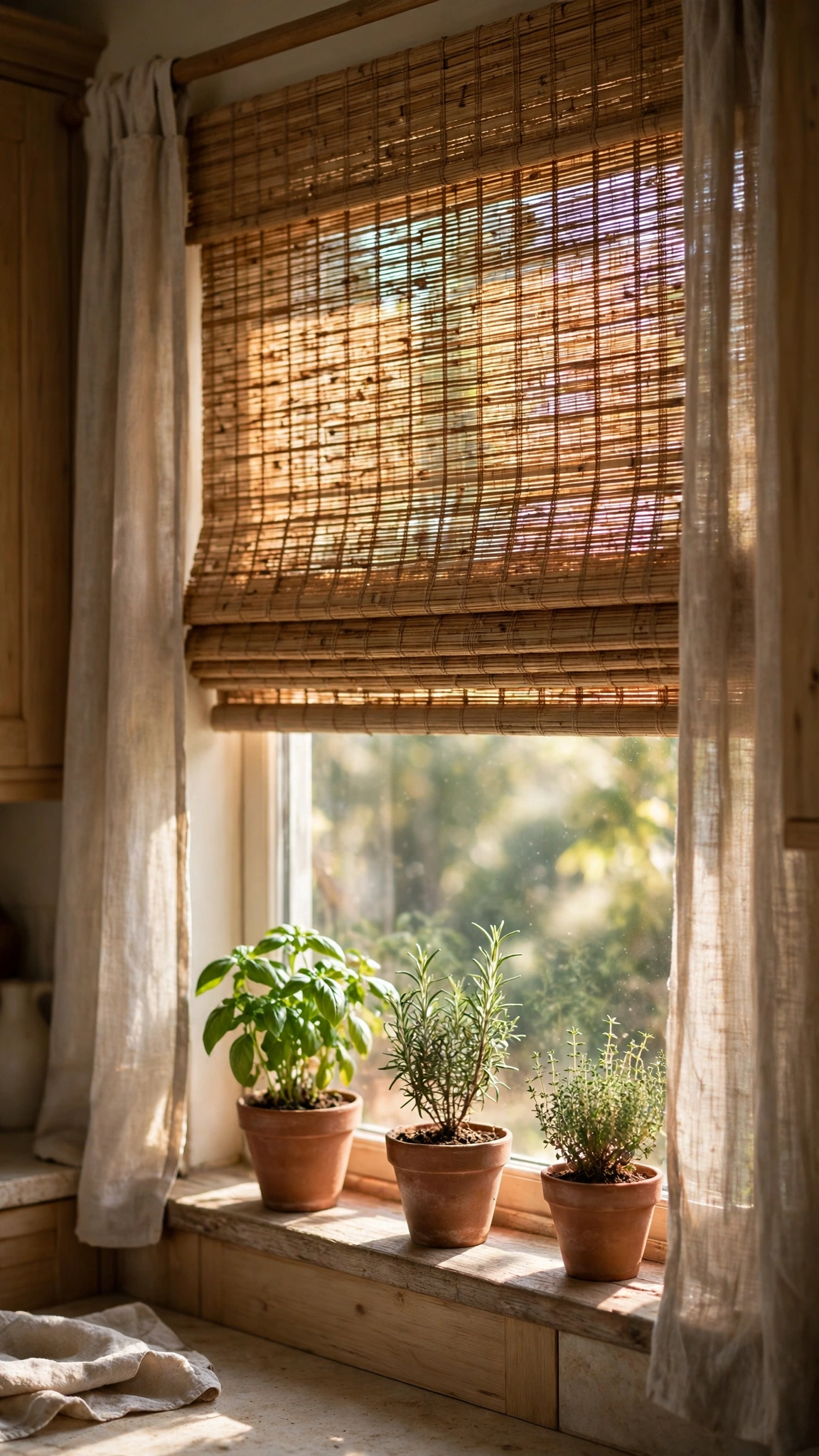
Synthetic blinds and shiny curtains break the organic spell at the very spot where the room meets nature. Replace them with woven bamboo or jute roman blinds, unlined linen panels or simple cotton café curtains and the window starts to feel like part of the material palette.
Natural fibers filter rather than block. Morning sun through a bamboo weave comes in warm and dappled, and linen moves gently with any breeze from an open window, adding softness and life that rigid treatments can’t offer. Both materials also pair with literally every wood tone and stone finish.
Ready-made linen-look panels and bamboo blinds are inexpensive and widely stocked; real stonewashed linen costs more but drapes better and lasts for years. Measure for a relaxed, slightly pooled fit on side panels — tailored perfection works against the easy, organic mood.
Tip: Choosing between blinds, shades and curtains comes down to light control — these trendy kitchen window blind ideas compare the options room by room so you can pick the right natural treatment for each window.
11. Add Privacy Without Blocking the Light
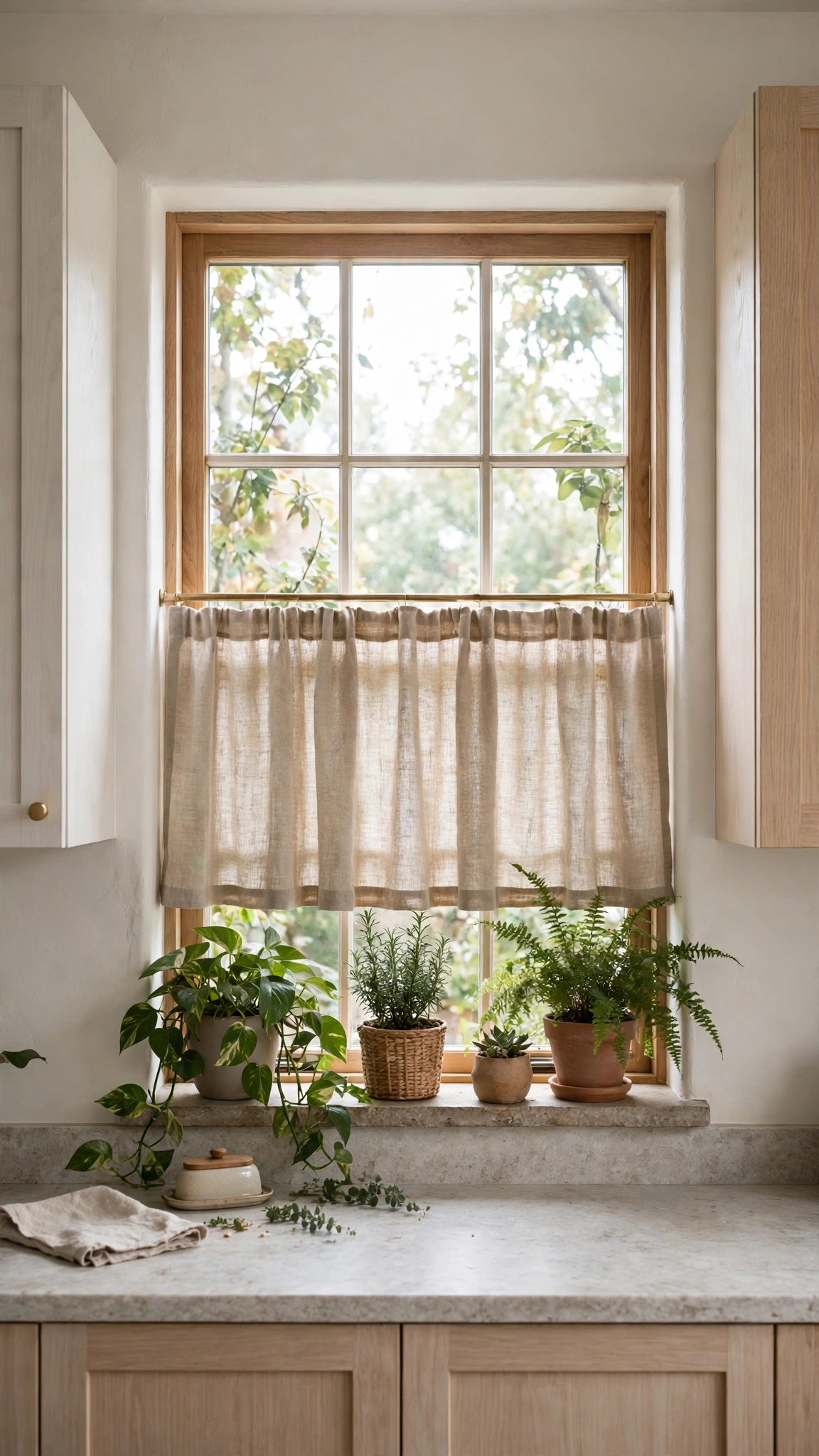
Plenty of organic kitchens are overlooked by neighbors, but the answer is never blackout blinds pulled down at noon. The organic approach screens the view while keeping the glow: café-height curtains, reeded or fluted glass, a deep sill of tall plants, or a timber screen outside the glass.
Each option softens sightlines in a natural way. Lower-half linen lets you stand at the sink unobserved while the top of the window stays open to the sky, and a row of bushy herbs or a tall olive in front of the glass is a screen that also happens to be beautiful.
Café curtains and plant screens are low-cost, renter-friendly fixes; reeded glass film gives the same effect for a few dollars per window without changing the glass itself. Keep the solution in the same natural palette and it becomes part of the design rather than an apology for it.
Tip: There are more options than most people realize — this guide on how to add privacy to a kitchen window without blocking natural light runs through films, glass choices and plant screens with honest pros and cons.
12. Soften the Space with Natural Textiles

Wood and stone carry an organic kitchen most of the way, but textiles deliver the softness that makes it feel like home rather than a showroom. Washed linen runners, cotton tea towels, a wool or jute rug and upholstered seat pads in undyed tones pull all the hard surfaces together.
Stick to a tight family of natural shades — flax, oatmeal, clay, soft white — and let texture do the talking instead of pattern or color. Linen that wrinkles a little, cotton with a woven stripe and chunky jute underfoot all say the same thing: this kitchen is for living in, cooking in and gathering in.
Textiles are also the easiest seasonal refresh there is. Heavier wool and deeper clay tones in autumn, pale linen and bare wood in summer — twenty minutes and a laundry basket is all a change of mood costs, which makes this the perfect finishing layer on any budget.
Tip: Curtains count as textiles too, and worn-looking linen at the window softens the whole room — these cozy kitchen window curtain ideas show the lengths, fabrics and hanging styles that keep the look charming rather than fussy.
Conclusion
An organic kitchen isn’t bought in one trip or finished in one weekend — it’s layered, one natural material at a time. Start with what you can touch every day: the wood on your shelves, the herbs on your sill, the linen at your window. Get those right and the room will quickly start to feel calmer, warmer and more connected to the world outside — which is exactly what a kitchen should be.