10 Beautiful Kitchen Hardware Ideas That Give Your Kitchen a Designer Look
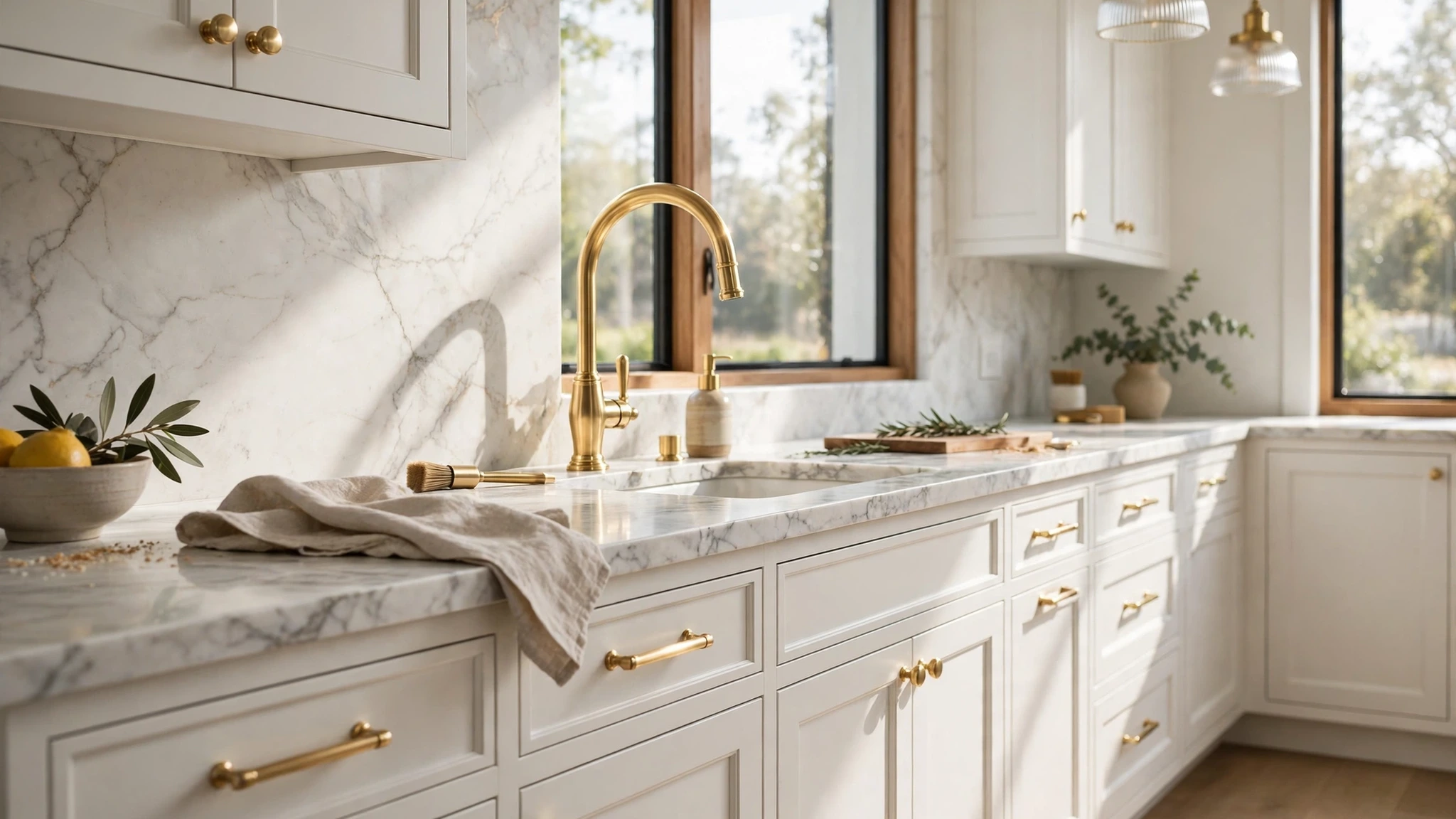
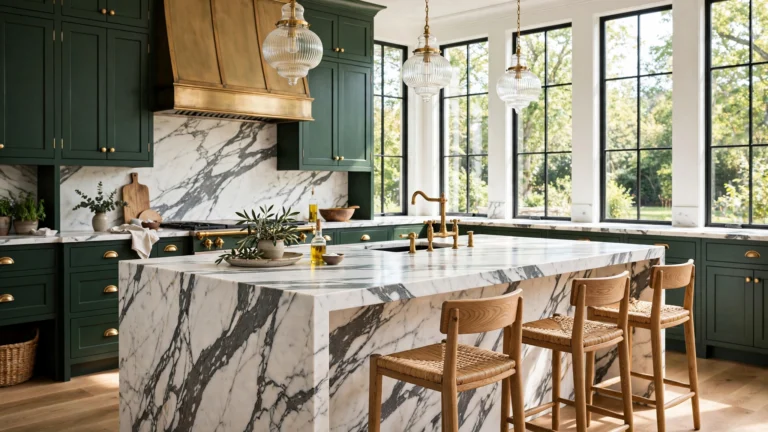
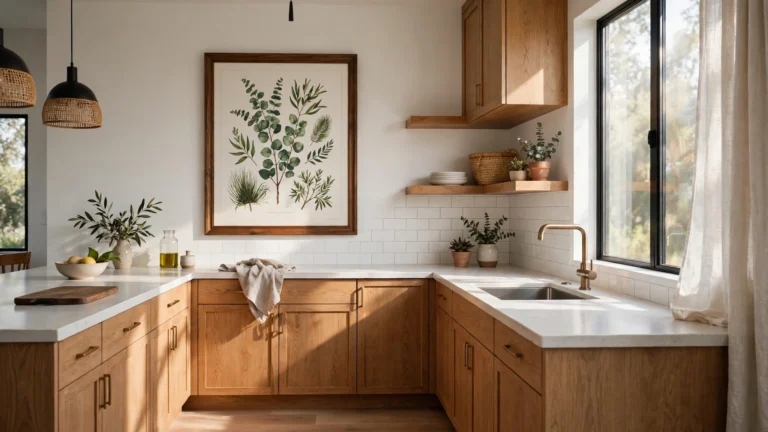
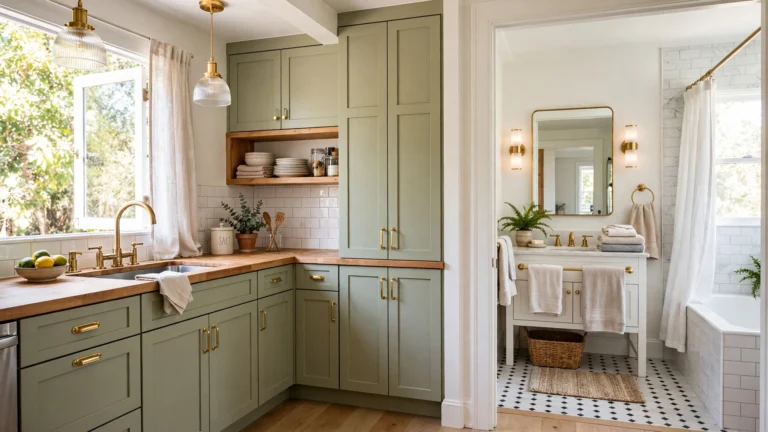
Kitchen hardware is the jewellery of the room — the smallest detail that makes the biggest difference. Swap a set of dated knobs for something considered and the whole kitchen suddenly looks designed on purpose: cabinets feel custom, plain doors gain character, and even a budget run of units reads like a bespoke installation. Designers know this, which is why hardware is often the last thing they choose and the first thing they upgrade.
The best part is that beautiful hardware is a one-afternoon, one-screwdriver change — no demolition, no replumbing, no five-figure renovation bill. Most swaps cost less than a night out and can be undone just as easily when your taste evolves. Ready to see which pulls, knobs and finishes give an ordinary kitchen that polished, designer finish?
1. Swap Dated Knobs for Brushed Brass Pulls

Brushed brass is the finish designers reach for when a kitchen needs instant warmth and polish. Unlike shiny polished brass, the brushed surface has a soft, satin glow that feels expensive rather than flashy, and it pairs beautifully with white, navy, sage and charcoal cabinetry alike.
Bar pulls are the simplest upgrade of all: their long, clean line modernises shaker and slab doors instantly, and the extra length makes drawers and heavy fridge doors far easier to open. Choose a length roughly one third the width of the drawer front for that balanced, showroom proportion.
A full kitchen’s worth of quality pulls typically costs £80–£250 depending on size and count — a fraction of new doors. Measure your existing screw spacing before ordering (128mm and 160mm centres are most common), and you can swap the whole set in under an hour.
Tip: Brass reads as the hero finish, so keep other metals quiet around it. The same one-star-material discipline works outdoors too — these stylish balcony table ideas show how a single well-chosen metal finish pulls a whole small space together.
2. Go Matte Black for Modern Contrast

Matte black hardware is the fastest route to a contemporary, high-contrast kitchen. On pale wood or white cabinets it acts like punctuation — every knob and handle becomes a deliberate full stop that makes the cabinetry look sharper and more architectural.
Black is also brilliantly forgiving. It hides fingerprints better than chrome, suits industrial, Scandi and modern farmhouse schemes equally, and never fights with stainless steel appliances. Keep the shapes simple — round knobs, slim bars, clean cup pulls — and let the finish do the talking.
Because black hardware is so widely stocked, it is one of the cheapest designer looks going: complete sets start around £40–£100. If your cabinets are dark, reserve black for a light island or dresser run so the contrast still registers.
Tip: Contrast only works when the shapes stay consistent, so pick one silhouette and repeat it everywhere. For more on making compact rooms feel deliberately designed rather than accidental, see these creative small-space ideas — the same repeat-and-restrain rule applies.
3. Mix Metals Like a Designer

The most expensive-looking kitchens rarely match every metal in the room. Designers mix two, sometimes three finishes — brass on the cabinets, black on the faucet, nickel on the lighting — because the layering makes a space feel collected over time rather than bought in one order.
The trick is discipline: assign each metal a job and a zone, and repeat each finish at least twice so it reads as intentional. Warm metals (brass, copper, gold) should dominate or support together; cool metals (chrome, nickel, steel) form the other family. One dominant finish, one supporting, one accent is a foolproof ratio.
Start with the largest count — usually the cabinet hardware — as your dominant metal, then echo it somewhere small, like a rail or a soap dispenser. Mixing costs nothing extra; it is a planning decision, not a purchase.
Tip: If a mix looks wrong, it is usually because a finish appears only once. Add a second touch of it before you remove anything. These stylish patio interior design ideas use exactly the same echo-the-finish trick to make outdoor rooms feel professionally pulled together.
4. Add Bin Pulls to Drawers for Vintage Character
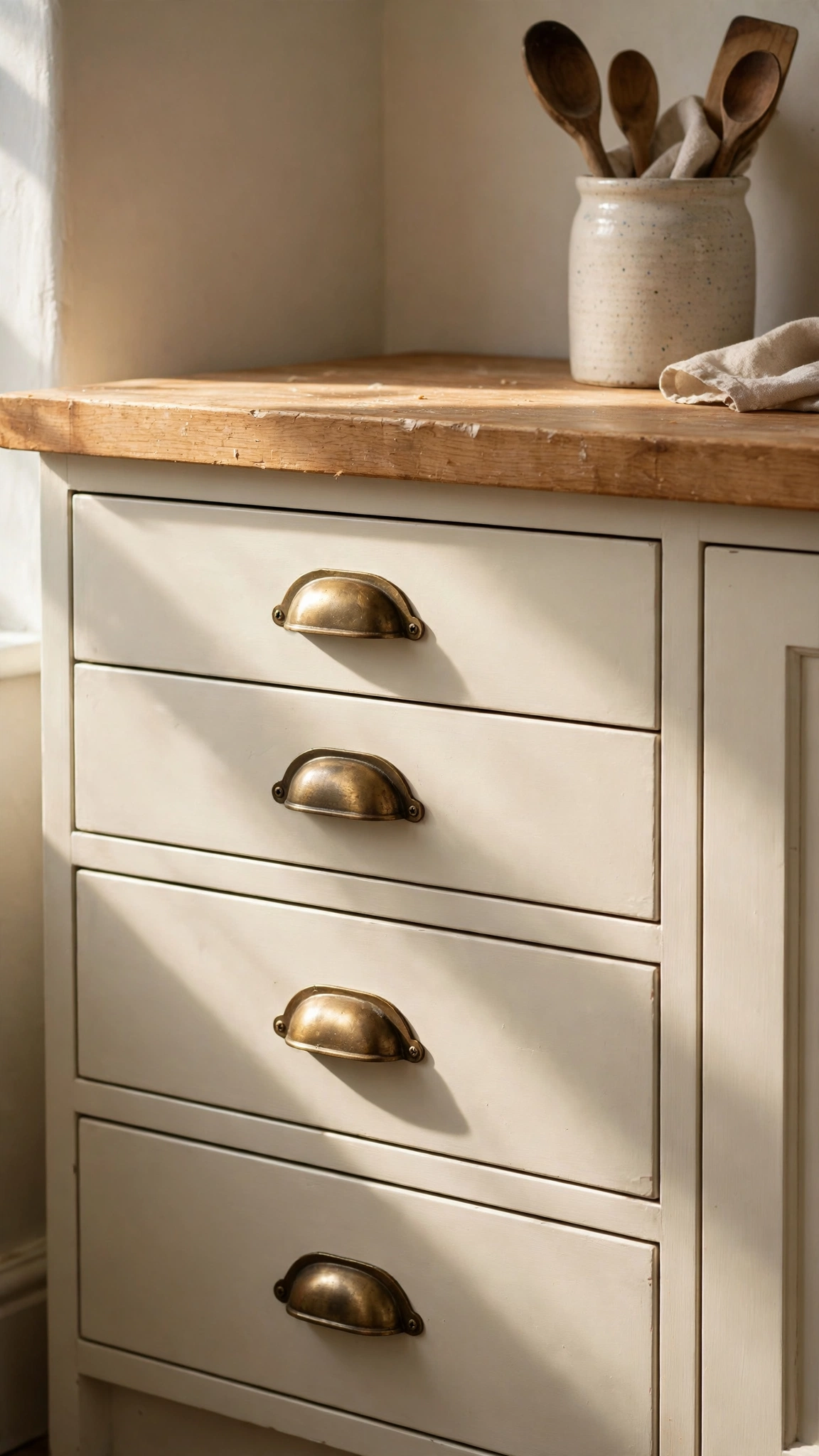
Bin pulls — those half-moon cup handles you grip from below — bring instant heritage character to a kitchen. They belong on drawers rather than doors, and a neat row of them along a drawer bank gives even flat-pack cabinetry a crafted, workshop-made feel.
They are practical as well as pretty: the cup shelters the drawer front from floury fingers, the grip suits heavy cutlery and pan drawers, and the shape suits shaker, in-frame and farmhouse styles perfectly. Antique brass, pewter and oil-rubbed bronze are the classic finishes.
Fit them in an afternoon with two screws each, centring them carefully — a paper template keeps a long run perfectly level. Expect £6–£15 per pull, so a bank of six drawers transforms for well under £100.
Tip: Pair bin pulls on drawers with simple knobs on doors for that authentic, mixed-by-function look old kitchens had. It is the same reason layered, collected schemes work in these creative Chinese home decoration ideas — small ornamental details, repeated with intent, read as luxury.
5. Choose Oversized Pulls for Wide Drawers

Standard handles look lost on the wide, deep drawers of a modern kitchen. Oversized pulls — 320mm, 480mm and longer — restore the proportions, giving big drawer fronts the confident, furniture-like presence designers aim for.
Scale is the whole secret. A long pull on a wide drawer looks bespoke; the same pull on a small drawer looks clumsy. As a guide, aim for hardware that spans between one third and two thirds of the front it sits on, and keep the diameter chunky enough to match.
Long pulls cost a little more per piece, £15–£40, but you usually need fewer of them. Before drilling, tape pulls in place with painter’s tape and live with the positions for a day — your eye will tell you if the scale is right.
Tip: Wide drawers and long pulls also make a small kitchen feel bigger, because the eye reads unbroken horizontal lines as width. These stylish balcony floor ideas use the identical visual trick outdoors, running lines long to stretch a compact footprint.
6. Coordinate Hardware with the Faucet and Lighting

When the cabinet hardware, the faucet and the light fittings share a finish family, the whole kitchen quietly clicks into place. Nothing new needs buying necessarily — it is about choosing your next purchase to rhyme with what is already there.
Start from the hardest thing to change — usually the faucet or the pendants — and let that set the metal. Then pick hardware in the same finish or its closest cousin: unlacquered brass with aged brass, brushed nickel with stainless steel, matte black with blackened bronze.
Manufacturers rarely match perfectly across brands, so order samples and compare them in your own light, morning and evening. A near miss at the same sheen level looks intentional; a clash of shiny against matte in the same colour looks like a mistake.
Tip: Take one existing piece of hardware to the shop rather than trusting photos — screens lie about warm metals. The same check-it-in-real-light advice runs through these stylish balcony flooring ideas, where tone-matching materials makes or breaks the finished look.
7. Fit Edge Pulls for a Sleek, Handleless Look
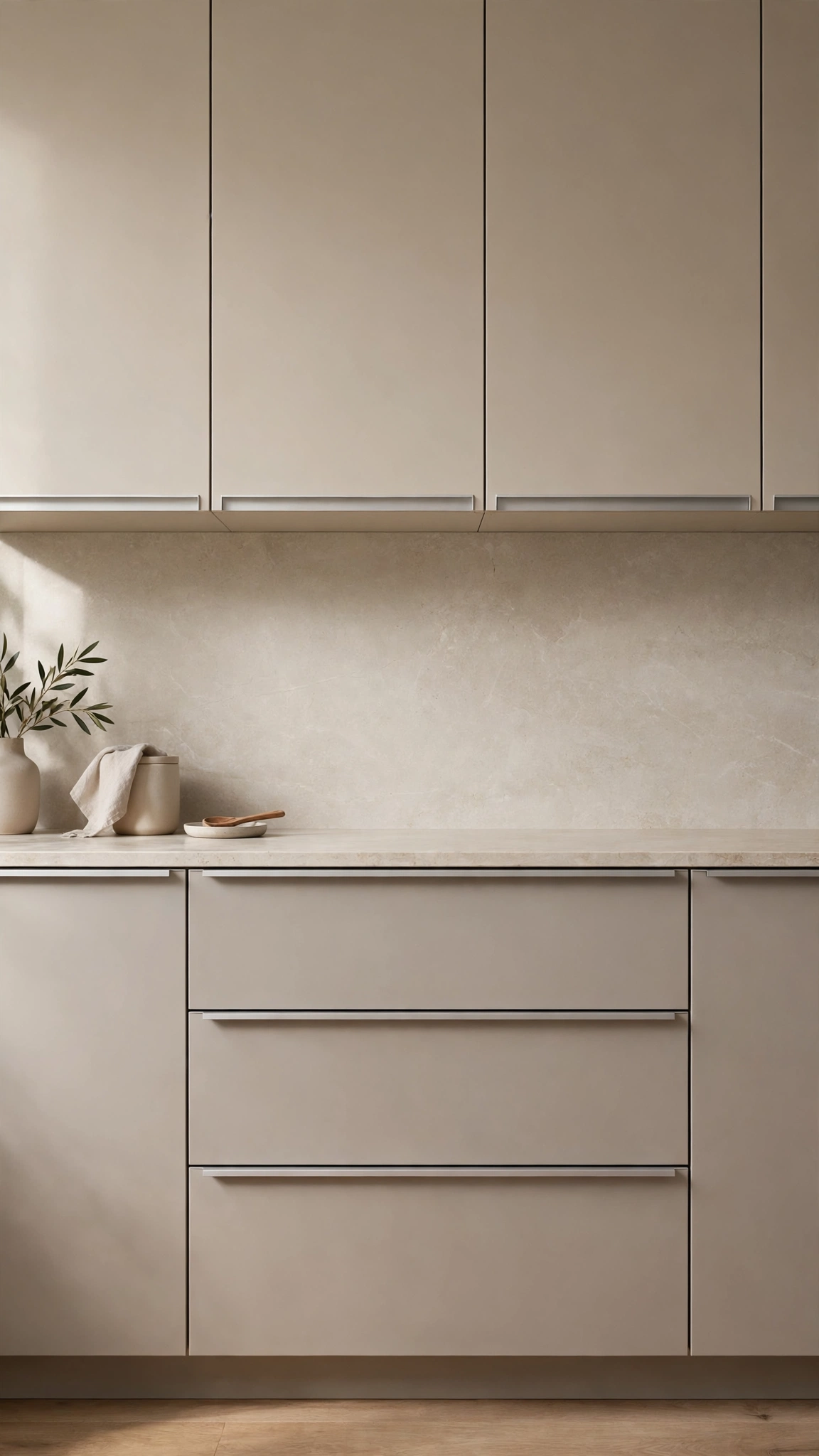
If you love the handleless look but not the price of true handleless cabinetry, edge pulls are the designer’s cheat. These slim profiles mount on the top edge of doors and drawers, giving you a finger grip that is almost invisible from the front.
The result is a clean sweep of cabinetry with fine shadow lines where the hardware hides — perfect for contemporary schemes and small kitchens where protruding handles snag hips and visually clutter the run. Anodised aluminium, black and brass profiles cover most palettes.
Edge pulls retrofit to most existing doors, though deep drawers may need a stronger profile for a comfortable grip. Budget £8–£20 per piece, plus an hour or two of careful alignment with a straight edge and clamps.
Tip: Edge pulls shine brightest on flat slab doors; on shaker fronts, keep a slim bar pull instead so the styles do not fight. For more seamless, small-footprint thinking, these creative balcony set ideas show how matched, low-profile pieces keep a tight space calm.
8. Add Glass Knobs to Uppers for a Touch of Sparkle
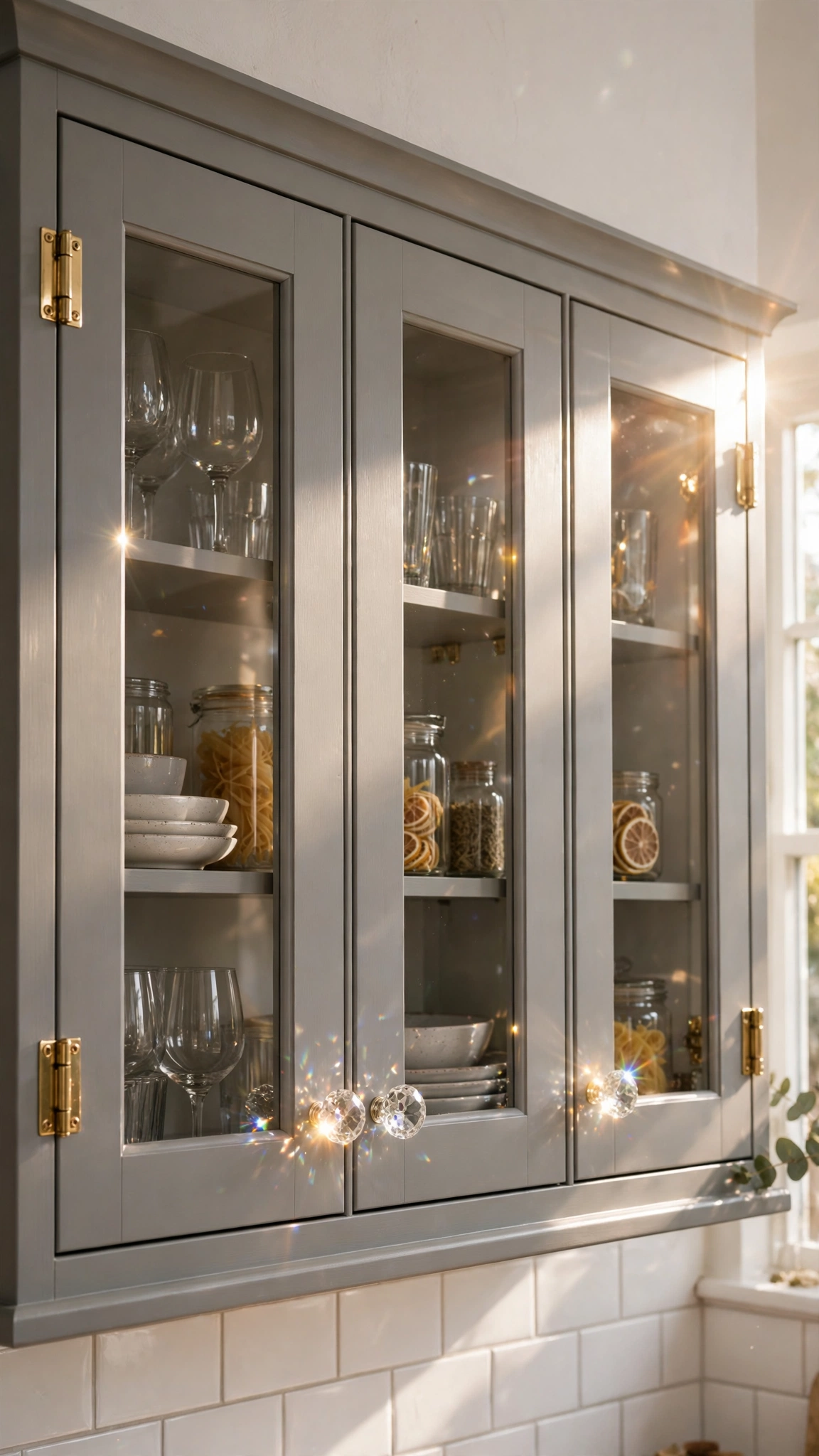
Glass and crystal knobs are the vintage jewel in the hardware box. They catch and scatter light across the room, lighten the look of heavy upper cabinets, and bring a note of prettiness that suits cottage, classic and glam-leaning kitchens alike.
Use them where hands are cleanest — upper cabinets, a dresser run, a glazed larder door — and pair them with sturdier pulls on hard-working drawers below. Clear glass suits everything; smoky, amber or milk glass can pick up a colour from your tiles or textiles.
Vintage-style glass knobs are widely available at £5–£12 each, and genuine antique sets turn up at salvage yards for little more. Check the bolt length suits your door thickness, and add a washer so the glass never grinds against painted wood.
Tip: A row of sparkling knobs works like a line of tiny lights — it lifts the whole elevation. These stunning balcony rug ideas do the same job at floor level, using one pretty, light-catching layer to raise an entire scheme.
9. Use Latches and Exposed Hinges for Crafted Detail
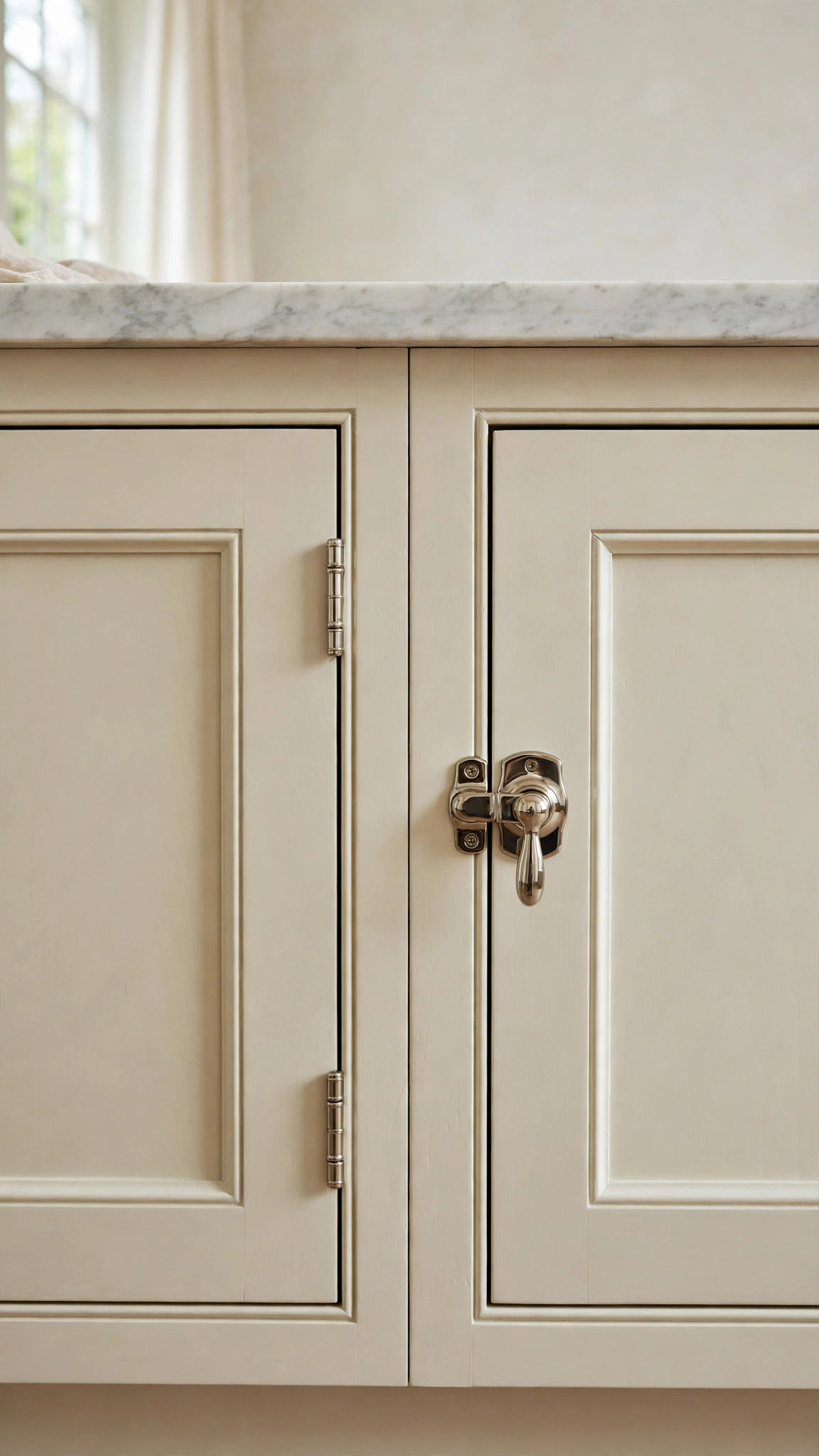
Nothing says bespoke like hardware that looks made, not moulded. Cupboard latches, turn catches and exposed hinges are the fittings of traditional in-frame kitchens, and adding them to even one feature cabinet gives the whole room a crafted, joinery-led feel.
A latch on a larder or a pair of glazed doors becomes a small daily ritual — satisfying to use, beautiful to look at. Match the finish to your knobs so the detail reads as part of the same family, and choose solid brass or nickel if you want them to last decades.
This is a slightly fiddlier job than a knob swap, since latches need their keep aligned precisely; allow an hour per door or ask a carpenter to fit a feature pair. Pieces run £15–£45, so reserve them for the doors that deserve the ceremony.
Tip: Doors are where crafted hardware earns its keep — the same principle makes exterior doors a design feature in these stylish balcony door ideas, where the right handle and hinge finish transforms a plain door.
10. Finish with Matching Appliance Pulls
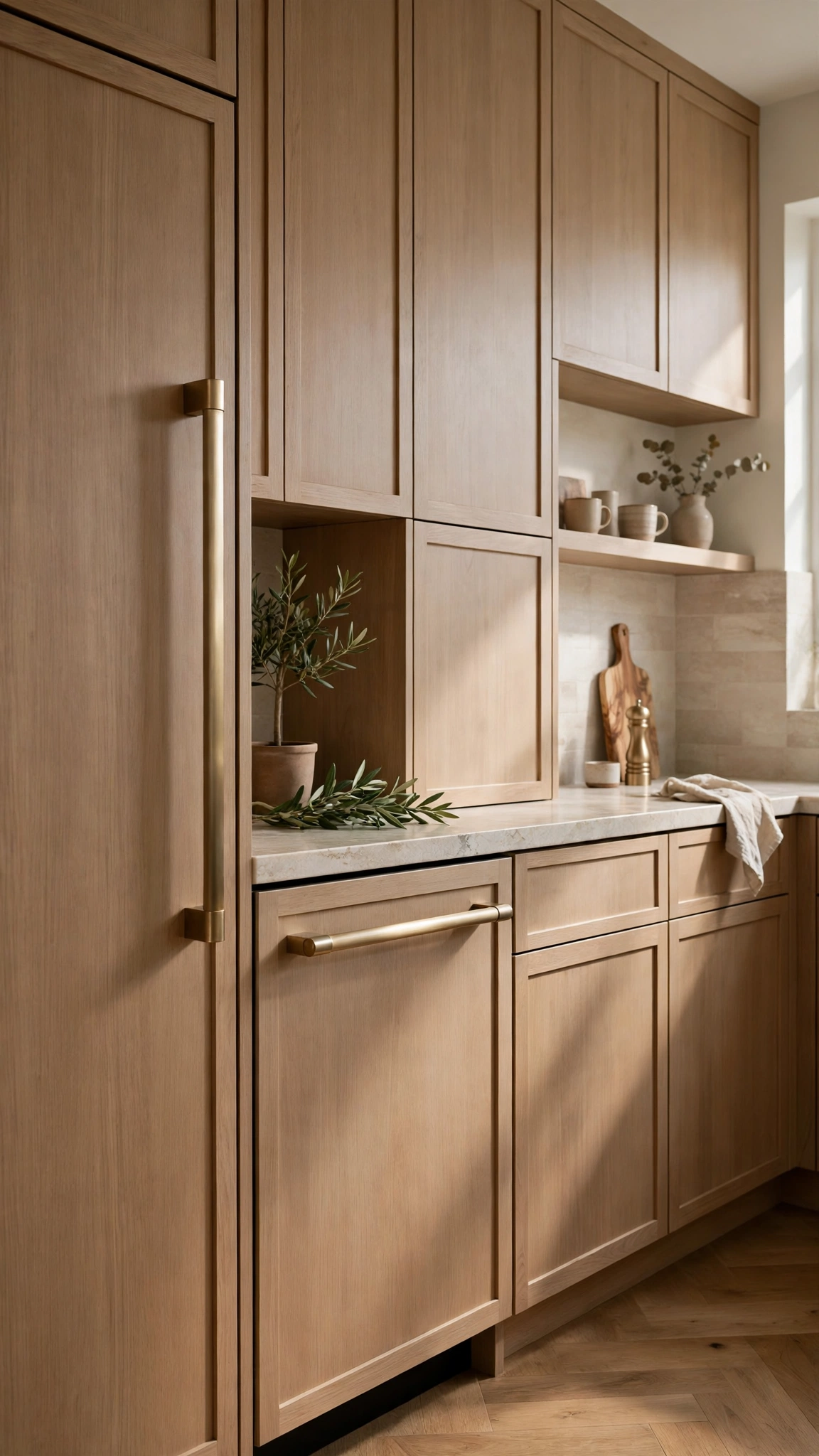
The final designer move is to treat integrated appliances as furniture. Fit panelled fridges and dishwashers with appliance pulls — longer, stronger versions of your cabinet handles — and the whole run reads as one seamless bank of bespoke joinery.
Appliance pulls are built for the job: longer centres (often 300mm-plus), sturdier mounts and a grip that can open a sealed fridge door without a struggle. Match them exactly to your cabinet finish so the eye travels along the run without a single jolt.
They are the priciest pieces in the hardware family, typically £30–£90 each, but most kitchens need only two or three. Fit them once the appliance doors are hung and aligned, and measure twice — these holes are in expensive panels.
Tip: Consistency is what turns separate buys into a designed scheme — one finish, repeated from the smallest knob to the largest pull. These gorgeous balcony seating ideas make the same point outdoors: matching a set, rather than collecting singles, is what looks truly put together.
Conclusion
Beautiful hardware is proof that designer kitchens are built from decisions, not just budgets. Choose a finish with warmth or contrast, scale it to your drawers, repeat it with discipline and let even the hinges join in — and a standard kitchen quietly becomes a considered one. Start with the run you touch most, and enjoy how different the whole room feels by tonight.