18 Stunning Garage Flooring Makeover Ideas That Make the Room Feel Completely New
Your garage floor takes more abuse than any other surface in your home. Oil drips, tire marks, dropped tools, and road salt slowly turn smooth concrete into a stained, cracked eyesore that drags down the whole space.
The good news is that a flooring makeover is one of the fastest and most affordable ways to transform your garage. From peel-and-stick tiles to showroom-worthy epoxy, there is a solution for every budget and skill level. Ready to find out which one will make your garage feel completely new?
1. Lay Down Interlocking Rubber Tiles

Interlocking rubber tiles are the fastest way to cover ugly concrete. The puzzle-style edges snap together by hand, so you can finish a two-car garage in a single afternoon with no glue or special tools.
They cushion your feet, deaden sound, and shield the concrete underneath from oil stains and dropped tools. Pick a dark charcoal or speckled finish to hide dust and tire marks between cleanings.
When one tile gets damaged, you simply pop it out and snap in a replacement. That modular design makes rubber tiles a favorite for home gyms and busy workshops alike.
Pro tip: Start laying tiles from the center of the garage outward so cut pieces land along the walls where they are least visible. For more weekend-friendly upgrades, browse our garage renovation ideas.
2. Roll Out a Glossy Epoxy Floor Coating

Nothing says showroom like a glossy epoxy floor. This two-part coating bonds to concrete and cures into a rock-hard, chemical-resistant surface that shrugs off oil, gasoline, and hot tires.
Decorative color flakes hide imperfections and add grip underfoot. A light gray or tan base brightens the whole garage and makes the space feel twice as large.
Plan for a full weekend: one day for diamond grinding and prep, one day for coating and curing. Good prep work is the difference between a floor that lasts decades and one that peels.
Pro tip: Test for moisture first by taping a plastic square to the concrete for 24 hours. If condensation forms, use a moisture-blocking primer. Pair your new floor with our garage workshop ideas for a complete setup.
3. Snap Together Vinyl Plank Floor Tiles
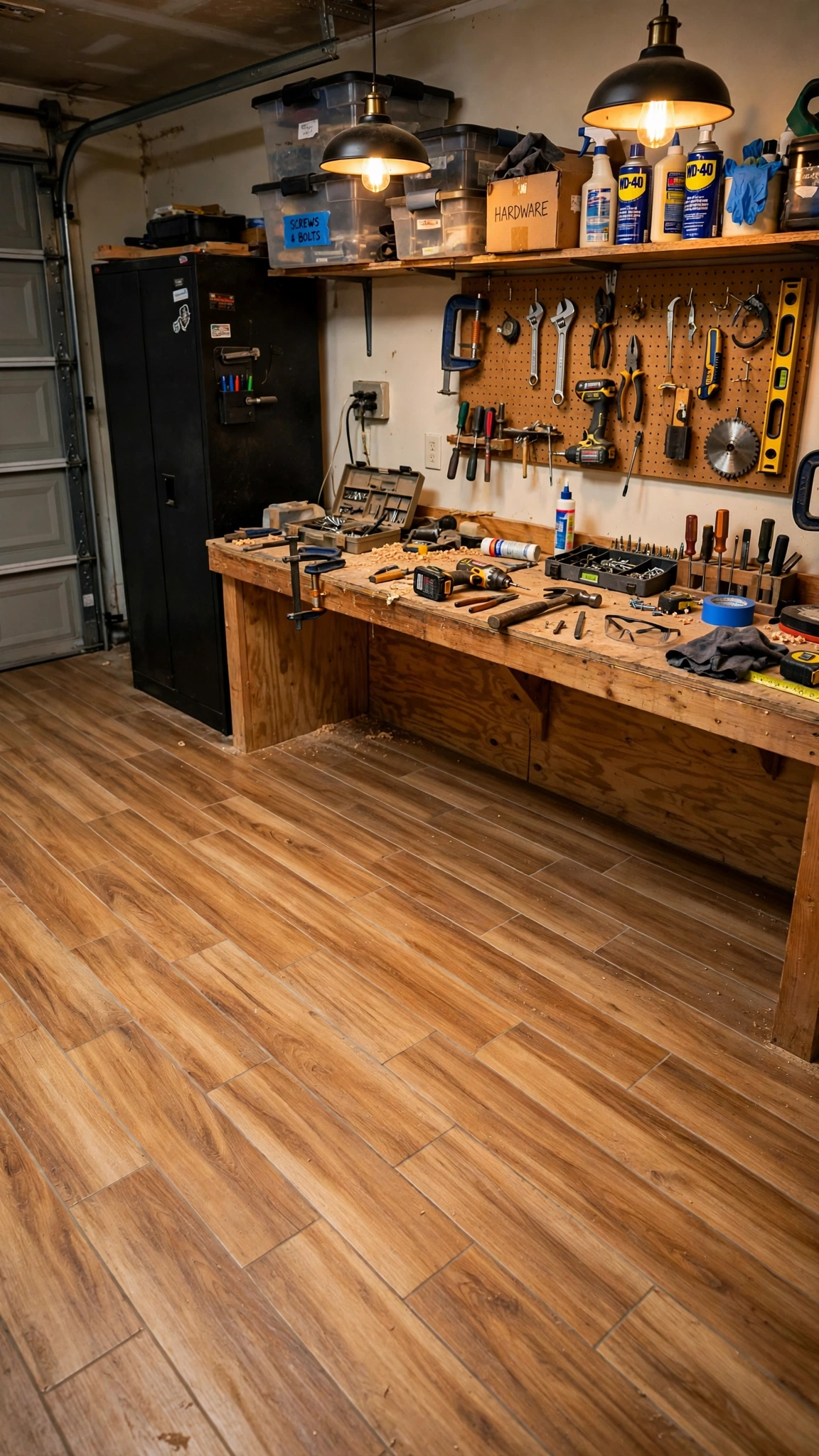
Vinyl plank tiles bring the warmth of wood to the garage without the worry. They are waterproof, scratch-resistant, and comfortable underfoot compared to bare concrete.
The click-lock system floats over the slab, so minor cracks and uneven spots disappear underneath. Wood-look planks make a converted garage office or lounge feel like a real room.
Choose a rigid-core luxury vinyl rated for heavy loads if you still park cars inside. Thinner planks can dent under vehicle weight over time.
Pro tip: Let the planks acclimate in the garage for 48 hours before installing to prevent gaps later. See how flooring transforms whole spaces in our garage interior design ideas.
4. Paint Bare Concrete With Floor Paint

A gallon of concrete floor paint is the cheapest makeover on this list. One weekend and under a hundred dollars can take your floor from stained gray to a clean, uniform color.
Use paint made specifically for concrete and masonry, not regular wall paint. Two thin coats bond better than one thick coat and resist hot-tire pickup.
Keep expectations realistic: paint will not hide deep cracks or spalling, and high-traffic lanes may need a touch-up every couple of years. For the price, though, the visual payoff is huge.
Money-saving tip: Etch the concrete with a degreaser and etch solution first so the paint grips properly. More budget transformations await in our garage upgrade ideas.
5. Polish Existing Concrete to a Shine

Polished concrete skips coatings entirely. A grinder with diamond pads mechanically smooths the slab until it shines like stone, revealing the natural aggregate inside.
The result is ultra-durable and nearly maintenance-free. Dust mopping is usually all it takes, and there is no coating to chip or peel ever again.
Renting a planetary grinder makes this a doable DIY project, though it is dusty, loud work. Seal the polished surface with a concrete densifier to lock in the shine.
Pro tip: Fill cracks with concrete crack filler before you start grinding for a flawless finish. Complement the industrial look with our garage interior wall ideas.
6. Stain Concrete With Rich Acid Tones

Acid stain reacts chemically with concrete to create permanent, variegated color that looks like natural stone. No two floors ever turn out exactly alike.
Earthy coppers, ambers, and walnut browns are the most popular choices. The mottled finish hides stains and wear beautifully, which is perfect for a working garage.
Neutralize the acid after it reacts, then seal with two coats of concrete sealer. The sealer deepens the color and protects your one-of-a-kind floor.
Pro tip: Always test the stain on a hidden corner first, since the final color depends on your concrete’s chemistry. Add function to the beauty with our garage mudroom ideas.
7. Stick Down Peel-and-Stick Floor Tiles

Peel-and-stick tiles are the ultimate renter-friendly garage upgrade. No glue, no grout, no special tools. Just peel the backing and press each tile onto clean concrete.
Modern options mimic slate, marble, and even wood grain convincingly. They wipe clean with a damp mop and handle foot traffic well in a garage used as a gym or hangout.
They are not the best pick under parked cars, since heat and weight can loosen the adhesive. For parking zones, pair them with a tougher surface or rubber mats.
Pro tip: Warm each tile with a hair dryer as you lay it for a stronger bond. Turn the rest of the space around it with our garage laundry area ideas.
8. Cushion Work Zones With Anti-Fatigue Mats

If you spend hours at a workbench, anti-fatigue mats are a small upgrade with a big payoff. The cushioned surface reduces leg and back strain on hard concrete.
Use them to define work zones rather than covering the whole floor. A mat in front of the bench, one at the tool chest, and one by the sink covers most needs.
Look for beveled edges so you do not trip, and oil-resistant material if you work on cars. They roll up easily when you need the full floor clear.
Pro tip: Interlocking foam mats are a cheaper alternative for light-duty zones. Build the perfect workout corner with our garage gym design ideas.
9. Click Together Rigid PVC Floor Tiles

Rigid PVC tiles are the premium cousin of rubber tiles. They are harder, more chemical-resistant, and handle vehicle traffic without denting or shifting.
The hidden interlock system creates a seamless, professional look. Coin, diamond, and vented textures add grip and style in equal measure.
They cost more than basic rubber tiles, but they last longer and look sharper. For a garage that doubles as a showroom, they are worth every penny.
Pro tip: Leave a small expansion gap around the perimeter for temperature changes. Plan the full layout with our garage workshop layout ideas.
10. Seal Concrete With a High-Gloss Sealer

A high-gloss concrete sealer gives you the wet-look shine of epoxy at a fraction of the cost and effort. It rolls on like paint and dries in hours.
The sealer deepens the concrete’s natural color and protects against stains and dust. Your garage will look freshly detailed every single day.
It will not fill cracks or level the surface, so start with concrete in decent shape. Reapply every two to three years in high-traffic lanes to keep the gloss alive.
Pro tip: Apply two thin coats instead of one thick one to avoid bubbles and peeling. Keep everything organized on top with our garage cabinet ideas.
11. Create a Bold Checkerboard Tile Pattern
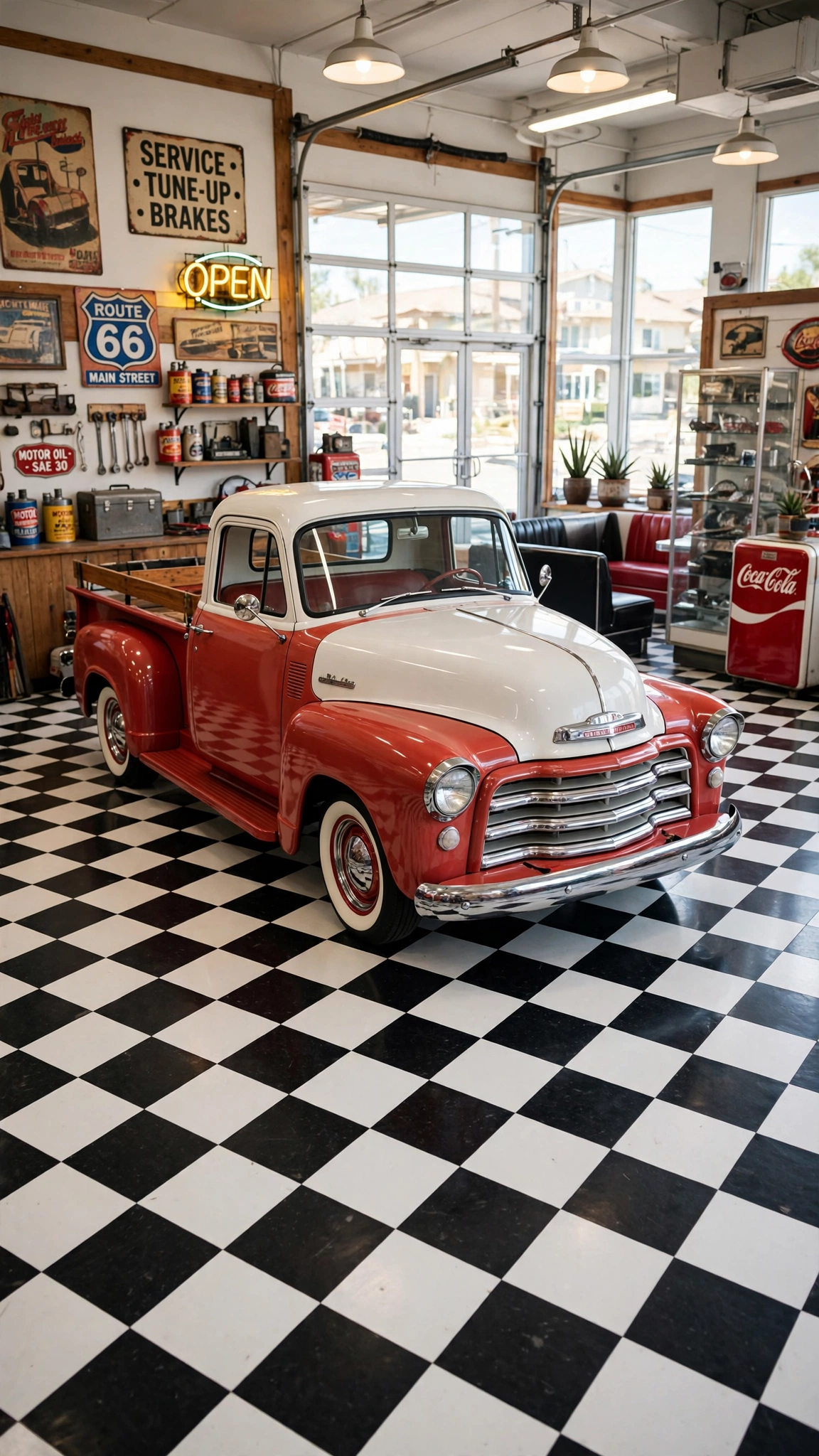
A checkerboard floor turns a plain garage into a conversation piece. Black and white is the classic choice, but gray and white or navy and white look equally sharp.
Use vinyl composition tiles or interlocking PVC tiles in alternating colors. The grid pattern actually makes measuring and layout easier, since every tile is a guide.
This look shines in show garages, man caves, and vintage car collections. It pairs perfectly with chrome details and neon signage on the walls.
Pro tip: Snap chalk lines for your starting grid to keep rows perfectly straight. Complete the retro look with our garage shelving ideas.
12. Paint Crisp Racing Stripes on Concrete
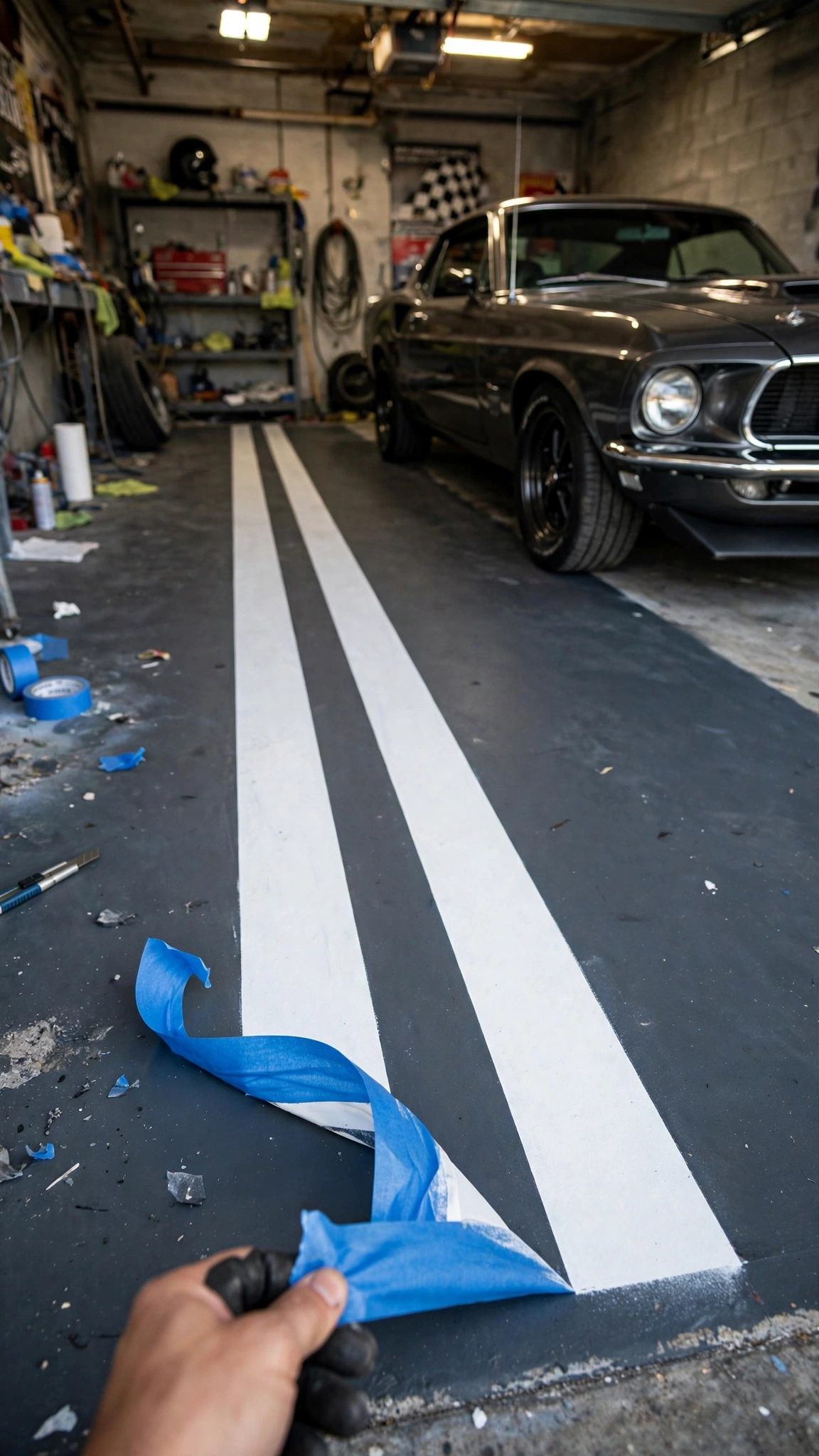
Racing stripes are pure personality. Two bold stripes down the center of the floor give any garage instant motorsport energy for the cost of a roll of tape and a quart of paint.
Paint the whole floor a dark base color first, then tape off your stripes and roll on a contrasting shade. White, red, or yellow stripes all pop against charcoal gray.
Seal the finished design with a clear concrete sealer so tires do not scuff your artwork. This is a weekend project with serious wow factor.
Pro tip: Use high-adhesion painter’s tape and seal the tape edges with the base color first for razor-sharp lines. Match the vibe with our garage man cave ideas.
13. Soften the Space With Carpet Tiles

Carpet tiles make a garage feel like an actual room. They add warmth, soften noise, and turn a cold slab into a comfortable lounge, office, or play space.
Use commercial-grade carpet tiles with stain-resistant fibers. They handle foot traffic well and individual tiles can be swapped out if one gets ruined.
Keep carpet away from parking zones and wet areas. It works best in the section of the garage you have claimed for living, not for cars.
Pro tip: Choose a low-pile, dark-patterned tile to hide dirt. Brighten the whole space to match with our garage lighting ideas.
14. Unroll Seamless Vinyl Sheet Flooring

Sheet vinyl gives you one continuous, waterproof surface with zero seams for dirt to hide in. It is a fantastic choice for garages that double as laundry rooms or workshops.
Heavy-duty commercial sheet vinyl stands up to rolling tool chests and the occasional car. Loose-lay options need no adhesive at all.
Measure carefully and cut around posts and doorways with a sharp utility knife. A helper makes unrolling and positioning much easier.
Pro tip: Let the sheet relax flat for 24 hours before trimming for a perfect fit. Maximize the new surface with our garage storage shelves ideas.
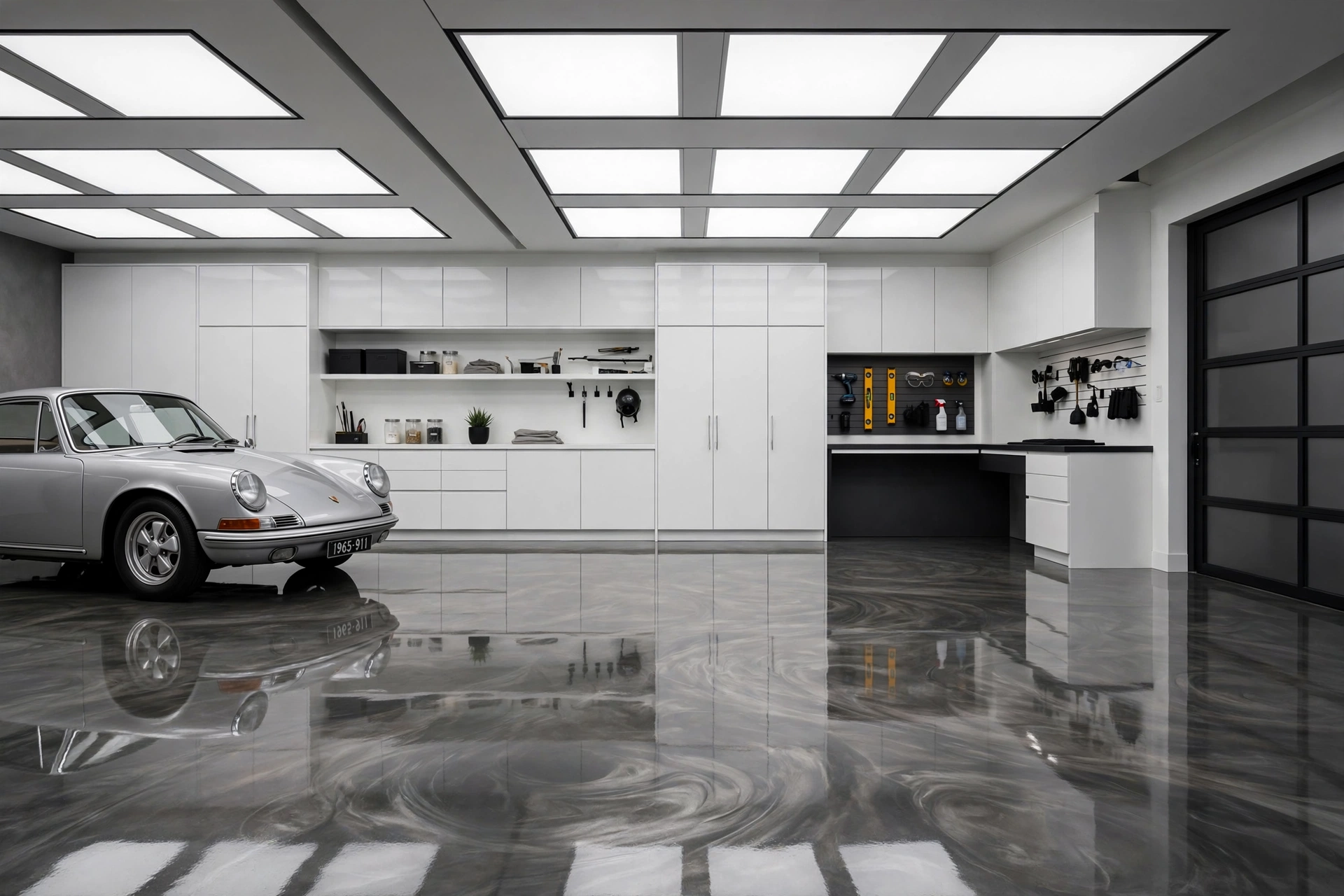
15. Swirl Metallic Epoxy for a Marble Look

Metallic epoxy is the showstopper of garage floors. Pigments swirled through clear epoxy create flowing, marble-like patterns with real three-dimensional depth.
Every pour is unique, and the glossy finish reflects light beautifully. Guests will assume you hired an artist, and honestly, you kind of become one.
This is an advanced DIY project. Work in small sections, keep a wet edge, and have a helper mix while you pour. The results are worth the learning curve.
Pro tip: Practice your swirl technique on a scrap board first. Make the exterior match the interior with our garage exterior ideas.
16. Add Glow-in-the-Dark Safety Striping

Glow-in-the-dark striping is equal parts practical and cool. Photoluminescent tape or paint charges in daylight and glows for hours after dark.
Mark parking guides, walkways, and step edges so nobody trips during a nighttime power outage. It is cheap insurance with a futuristic look.
Apply it over your finished floor as a final layer. The glow effect works best on stripes at least two inches wide.
Pro tip: Place stripes where headlights hit them when you pull in for maximum charge. Elevate heavy gear safely with our garage lift ideas.
17. Install Drainage Tiles in Wet Zones
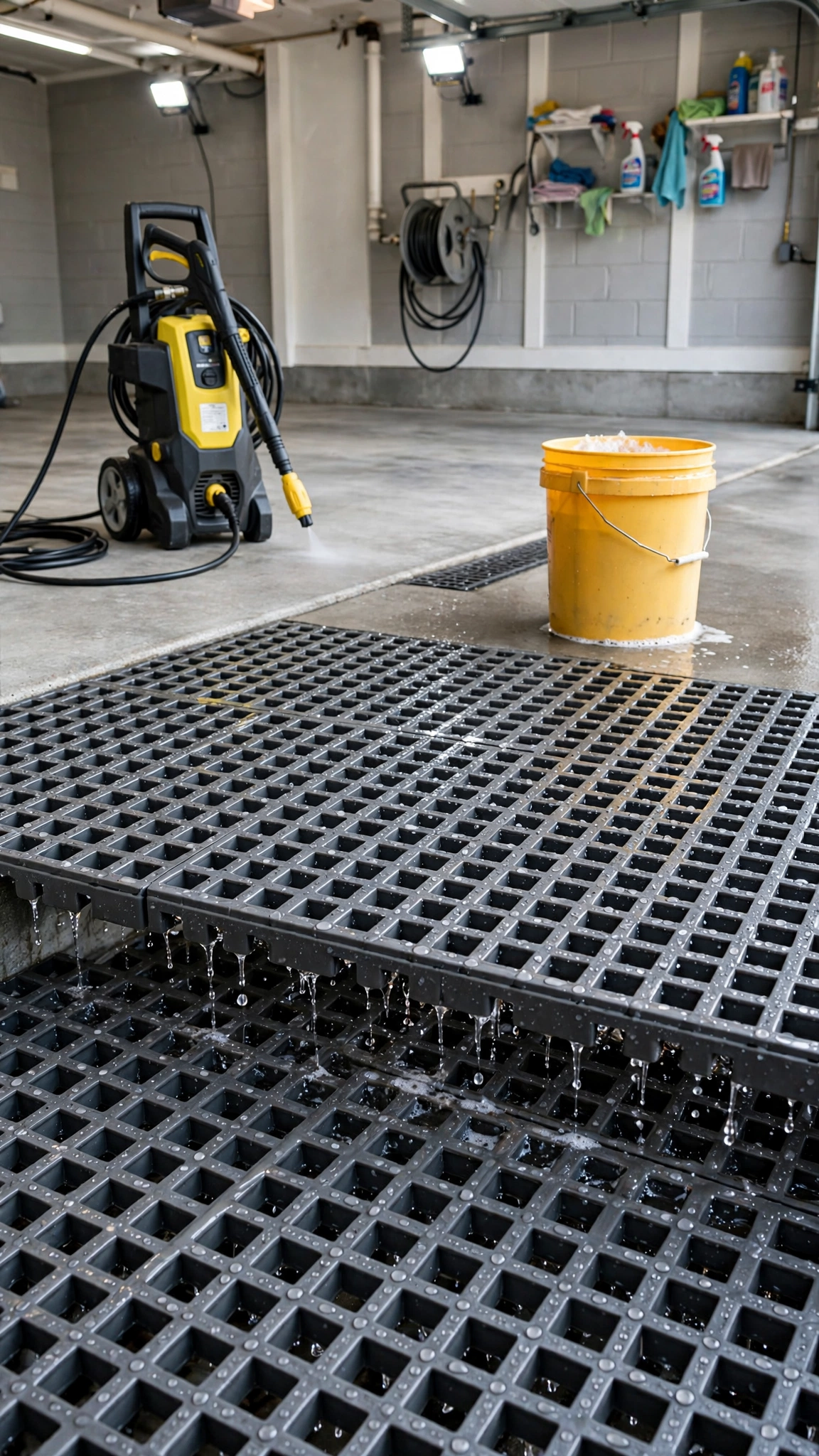
If you wash cars, bikes, or pets in the garage, drainage tiles are a game changer. The raised grid lets water flow through while you walk on a dry surface above.
They snap together like other interlocking tiles and lift out for easy cleaning underneath. No more slippery puddles or musty standing water.
Use them just in the wet zone rather than the whole garage to save money. A washing bay of drainage tiles framed by epoxy looks incredibly professional.
Pro tip: Slope is still your friend. Even with drainage tiles, keep the slab graded toward the door. Flooring on a budget? Read how to update flooring on a budget.
18. Finish With a Matte Protective Topcoat

Not everyone wants a mirror shine. A matte protective topcoat gives you all the stain resistance of a sealer with a soft, modern, non-reflective finish.
Matte finishes hide dust, footprints, and minor imperfections far better than gloss. They suit minimalist and Scandinavian-inspired garages perfectly.
Apply it as the final coat over stain, paint, or bare sealed concrete. Two thin coats with a microfiber applicator give the most even result.
Pro tip: Matte topcoats can be refreshed with a maintenance coat every few years without stripping. Learn pro installation tricks in how to install vinyl flooring.
Conclusion
From a hundred-dollar paint job to a jaw-dropping metallic epoxy pour, the right garage floor makeover changes how the entire room feels. Pick the idea that fits your budget, your skills, and how you actually use the space, then enjoy walking into a garage that feels completely new.