11 Inspiring Kitchen Floor Ideas That Give Your Kitchen a Designer Look
The floor is the largest surface in your kitchen, yet it is the one most people choose last. A beautiful kitchen floor does more than stand up to spills and foot traffic — it sets the tone for the entire room, grounding the cabinets, the counters, and the light in one cohesive look.
From warm herringbone wood to bold patterned tile, the right flooring can make a modest kitchen feel custom and expensive. Ready to find the floor that gives your kitchen a true designer look?
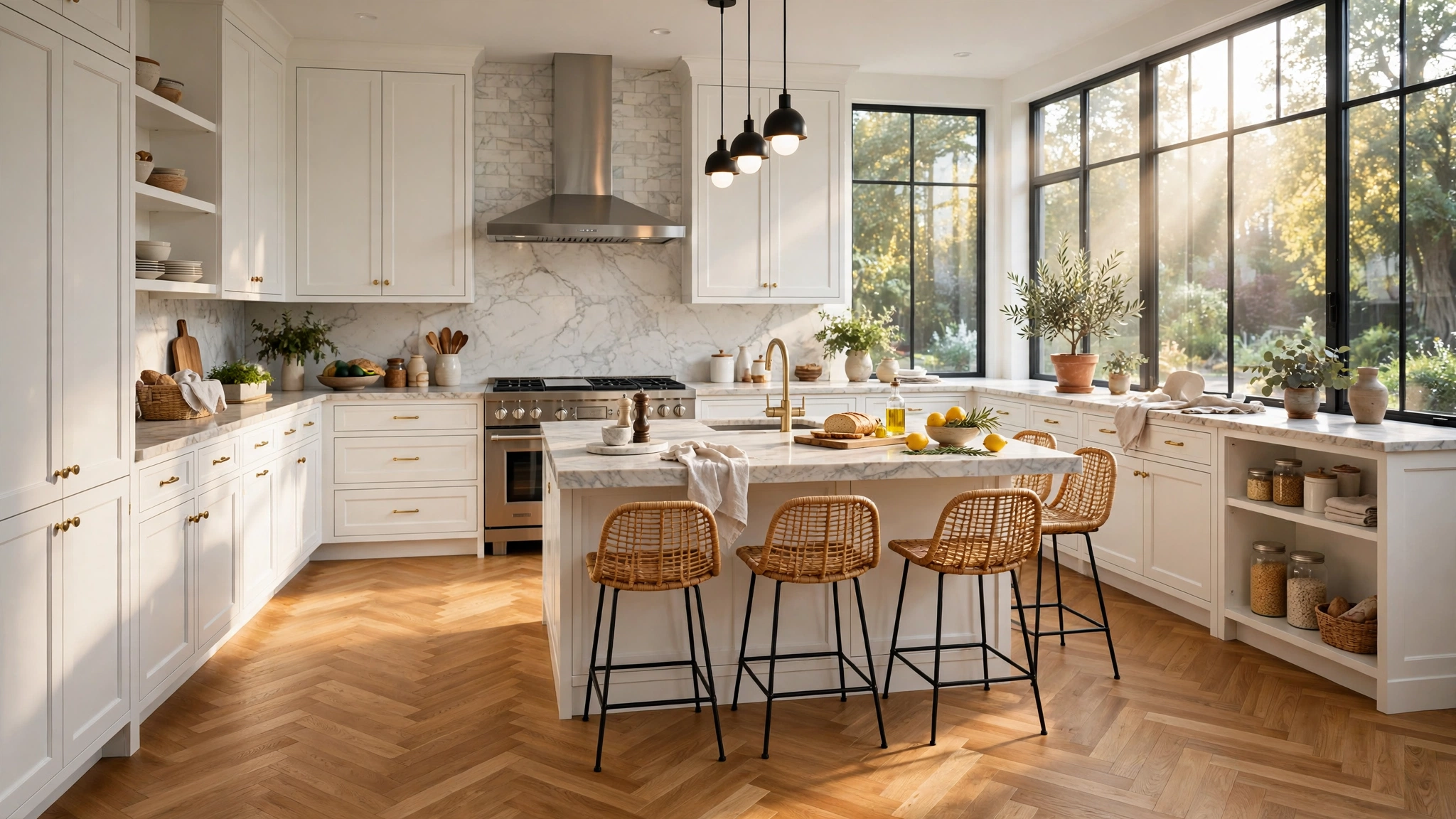
1. Lay Herringbone for Instant Character

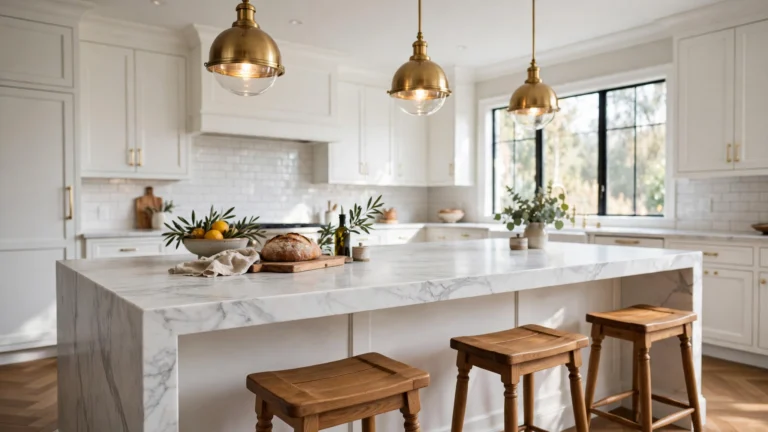
Herringbone is the pattern designers reach for when a kitchen needs instant character. The zigzag arrangement turns ordinary wood planks into a woven texture that catches the eye and makes the whole room feel considered.
It works in kitchens of every size because the diagonal movement draws the eye across the room, making narrow spaces feel wider and open plans feel more connected. Lighter oak tones keep the look airy, while walnut or smoked finishes add drama.
Expect to pay more for installation than straight planks, since herringbone takes extra cuts and patience. Engineered wood versions offer the same look with better moisture resistance, which matters in a hardworking kitchen.
Tip: Pair a herringbone floor with a threshold that flows into the next room, and take a cue from these stylish floor ideas that make a small space feel bigger to keep the transition seamless and open.
2. Choose Wide Planks for a Calm, Expensive Feel
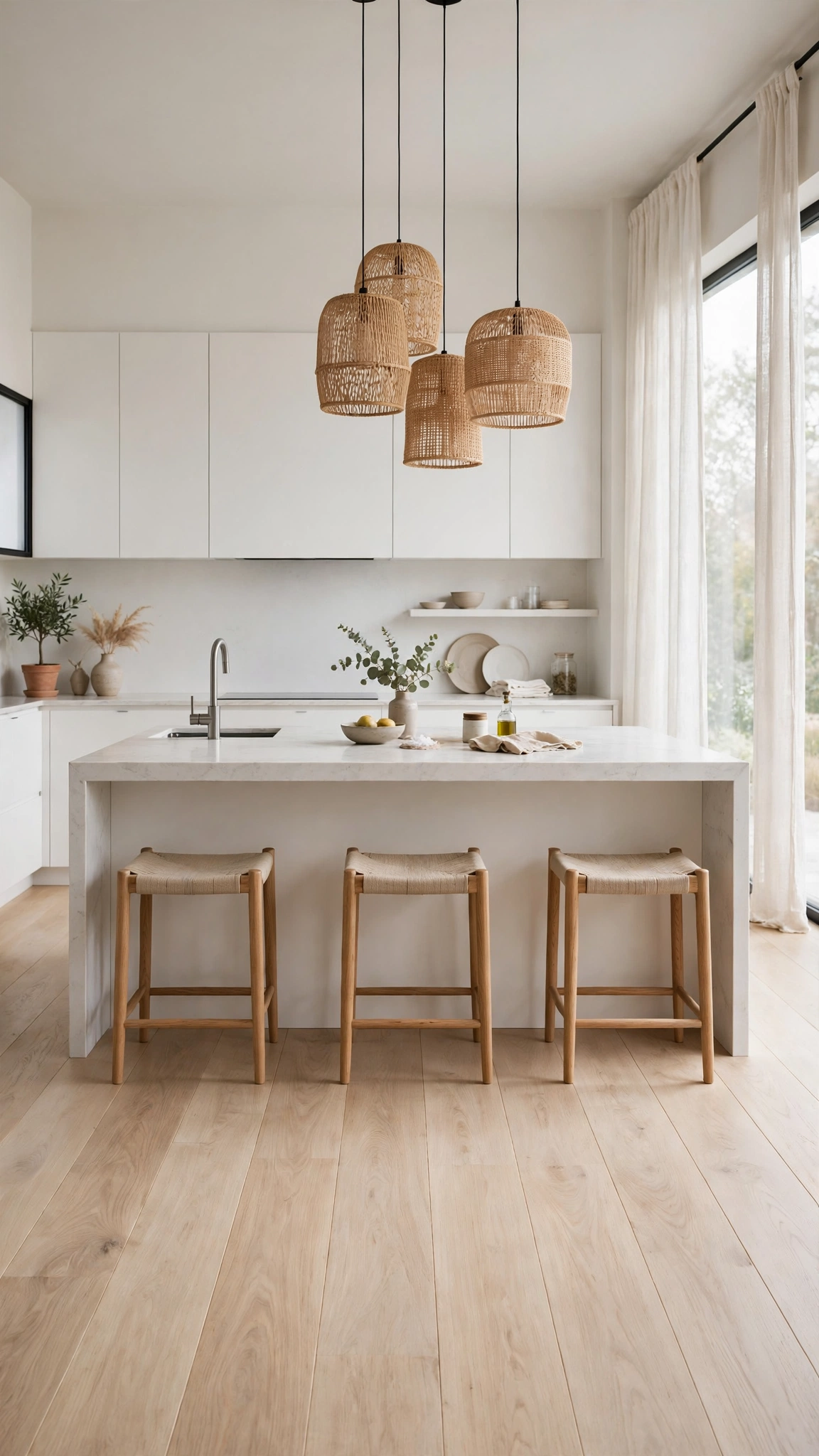
Wide planks are the quiet luxury of kitchen flooring. With fewer seams breaking up the surface, the floor reads as one continuous, calm plane — the same trick high-end homes use to make rooms feel larger and more serene.
Planks seven inches or wider work best in open kitchens, where the long lines can run uninterrupted. A matte finish keeps the look modern and hides everyday wear far better than a high gloss.
Engineered wide planks are a practical choice over solid wood in kitchens, since they handle humidity swings without cupping. Budget for a skilled installer, as wide boards show uneven subfloors more easily.
Tip: Run the planks in the direction of the longest wall to stretch the room visually, just as these small-space ideas that make a room feel bigger use long sightlines to open up tight spaces.
3. Make a Statement with Patterned Cement Tile

Patterned cement tile is jewelry for the kitchen floor. Each tile carries its own motif, and together they create a rug-like pattern that anchors the room without a single textile in sight.
This look shines in kitchens that need personality — a plain white kitchen instantly gains warmth and a story. Keep the rest of the palette quiet so the floor stays the star, and seal the tiles well since cement is naturally porous.
Cement tiles cost more than ceramic and need a confident installer, but a small area like a galley or breakfast nook keeps the project affordable while delivering the full designer effect.
Tip: Treat the tile field like a rug by letting it stop at a clean border, and borrow the cozy layering logic of these patio set ideas that turn a small space into a cozy retreat for the seating zone above it.
4. Warm the Room with Terracotta
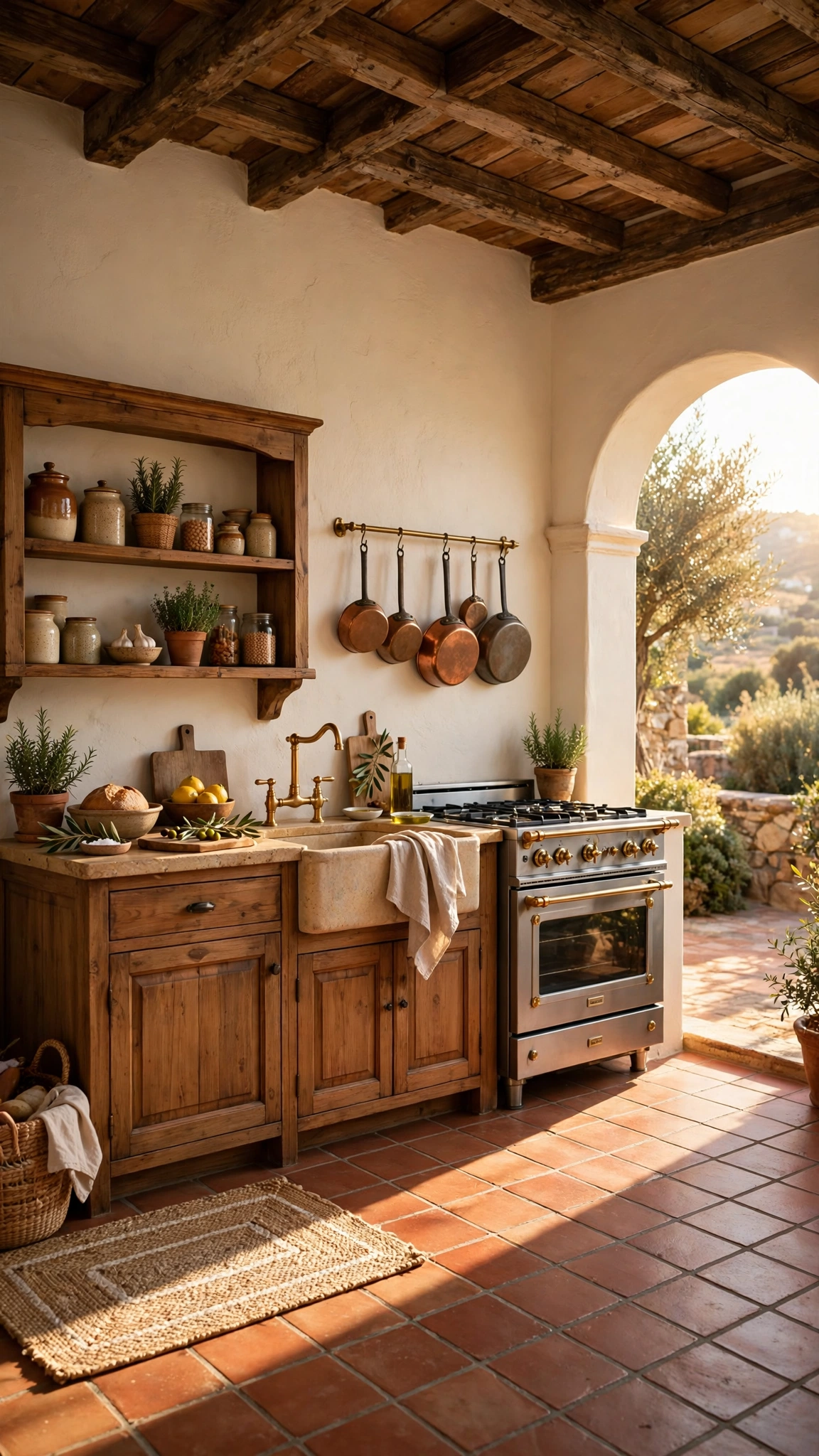
Terracotta brings instant warmth that no other material quite matches. Its sun-baked orange tones make a kitchen feel welcoming and lived-in, especially alongside cream cabinets, wood beams, and brushed brass.
Because each tile varies slightly in color, the floor has a handmade quality that reads as expensive even in a simple layout. It pairs beautifully with both rustic farmhouse kitchens and sleek modern ones softened by natural textures.
Seal terracotta tiles on installation and reseal every few years to protect against stains. The material is forgiving underfoot and ages gracefully, developing a patina that only adds to its charm.
Tip: Let the warm floor set the palette and keep walls pale, and echo the earthy, plant-filled warmth of these plant wall ideas that turn a small space into a cozy retreat with a few potted herbs nearby.
5. Go Bold with Checkerboard

Checkerboard is a classic that never really leaves the designer playbook. The alternating squares give a kitchen instant graphic punch and a sense of order that flatters both vintage and contemporary cabinets.
Black and white is the timeless pairing, but softer combinations — cream with sage, or charcoal with warm gray — deliver the same structure with a gentler feel. Larger squares suit big kitchens, while smaller ones add detail to compact spaces.
Porcelain checkerboard tiles are the practical pick: they resist stains, need almost no maintenance, and cost far less than marble while looking nearly identical from standing height.
Tip: Keep the checkerboard crisp by choosing a grout color that matches one of the squares, and frame the look with seating as inviting as these stylish seat ideas for a beautiful small-space escape.
6. Try Large-Format Stone-Look Porcelain
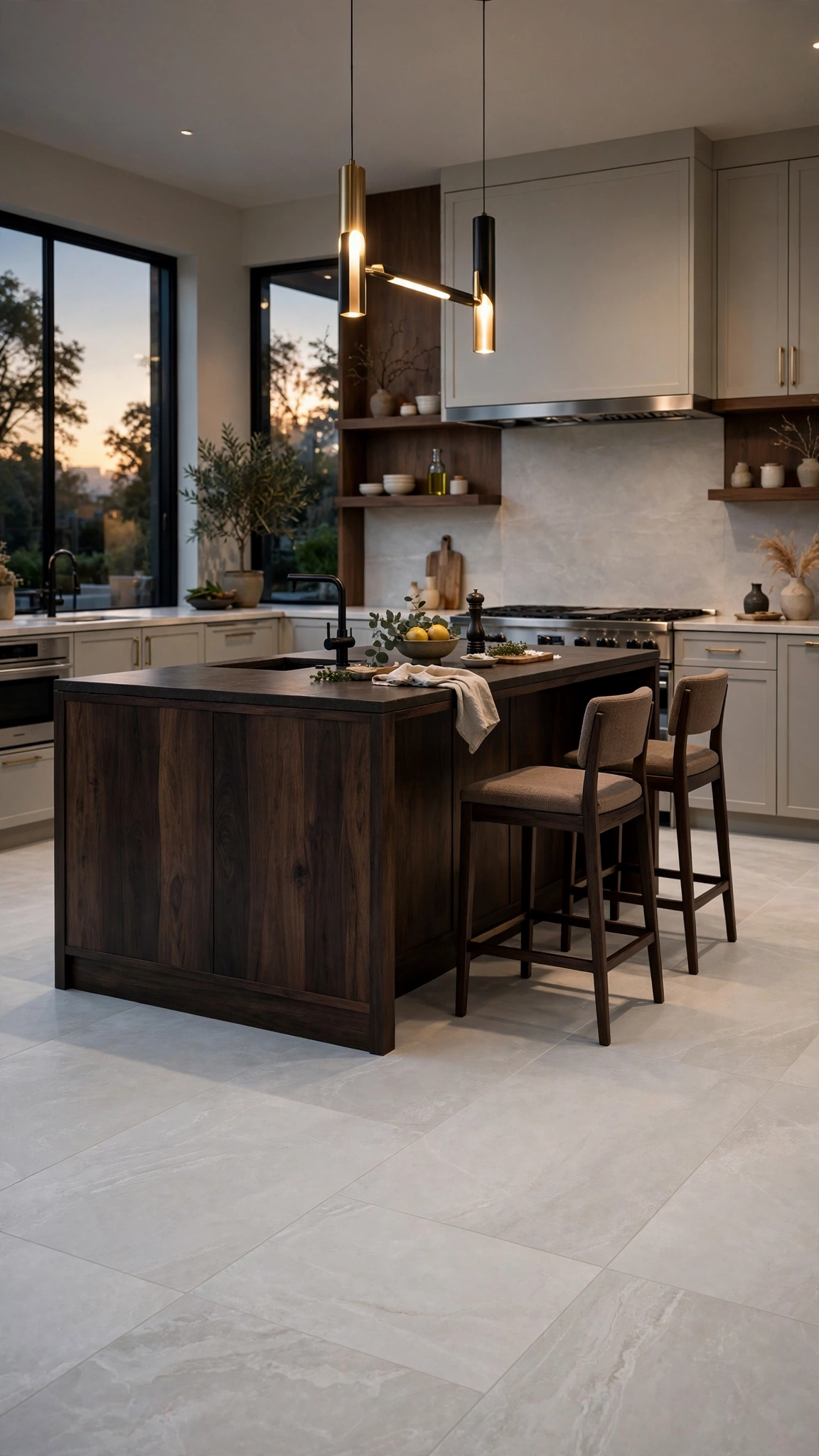
Large-format porcelain that mimics natural stone gives you the drama of marble or limestone without the maintenance anxiety. Tiles up to 24 by 48 inches mean fewer grout lines, so the floor looks almost seamless.
The stone look adds a cool, polished backdrop that makes wood cabinets and brass hardware pop. It is also one of the most durable choices available — nearly impervious to stains, scratches, and water.
Because the tiles are heavy and large, professional installation is worth it, and a level subfloor is essential. The payoff is a floor that looks like a luxury hotel kitchen for a fraction of the stone price.
Tip: Choose a rectified edge so grout lines stay hairline-thin, and plan the layout so the tile field reads as calmly as these creative set ideas for a beautiful small-space escape keep a compact area feeling uncluttered.
7. Add Warmth with Wood-Look Tile
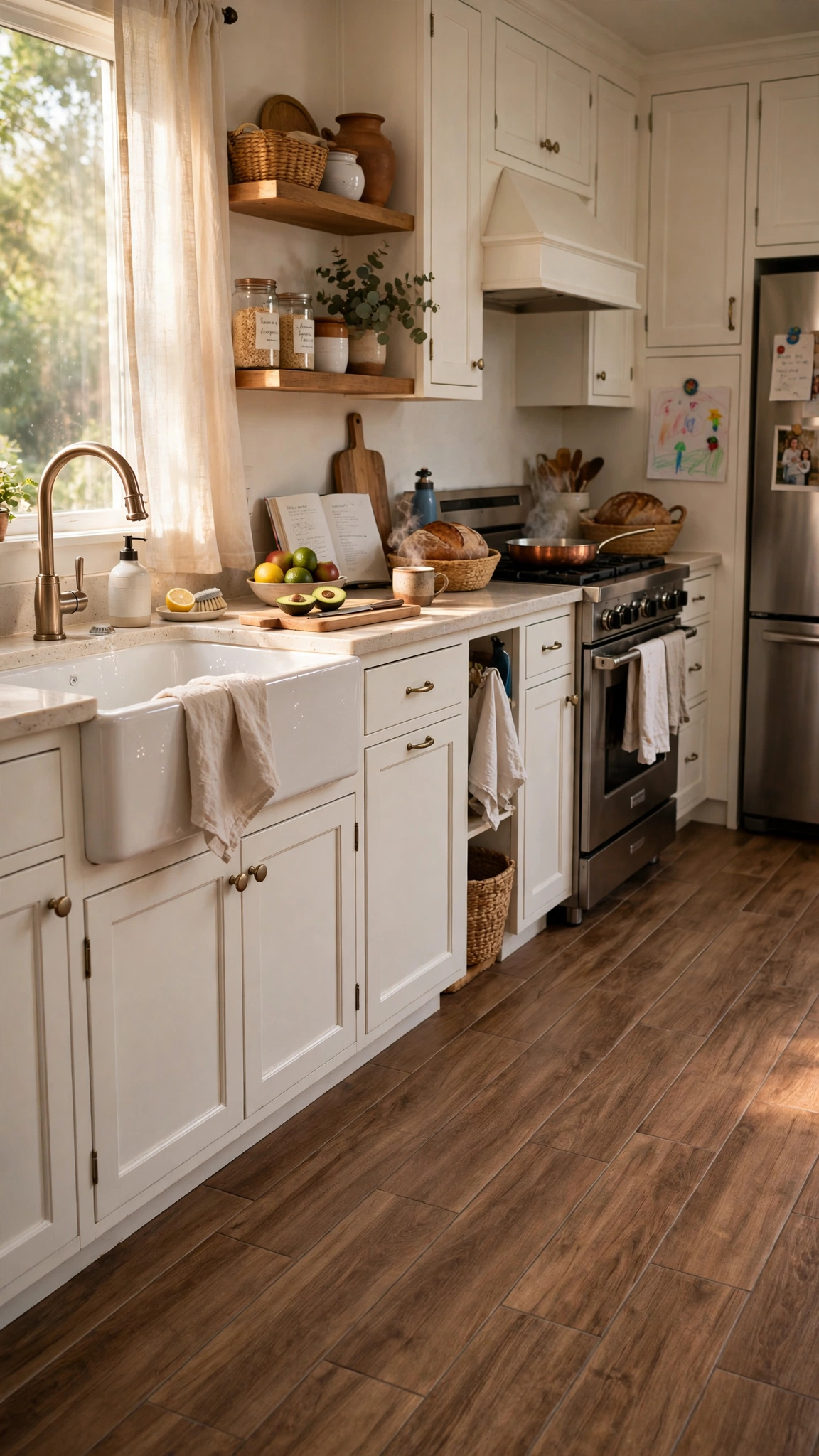
Wood-look tile is the best of both worlds: the warmth and grain of timber with the waterproof toughness of porcelain. In a kitchen, where real wood worries about every spill, that combination is hard to beat.
Modern printing makes the grain remarkably convincing, especially in matte finishes with varied plank tones. It suits farmhouse, transitional, and even Scandinavian kitchens, and it never needs refinishing.
Installation costs are similar to other tile, and the floor will outlast most other finishes in the house. Choose a grout color close to the plank tone so the seams disappear into the wood effect.
Tip: Soften the tile’s cool feel underfoot with a washable runner at the sink, and carry the natural warmth onto the threshold with ideas like these stylish door ideas for a beautiful small-space escape that blur indoor and outdoor living.
8. Brighten a Small Kitchen with Pale Concrete
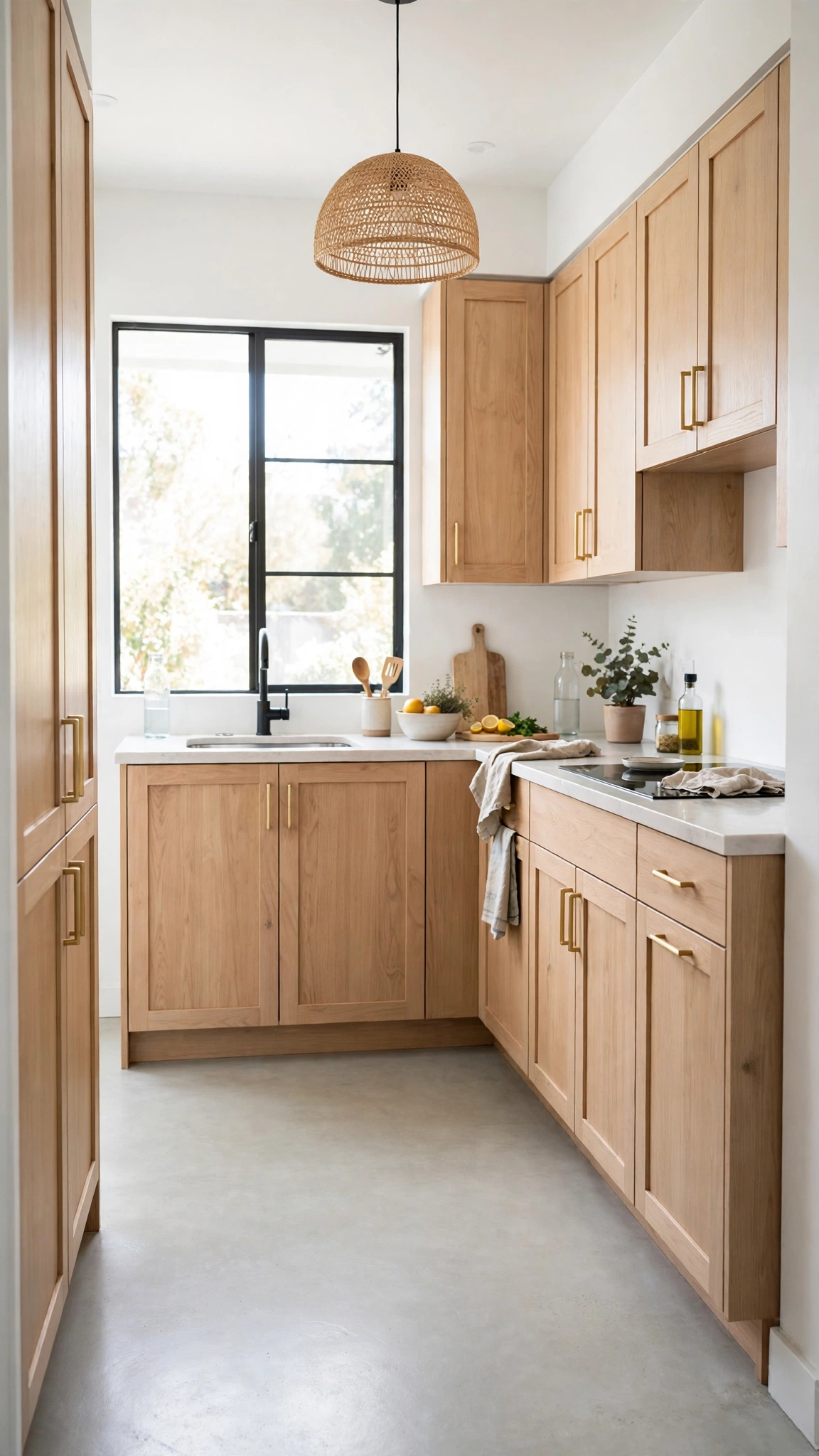
Pale polished concrete is a designer favorite for small kitchens because it reflects light and erases visual boundaries. The floor becomes a quiet, continuous surface that makes the whole room feel larger.
Its subtle mottling adds just enough texture to keep the space from feeling flat, and it pairs effortlessly with wood, white, and black accents. Radiant heating underneath turns it from cool to cozy in colder months.
Polished concrete is affordable when the slab is already there, though grinding and sealing a new pour adds cost. It is nearly indestructible and only gets better-looking with age.
Tip: Keep the palette light and let the floor do the brightening work, then add life overhead with greenery inspired by these hanging plant ideas that turn a small space into a cozy retreat.
9. Define Zones with a Tile Inlay Rug

A tile inlay rug is a permanent pattern set directly into the floor — a bordered medallion or geometric field that defines a zone the way an area rug would, without ever needing to be washed.
It works beautifully in open-plan kitchens, marking the dining area or the island zone while the surrounding floor stays neutral. The contrast makes the layout feel intentional and custom, like a detail from a boutique hotel.
Plan the inlay early, since it requires precise cutting and a steady hand. Using the same tile family in two tones keeps the look elegant rather than busy.
Tip: Let the inlay echo the room’s architecture — a square medallion under a square table — and keep the surrounding zones calm with the same restraint as these privacy screen ideas for a beautiful small-space escape use to define outdoor rooms.
10. Soften Hard Floors with Natural Fiber Runners

Even the most beautiful hard floor benefits from a little softness. A natural fiber runner along the work zone adds texture, cushions long cooking sessions, and introduces a layer of warmth that tile and stone alone cannot provide.
Jute, sisal, and wool blends are the go-to materials: they are durable, easy to shake out, and their neutral tones work with nearly any palette. A runner also protects high-traffic paths from wear.
Choose a low-profile weave so it sits flat and does not catch on shoes or chair legs, and add a non-slip pad underneath. Runners are inexpensive, so swapping them seasonally is an easy refresh.
Tip: Anchor the runner with a plant stand or stool at one end for a styled finish, borrowing the layered, lived-in feel of these plant stand ideas that make a small space feel bigger.
11. Grow the Look Outdoors with a Matching Threshold

The most polished kitchens do not stop at the back door. Extending the same flooring — or a close tonal match — across the threshold into an outdoor space makes both rooms feel larger and the whole home feel designed as one.
Wood-look porcelain and pale stone are ideal for this trick because outdoor-rated versions exist in the same colors. The continuous line pulls the eye outward and doubles the sense of space on sunny days.
Check slip ratings for the outdoor section and keep a single grout color across both zones for a truly seamless join. Even a small step-out patio benefits enormously from the visual connection.
Tip: Finish the transition with edible greenery just outside the door, taking inspiration from these vegetable garden ideas that turn a small space into a cozy retreat so the kitchen and garden feel like one living space.
Conclusion
Your kitchen floor works harder than any other surface in the house, and it deserves the same attention as the cabinets and counters. Whether you choose herringbone warmth, bold checkerboard, or a quiet pale stone, the right floor will ground the room, stretch the space, and give your kitchen that unmistakable designer finish.