13 Smart Garage Storage Ideas That Turn Clutter Into a Smart, Functional Setup

The garage is usually the hardest-working room in the house and the most neglected. Boxes pile up, tools disappear into corners, and before long you can barely walk from the car to the door. But a garage does not need a full renovation to feel smart and functional.
With the right storage ideas, every square foot starts working for you instead of against you. The trick is thinking in systems, not stuff. Ready to turn your cluttered garage into a smart, functional setup?
1. Zone the Garage Into Stations

The fastest way to bring order to a chaotic garage is to divide it into stations. Think of your garage like a kitchen: everything has a home based on how you use it. A tool station, a sports station, a garden station, and a car-care station.
Once each station has a boundary, clutter stops migrating. You always know where things belong and where to find them. Use floor tape, different wall colors, or rugs to mark the zones visually.
Start with just two or three zones if the whole garage feels overwhelming. Even a rough division makes the space feel instantly smarter and easier to maintain.
Pro tip: Map your zones on paper first, then mark them out — and if you need layout inspiration, these garage workshop layout ideas show how pros arrange functional stations.
2. Install Floor-to-Ceiling Cabinet Walls

Nothing hides clutter like closed cabinets. A full wall of floor-to-ceiling cabinets swallows boxes, chemicals, and random gear in one move, and the garage instantly looks calm. Go tall rather than wide to use every vertical inch.
Choose cabinets with adjustable shelves so they adapt as your storage needs change. Lockable doors are a bonus if you keep tools or hazardous materials inside. Light colors keep the garage feeling open instead of cave-like.
This is one of the highest-impact upgrades you can make. Even a single cabinet wall along the back of the garage changes how the whole room feels.
Pro tip: Measure twice before buying — and browse these garage cabinet ideas to find the right style and configuration for your space.
3. Add Open Shelving for Everyday Gear
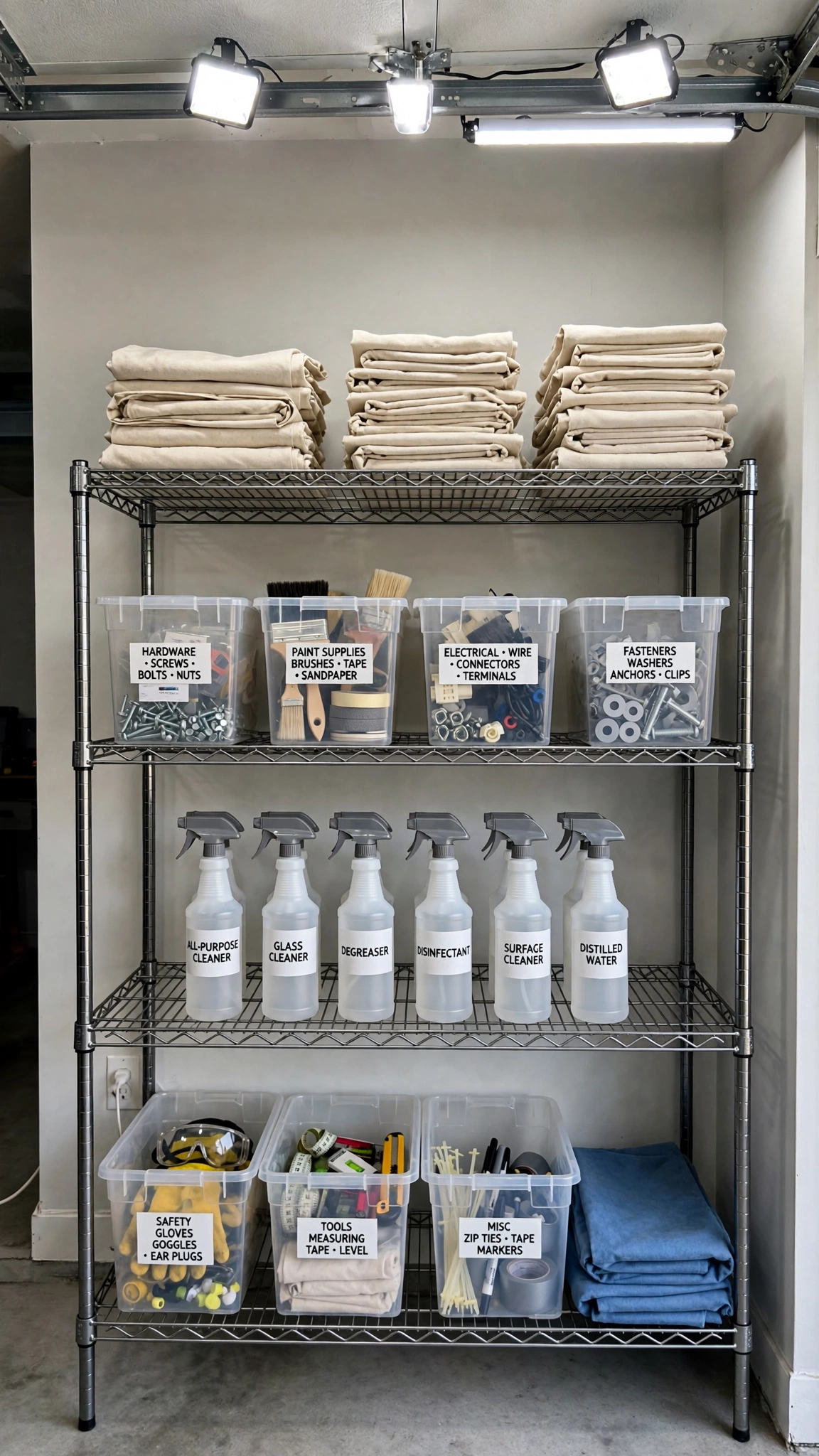
Open shelving is the opposite of cabinets: instead of hiding things, it makes the items you grab daily easy to see and reach. Cleaning supplies, car-care products, and project materials belong here. If you can see it, you will use it.
The key is discipline. Open shelves look smart only when every shelf has a purpose and a label. Use matching bins so the shelves read as one calm system instead of visual noise.
Heavy-duty metal shelving holds hundreds of pounds per shelf and costs far less than built-ins. Anchor tall units to the wall so they can never tip.
Pro tip: Stick to one bin color for a designer look — and see how far good shelving can go with these garage shelving ideas.
4. Mount a Slatwall for Tools
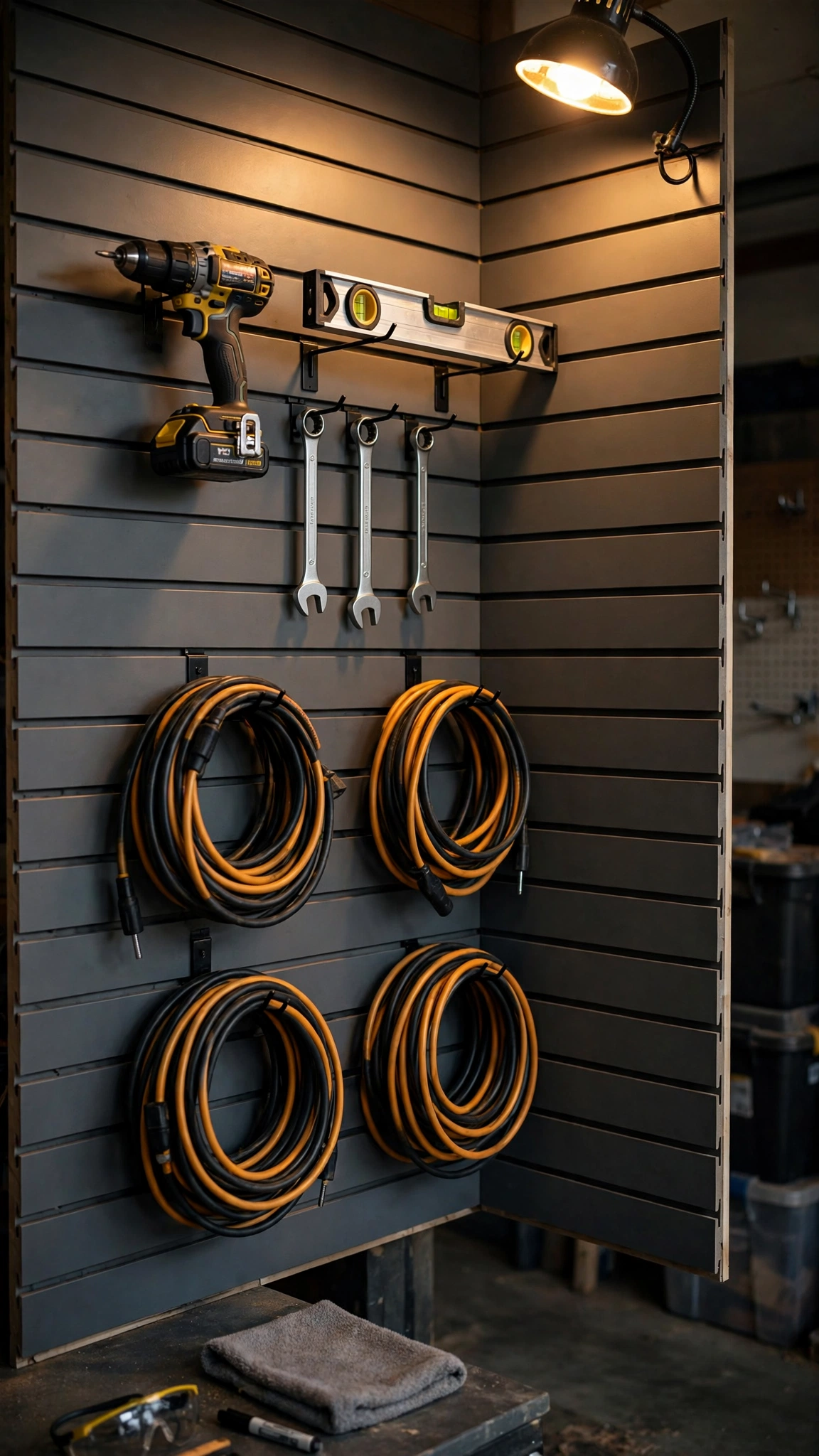
A slatwall turns a blank wall into a fully adjustable tool display. Hooks, baskets, and shelves slide into the grooves and rearrange in seconds as your tool collection changes. No more digging through drawers for the drill.
Group tools by task so everything for one job hangs together. Outline each tool’s spot with tape or paint so missing items are obvious at a glance. It looks sharp and saves real time.
Slatwall panels install over drywall or directly on studs, and a single 4×8 panel holds an entire basic tool set. It is one of the smartest small-space moves you can make.
Pro tip: Leave 20 percent of the slatwall empty for future tools — and get the full workshop picture from these garage workshop ideas.
5. Build a Drop Zone by the Door

Most garage mess starts at the door where shoes, jackets, and bags get dumped. A dedicated drop zone catches all of it. A bench with cubbies below and hooks above handles the whole family’s daily gear in four square feet.
Give every person one hook and one cubby so there is no excuse for floor piles. A washable rug underneath keeps dirt from spreading into the rest of the garage.
This tiny station has an outsized effect. When the entry stays clear, the whole garage feels cleaner and more functional.
Pro tip: Add a small trash bin and a shoe tray to complete the station — and see entry-style setups in these garage mudroom ideas.
6. Use Ceiling-Mounted Racks
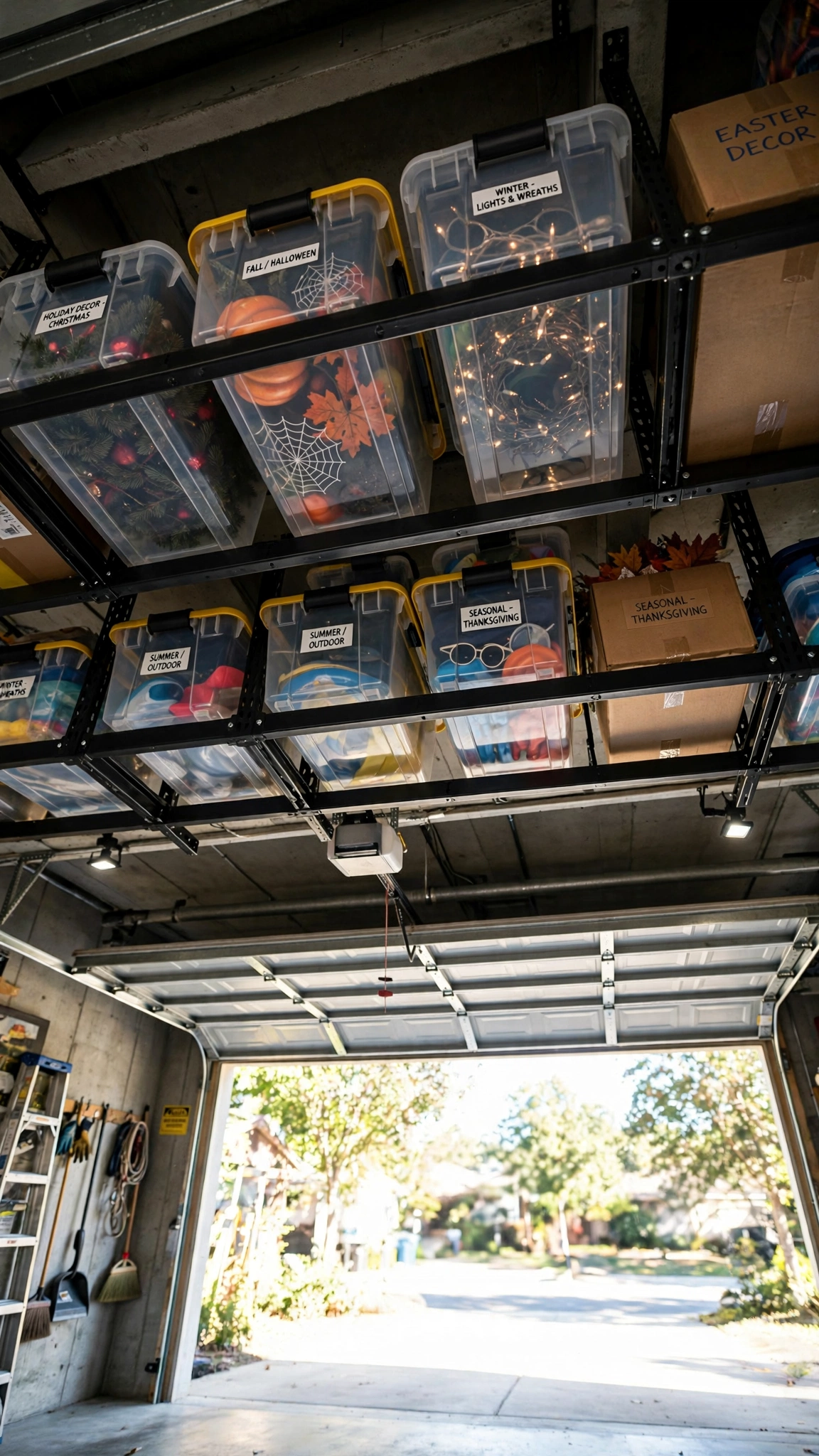
The ceiling is the most wasted space in most garages. Overhead racks bolt to the joists and hold seasonal bins, luggage, and rarely used gear completely off the floor. It is like adding a whole extra closet.
Keep a step stool nearby and store only lightweight, infrequently needed items up high. Clear bins with big labels mean you never have to guess what is overhead.
Most racks support several hundred pounds when mounted into joists properly. The floor space you free up is immediately noticeable.
Pro tip: Check your ceiling height before buying so the car still fits underneath — and pair this with more vertical wins from garage storage shelves ideas.
7. Create a Rolling Workbench Station

A rolling workbench gives you a project station that moves where you need it and tucks away when you do not. Lock the casters for rock-solid work, then roll it against the wall to reclaim parking space.
Look for a bench with deep drawers and a thick top that can take a beating. The drawers become your hardware library: screws, bits, and fasteners sorted and always within reach.
This one piece of furniture can replace a whole corner of scattered project clutter. Everything for making and fixing lives in one mobile unit.
Pro tip: Add a power strip to the side of the bench so tools plug in anywhere — and plan the full corner with these garage upgrade ideas.
8. Hang Bikes and Bulky Sports Gear
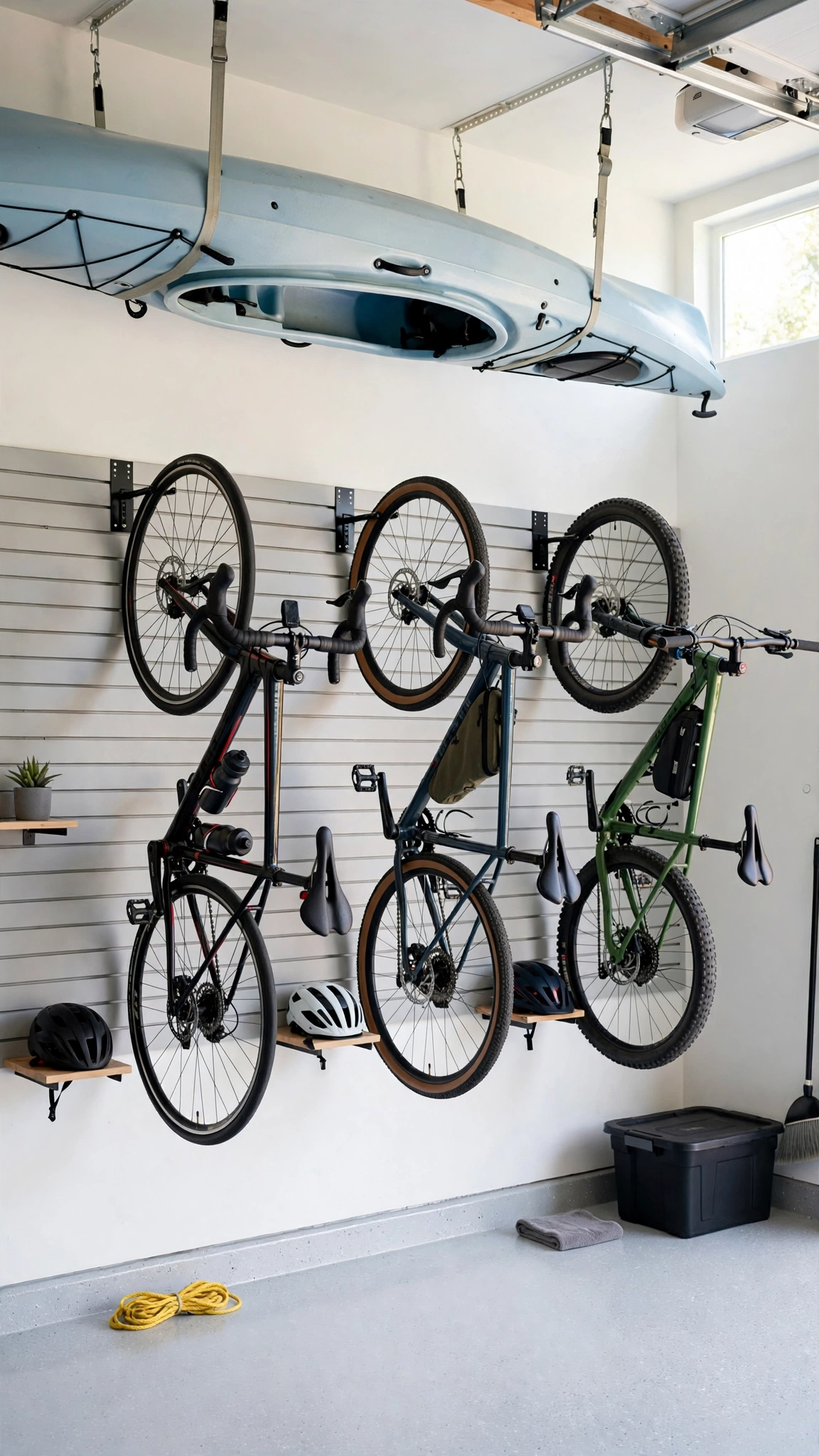
Bikes, kayaks, and skis eat floor space fast. Wall hooks and ceiling hoists lift them overhead where they are out of the way but still easy to grab. A bike that hangs on the wall takes up almost no room at all.
Vertical bike hooks are the simplest win: one stud, one hook, one bike. For heavier gear like kayaks, a pulley hoist lets one person lift and lower safely.
Group all the sports gear on one wall so it reads as an intentional sports station instead of scattered clutter. Helmets and pads go in a bin right below.
Pro tip: Hang bikes by the front wheel to fit more in less wall — and keep the active corner motivating with these garage gym design ideas.
9. Label Everything Ruthlessly
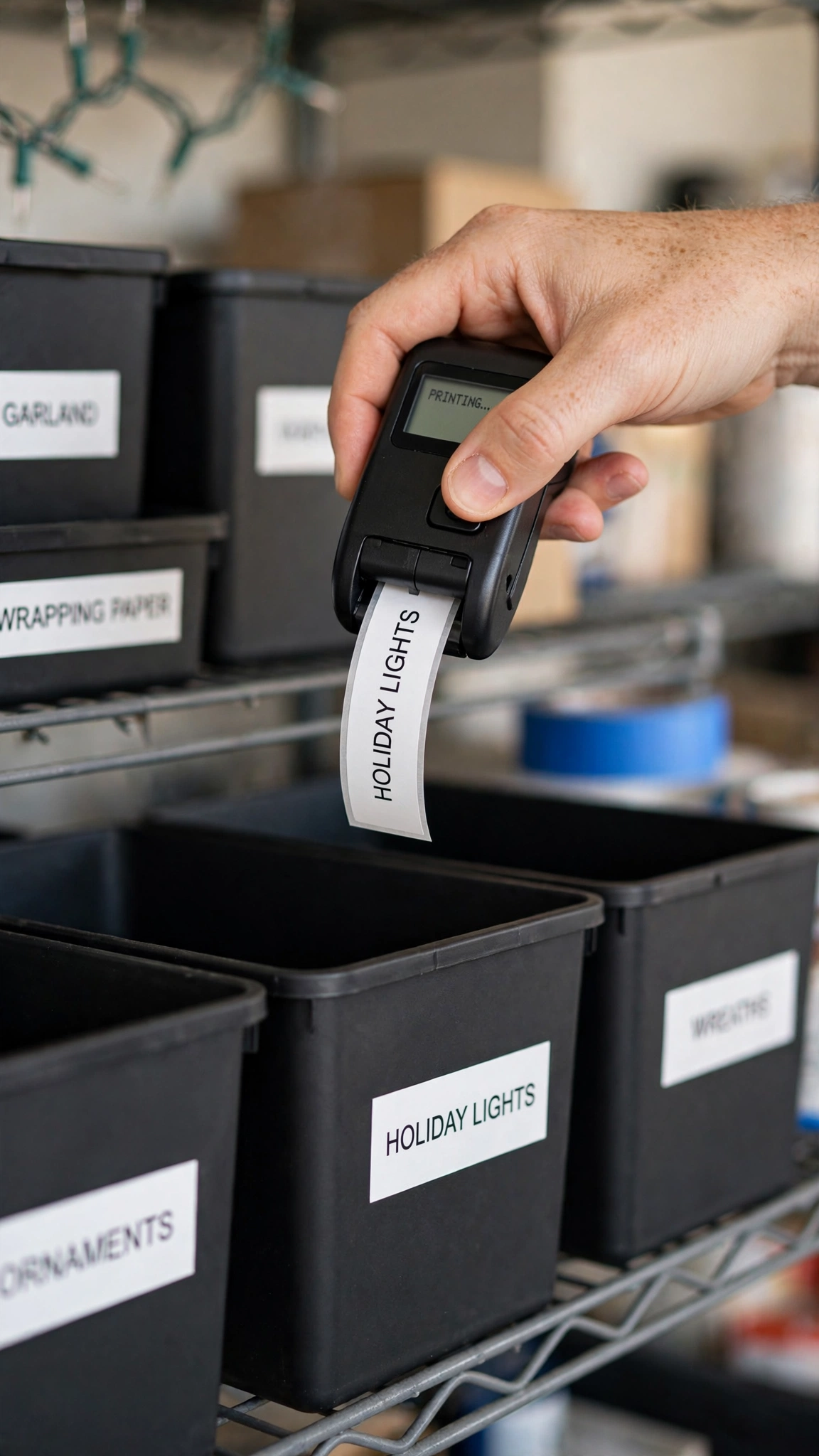
A storage system only works if everyone knows where things go. Labels are the cheapest, highest-impact upgrade in the garage. A label maker and an afternoon can transform mystery bins into a self-explanatory system.
Label the bin, the shelf, and the zone. Big, high-contrast text works best in garage lighting. When every container announces its contents, putting things back becomes automatic.
This is also what keeps the system alive long-term. New family members and future-you will thank present-you every single time.
Pro tip: Label the empty spot too, not just the bin — and see labeled systems in action in these garage interior design ideas.
10. Add Bright, Layered Lighting
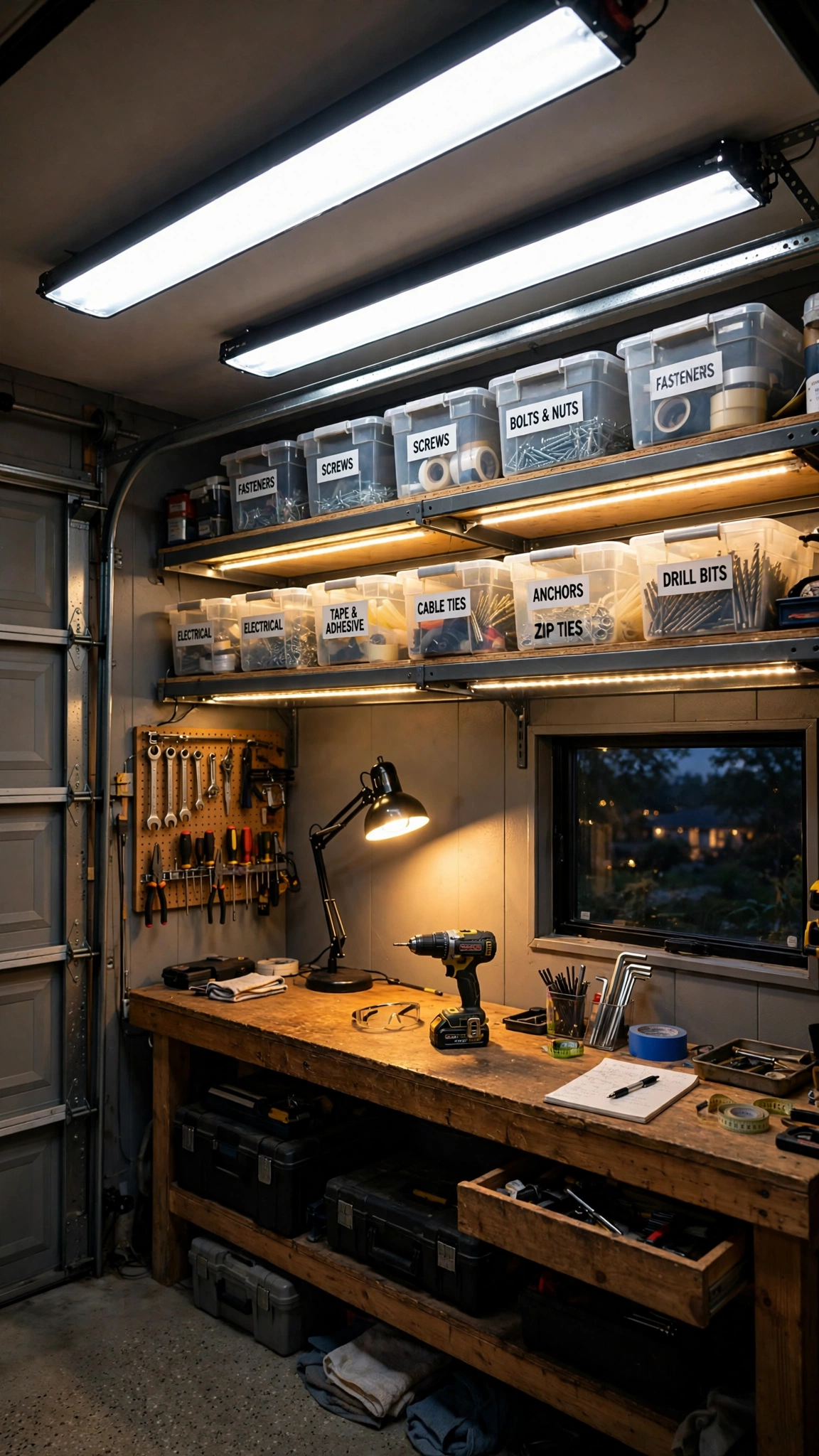
You cannot use what you cannot see. Dim garages hide clutter and make every task harder. Bright overhead LEDs plus task lighting at the bench turn a gloomy garage into a room you actually want to work in.
Layer the light: bright general lighting for the whole room, focused light at workstations, and small strip lights inside dark cabinets or under shelves. Motion sensors mean the lights are always on when you need them.
Good lighting also makes the garage feel bigger and cleaner, which makes it easier to keep it that way. It is a functional upgrade and a mood upgrade at once.
Pro tip: Choose daylight-temperature bulbs (5000K) for true colors — and get inspired by these garage lighting ideas.
11. Build a Garden and Outdoor Gear Corner
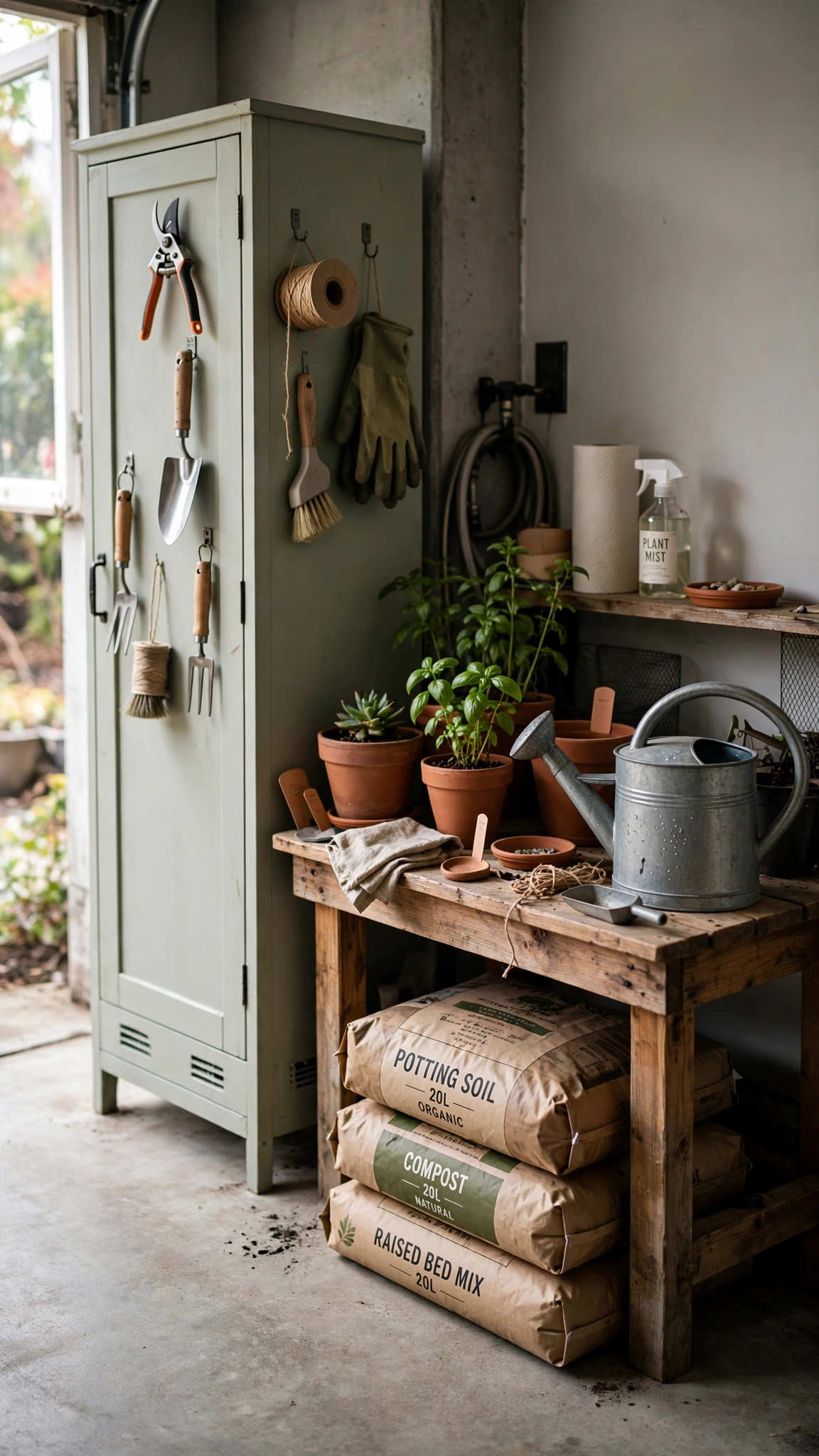
Garden tools, soil, and outdoor gear tend to sprawl across the garage because they have no home. Give them one dedicated corner with tall narrow storage and a small potting surface, and the sprawl stops.
Hang long-handled tools on the wall or inside a cabinet door so they never lean in corners. A small bench doubles as a potting station in spring and a project surface the rest of the year.
Keeping dirty garden supplies contained also keeps the rest of the garage cleaner. One corner, one system, zero drift.
Pro tip: Store soil and chemicals in sealed bins off the floor — and if the garage doubles as a utility room, see these garage laundry area ideas.
12. Finish the Walls for a Clean Backdrop
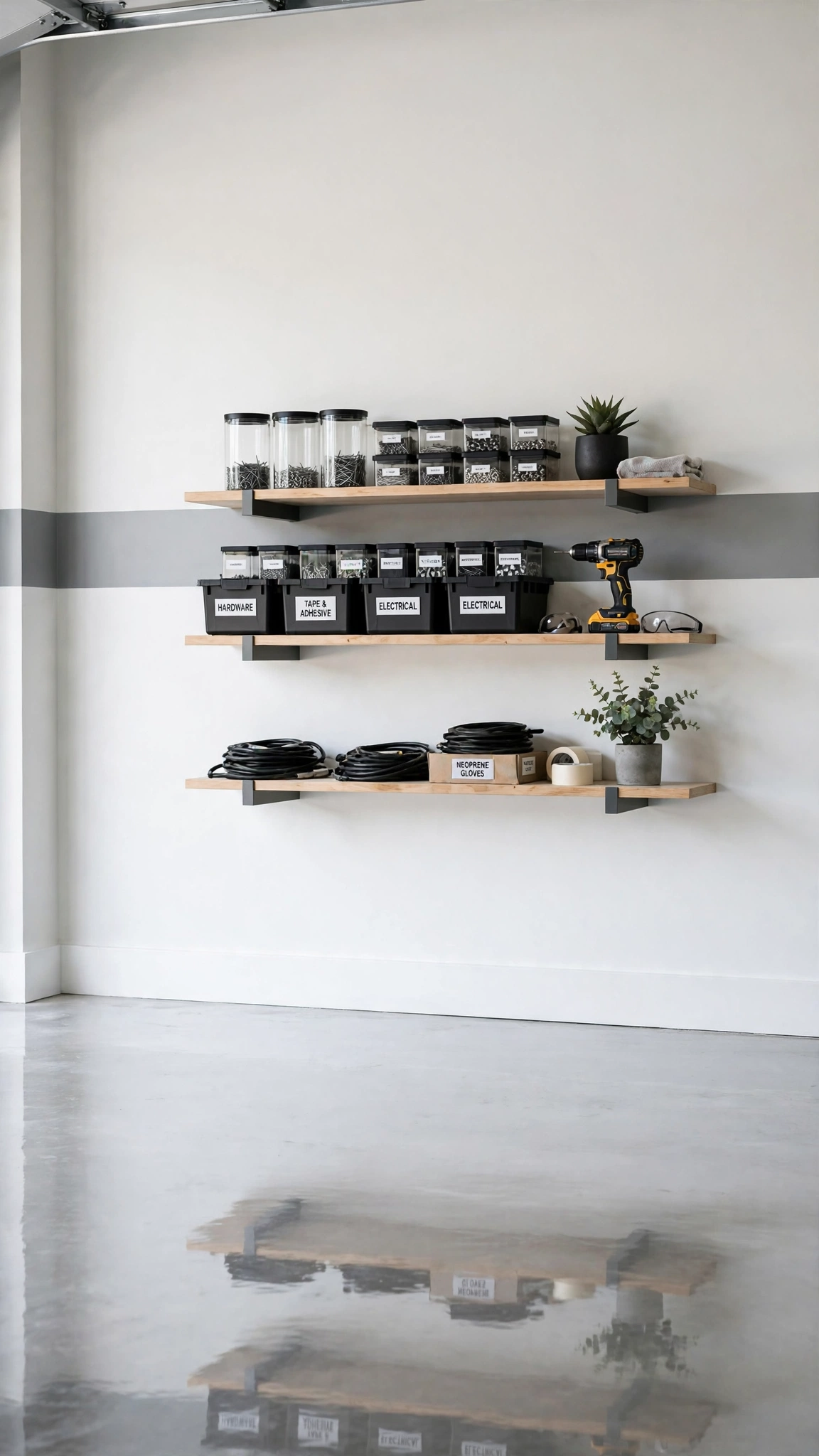
Bare studs and stained drywall make even organized storage look messy. A weekend of patching and painting gives every shelf and cabinet a clean backdrop, and the whole garage feels like a real room.
Light, wipeable paint is the smart choice: it bounces light around and shrugs off dust and scuffs. A darker accent wall behind the workbench hides wear where it happens most.
Finished walls also make future upgrades easier. Shelves, slatwall, and hooks all mount cleaner and hold better on a proper surface.
Pro tip: Use semi-gloss paint so walls wipe clean — and see the difference walls make in these garage interior wall ideas.
13. Schedule a Twice-Yearly Reset

Even the smartest system drifts over time. A twice-yearly reset — spring and fall — keeps clutter from quietly taking over. Pull everything out, sweep, donate what you have not touched, and put the rest back in its labeled home.
The reset is also when you tune the system: move the most-used items to the easiest spots, retire broken tools, and adjust shelves for new gear. Thirty focused minutes twice a year beats a whole lost weekend.
Put it on the calendar like an appointment. A garage that gets reset stays smart and functional for years, not weeks.
Pro tip: Do the reset when seasons change so sports gear rotates naturally — and plan bigger refreshes with these garage renovation ideas.
Conclusion
A smart garage is not about buying more stuff — it is about giving everything you own a clear, labeled home. Start with one station or one wall, and let the system grow from there. Your future self will walk into a functional garage every single day.