12 Inspiring Kitchen Rug Ideas That Make Your Kitchen Look More Expensive
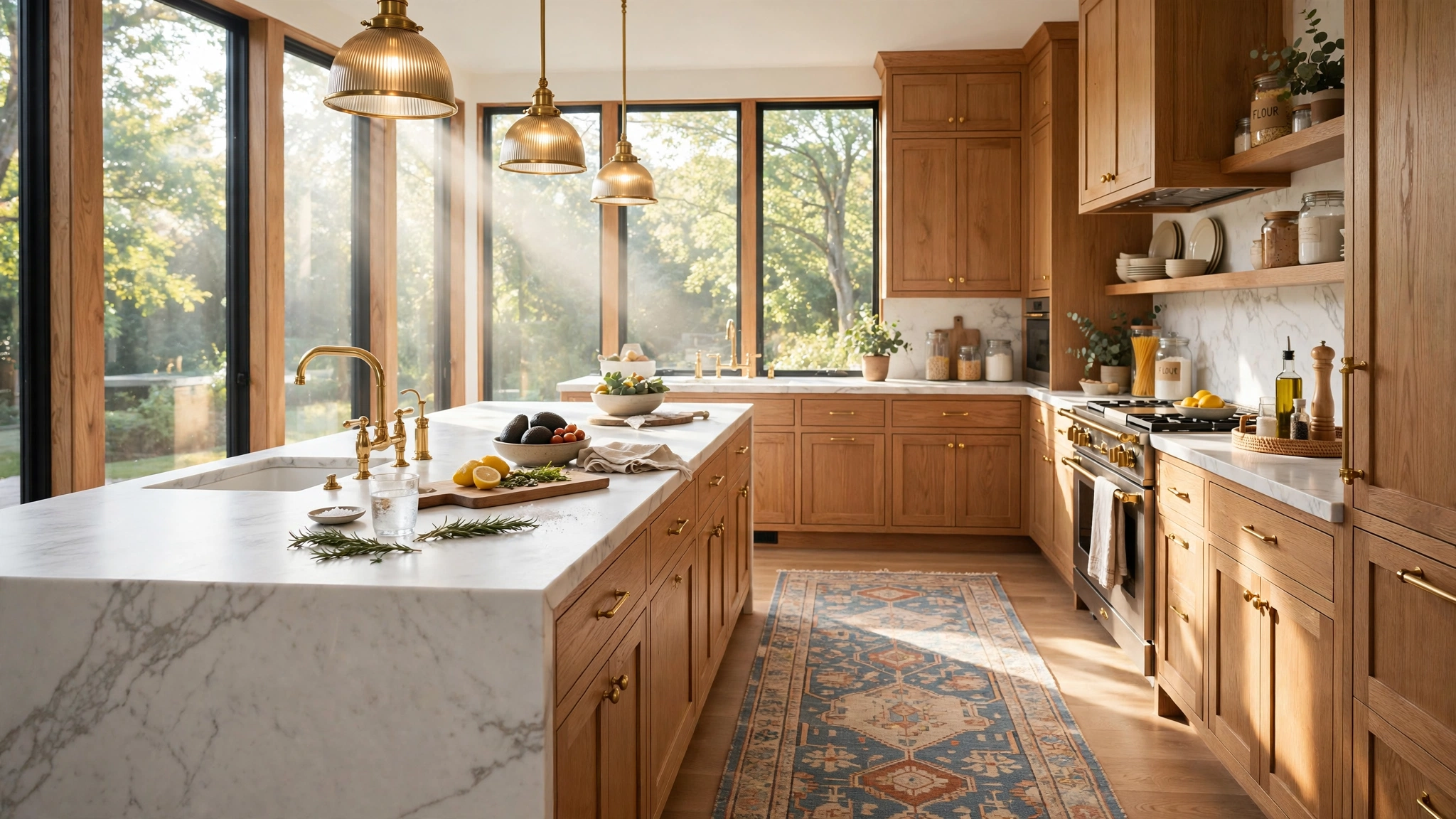
A kitchen rug might be the smallest change you make in the room, yet it has an outsized effect on how expensive the whole space feels. It softens hard floors, adds a layer of colour and texture, and instantly makes a working kitchen feel like a designed one.
The trick is choosing the right rug for the right spot, because a kitchen rug has to look beautiful and survive spills, steam, and daily foot traffic. Ready to find the one that makes your kitchen look far more expensive than it cost?
1. Layer a Runner Along the Work Zone
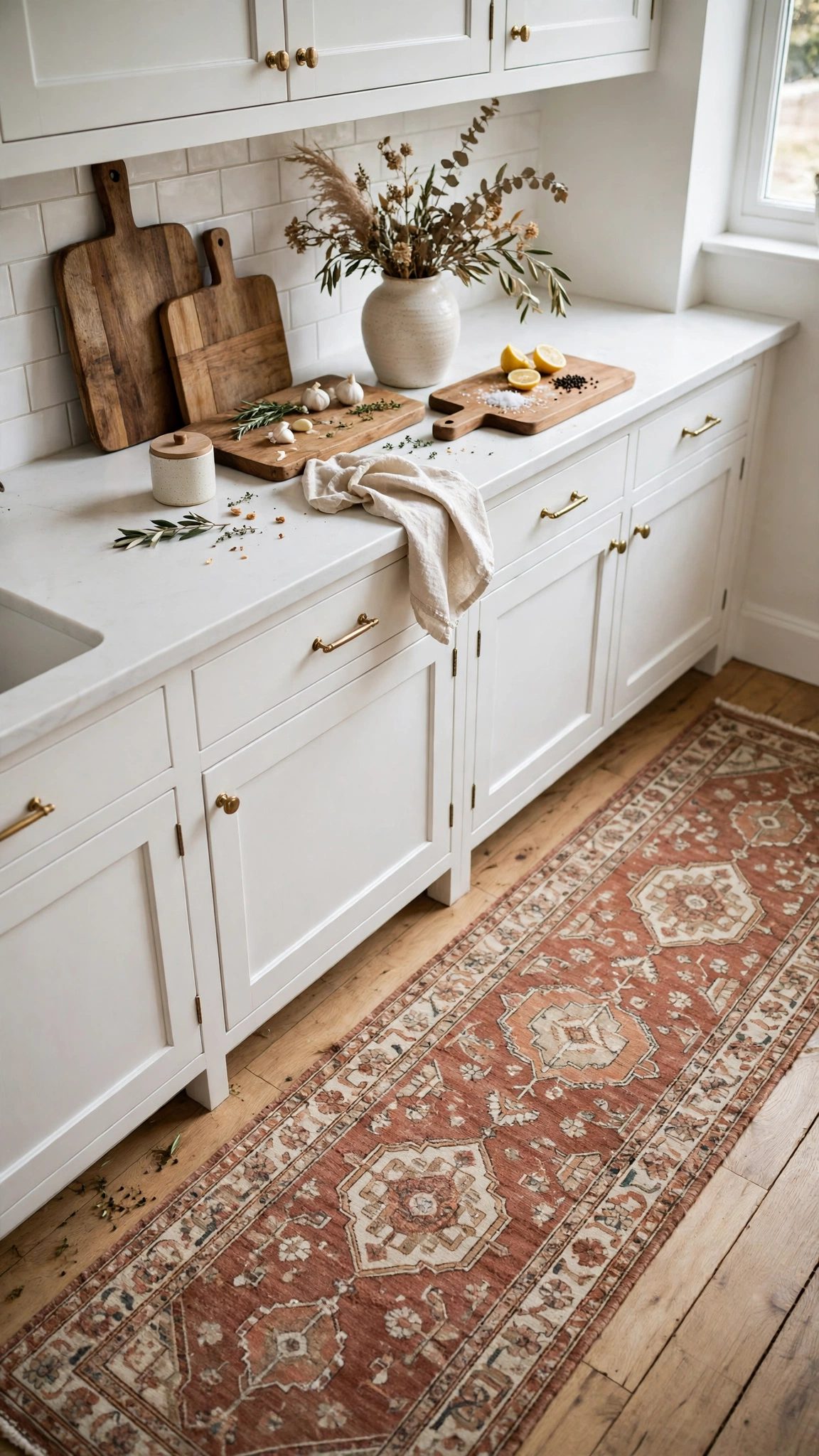
A runner placed along the main work counter is the single easiest way to make a kitchen feel intentional. It traces the path you walk every day and turns a plain stretch of floor into a designed feature.
Choose a runner that is long enough to cover the full length of the counter, leaving a few inches of bare floor at each end. Flatweave or low-pile styles work best here because they sit flat, do not bunch underfoot, and are easy to shake out.
Patterns in muted tones, like faded persian motifs or subtle stripes, add warmth without competing with your cabinets or backsplash. Expect to spend anywhere from a modest amount for a machine-washable runner to more for a hand-knotted piece.
Tip: Think of the runner as part of the room’s layout plan, just like planning a stunning workshop layout starts with mapping where you actually stand and work.
2. Anchor the Island with a Large Flatweave
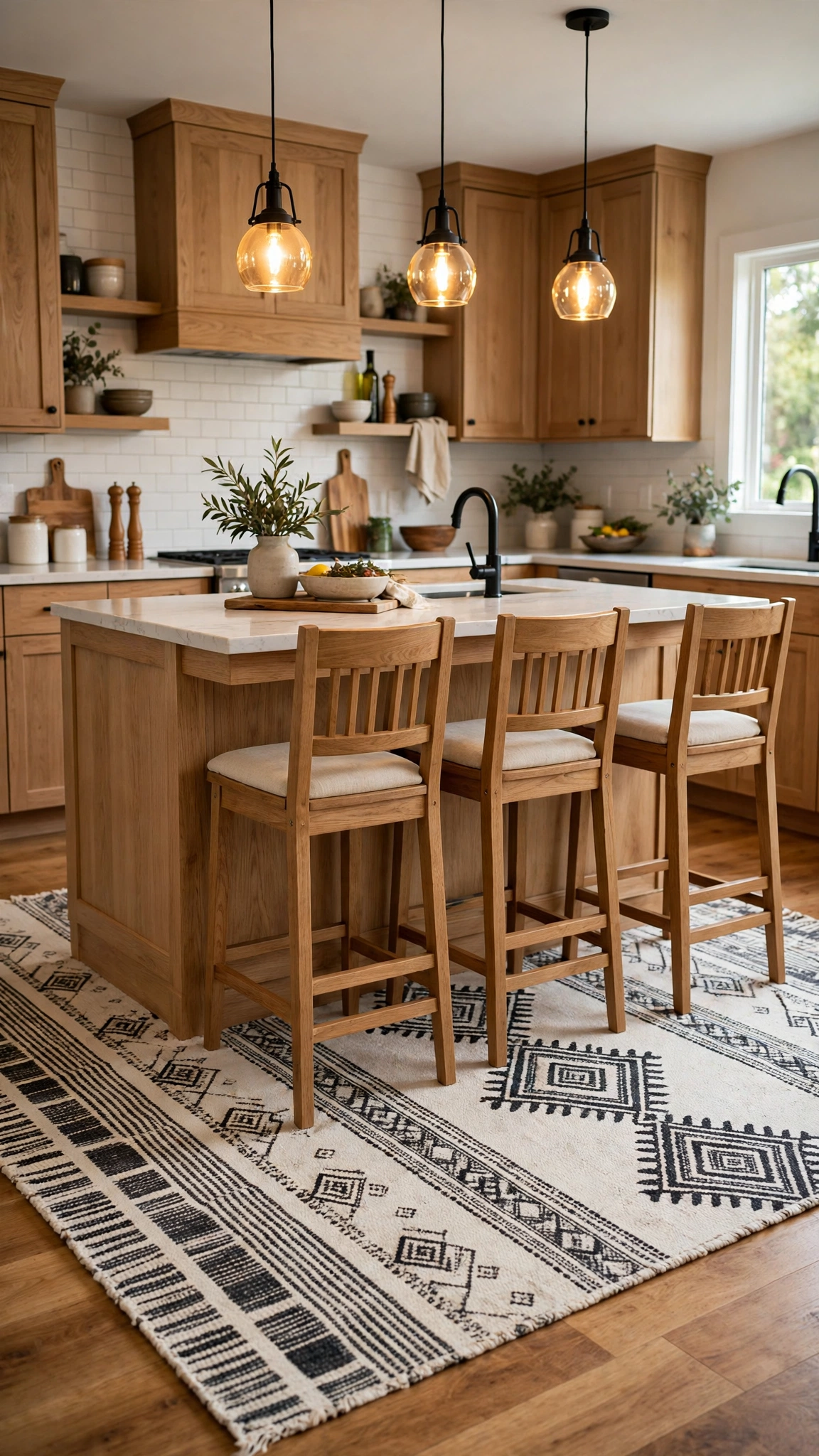
A large rug under or beside the island grounds the whole room. Without one, an island can feel like it is floating in the middle of hard flooring; with one, the seating area becomes a proper destination.
Pick a flatweave in a size that extends at least a foot beyond the stools on each side, so chairs stay on the rug when pulled out. Cotton and wool flatweaves are ideal because they are thin enough for stools to slide and sturdy enough for daily use.
Neutral bases with a woven border or a quiet geometric pattern suit almost any kitchen style, from farmhouse to modern. A rug pad underneath keeps everything in place and adds a touch of cushioning.
Tip: A well-anchored island rug does for a kitchen what a considered beautiful interior design does for any room: it pulls separate pieces into one cohesive whole.
3. Choose a Washable Rug for the Sink Zone
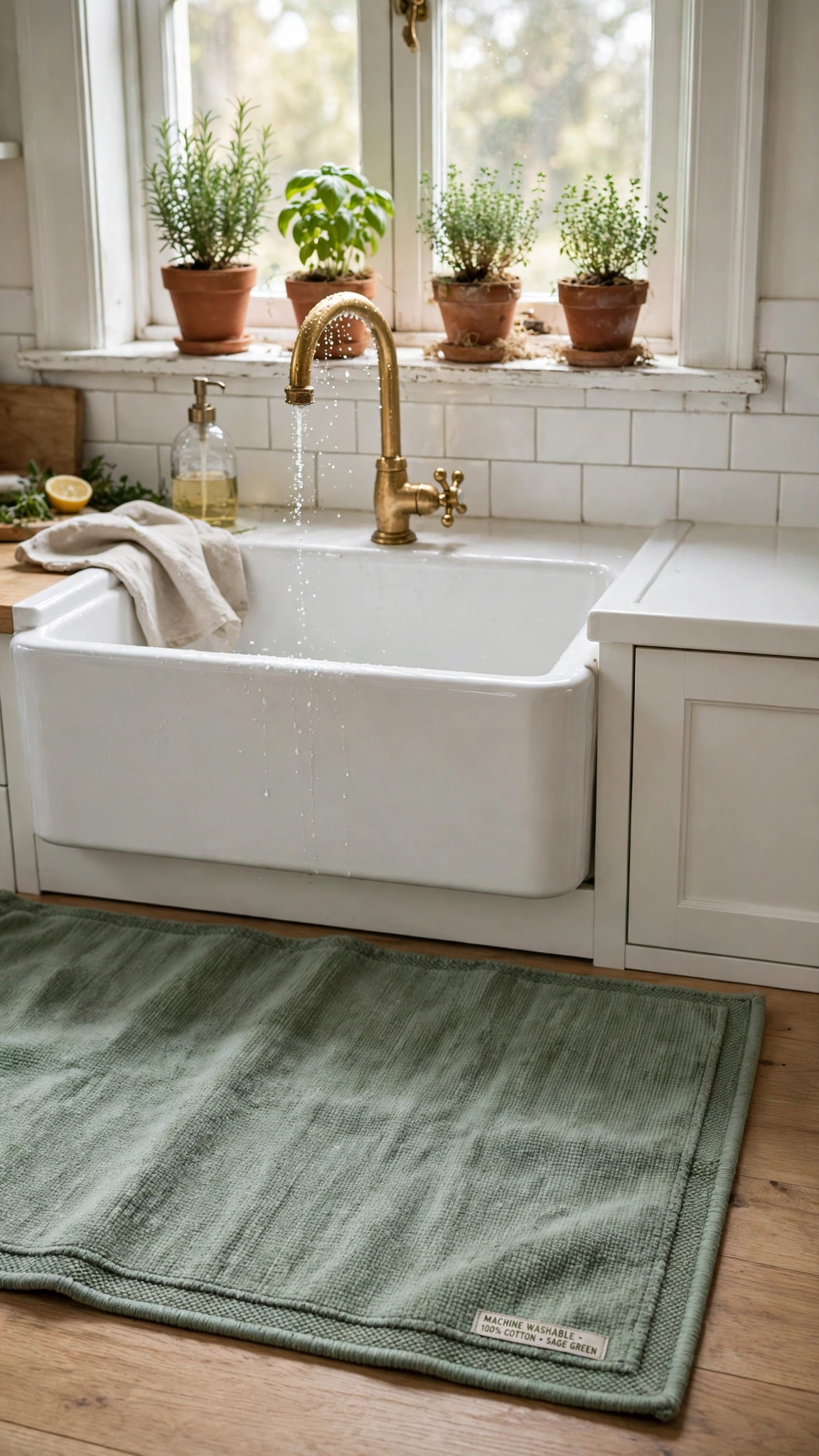
The sink is where most kitchen mess happens, so this is the one spot where practicality should win. A machine-washable rug lets you stop worrying about splashes and simply toss it in the wash when it needs refreshing.
Look for rugs labelled machine-washable with a non-slip backing, and size it to cover the full width of the sink base. Darker patterns or mid-tones are forgiving between washes, while still looking polished.
Washable rugs have come a long way from thin, plasticky mats. Today’s versions look like real woven rugs, with proper texture and pattern, at a fraction of the price of a wool piece.
Tip: Treat the sink rug like a workhorse textile and keep a spare, the same way a smart creative laundry area setup keeps everyday washing effortless rather than a chore.
4. Add a Vintage Rug for Instant Character
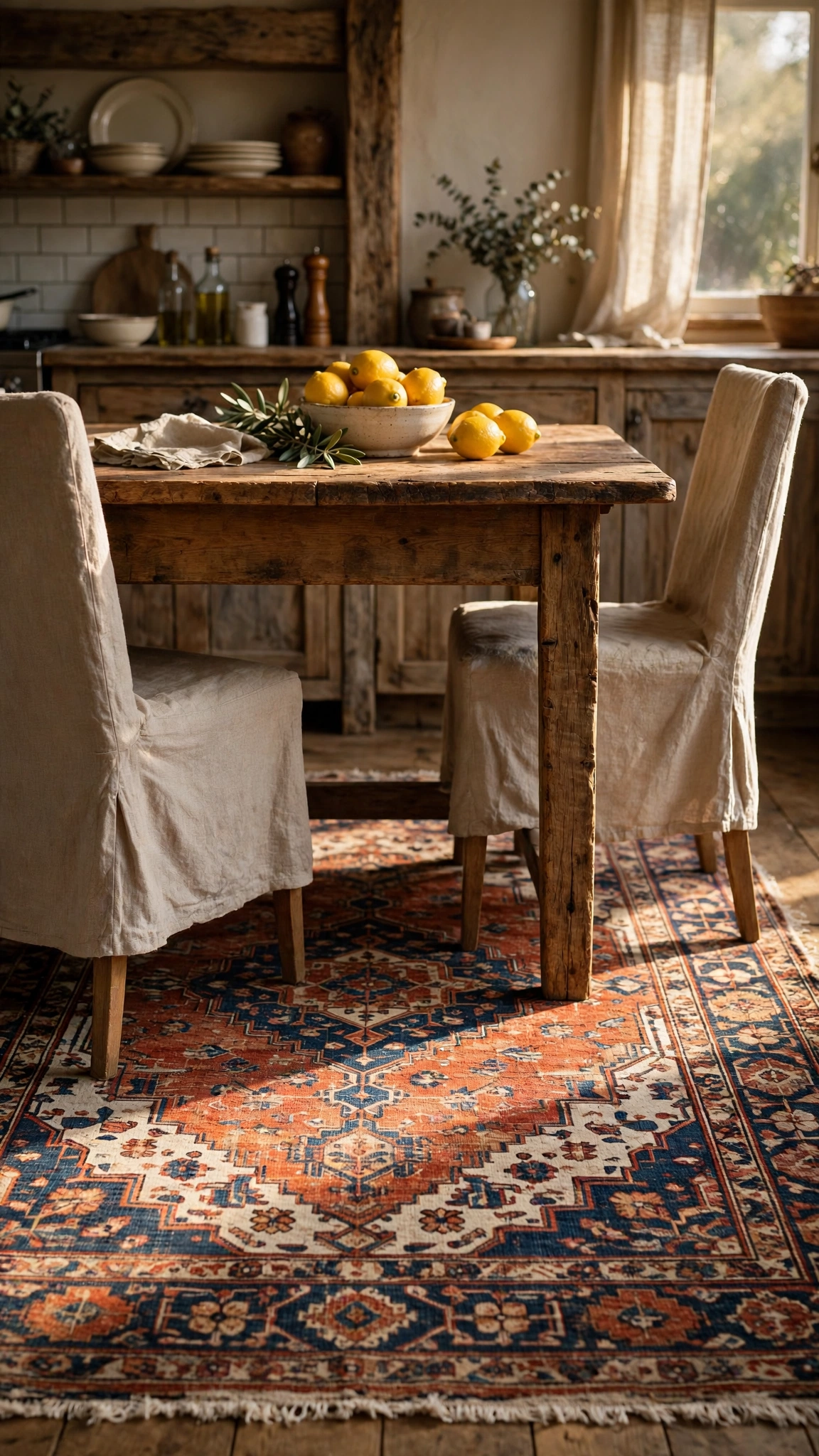
Nothing makes a kitchen look collected and expensive quite like a vintage rug. Its softened colours and worn texture add history to a room that can otherwise feel brand-new and flat.
Real vintage rugs can be pricey, but vintage-look reproductions capture the same feel for far less. Place one under a breakfast table or in front of a range, where it becomes the room’s focal point.
Pair the rug with simple surroundings so it can shine: plain cabinet fronts, a wooden table, and a few natural accessories. The contrast between old pattern and clean lines is exactly what makes designer kitchens feel layered.
Tip: Let the rug’s palette guide your accents, much like a gorgeous colour scheme ties a whole room together through one confident palette.
5. Match the Rug to Your Cabinet Colour
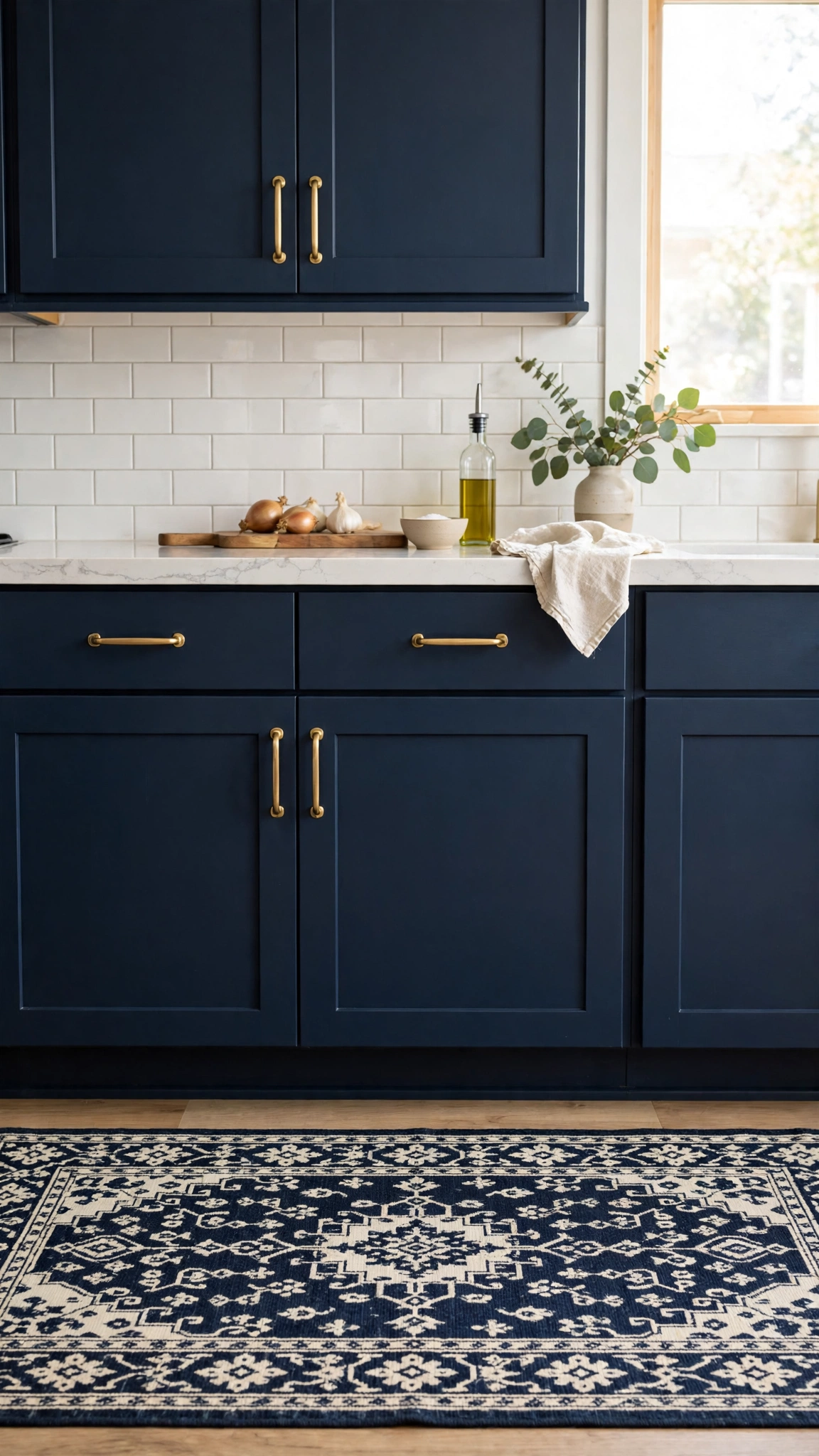
Matching your rug to your cabinet colour is a quiet designer trick that makes the whole kitchen feel custom. It creates a visual echo that pulls the eye around the room and makes the space feel planned rather than assembled.
You do not need an exact colour match. Pick up one tone from your cabinets, say sage green or navy, and choose a rug where that colour appears in the pattern. The rest of the rug can be neutral.
This works beautifully with painted cabinets, where the rug softens the block of colour at floor level. It also works with wood cabinets, where a rug in warm rust or ochre tones brings out the grain.
Tip: Coordinate the rug with the cabinet finish the same way creative cabinet ideas use colour and finish to make storage feel like a design feature, not an afterthought.
6. Use a Patterned Rug to Hide Everyday Wear
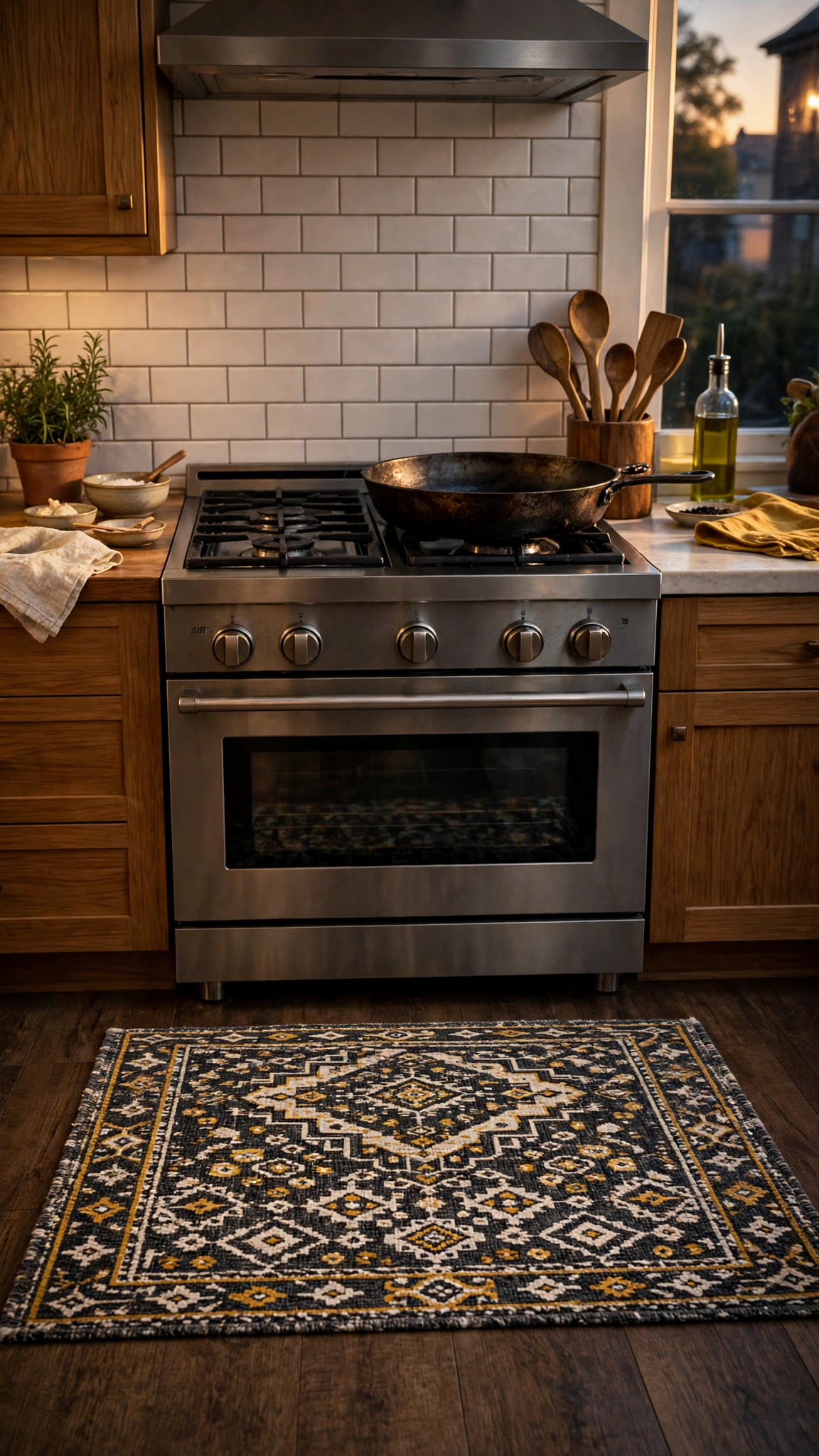
Busy households need rugs that forgive. A dense pattern in mixed tones hides crumbs, paw prints, and the odd splash far better than a solid light rug ever will.
Look for small-scale patterns, like intricate geometrics, tiny florals, or distressed motifs, in at least three tones. The more visual texture the rug has, the less any single mark stands out.
This is the rug to place in the highest-traffic path, from the fridge to the stove to the sink. It keeps the kitchen looking tidy between cleans and saves you from constant spot-cleaning.
Tip: A forgiving pattern is a practical luxury, the same kind of everyday smartness that stunning organized workshop ideas bring to a hardworking space.
7. Layer a Small Rug Over a Larger Jute Base

Layering is a styling move borrowed straight from designer living rooms, and it works just as well in kitchens. A large natural jute rug forms the base, and a smaller patterned rug on top adds colour and personality.
Keep the base rug simple and the top rug smaller by at least a foot on each side, so the border of jute shows all around. A rug pad between the layers stops slipping, and the jute adds a lovely natural texture underfoot.
This approach also lets you change the look cheaply: swap just the top rug for a new season or mood while the jute base stays put. It is an easy way to refresh the kitchen without redecorating.
Tip: Layering rugs is a budget-friendly refresh, in the spirit of creative renovation ideas without overspending that transform a space through styling rather than construction.
8. Pick a Cushioned Rug for Standing Comfort
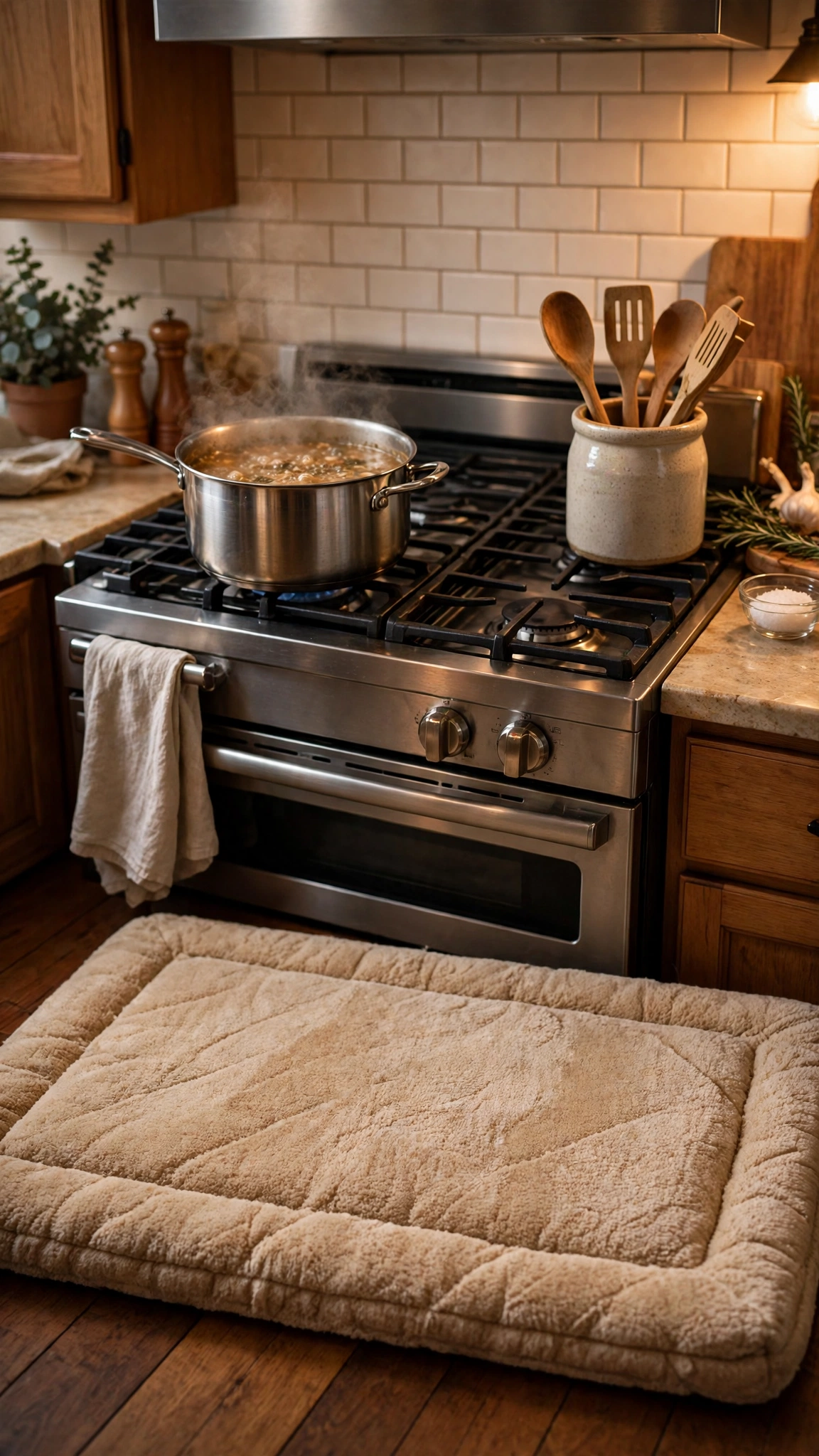
If you spend long stretches chopping, stirring, or baking, a cushioned rug is a gift to your feet and back. Anti-fatigue kitchen rugs are thicker than standard rugs and make standing at the counter noticeably more comfortable.
Place one where you stand longest, usually in front of the stove or the main prep counter. Modern cushioned rugs come in convincing woven and vintage looks, so comfort no longer means sacrificing style.
Choose a wipe-clean or washable version, and check that the thickness still lets doors and drawers clear it. Half an inch of cushion is plenty for comfort without creating a tripping edge.
Tip: Comfort underfoot matters in any hardworking room, just as stunning gym design ideas prove that a functional floor is the foundation of a space you actually enjoy using.
9. Define a Breakfast Nook with a Round Rug
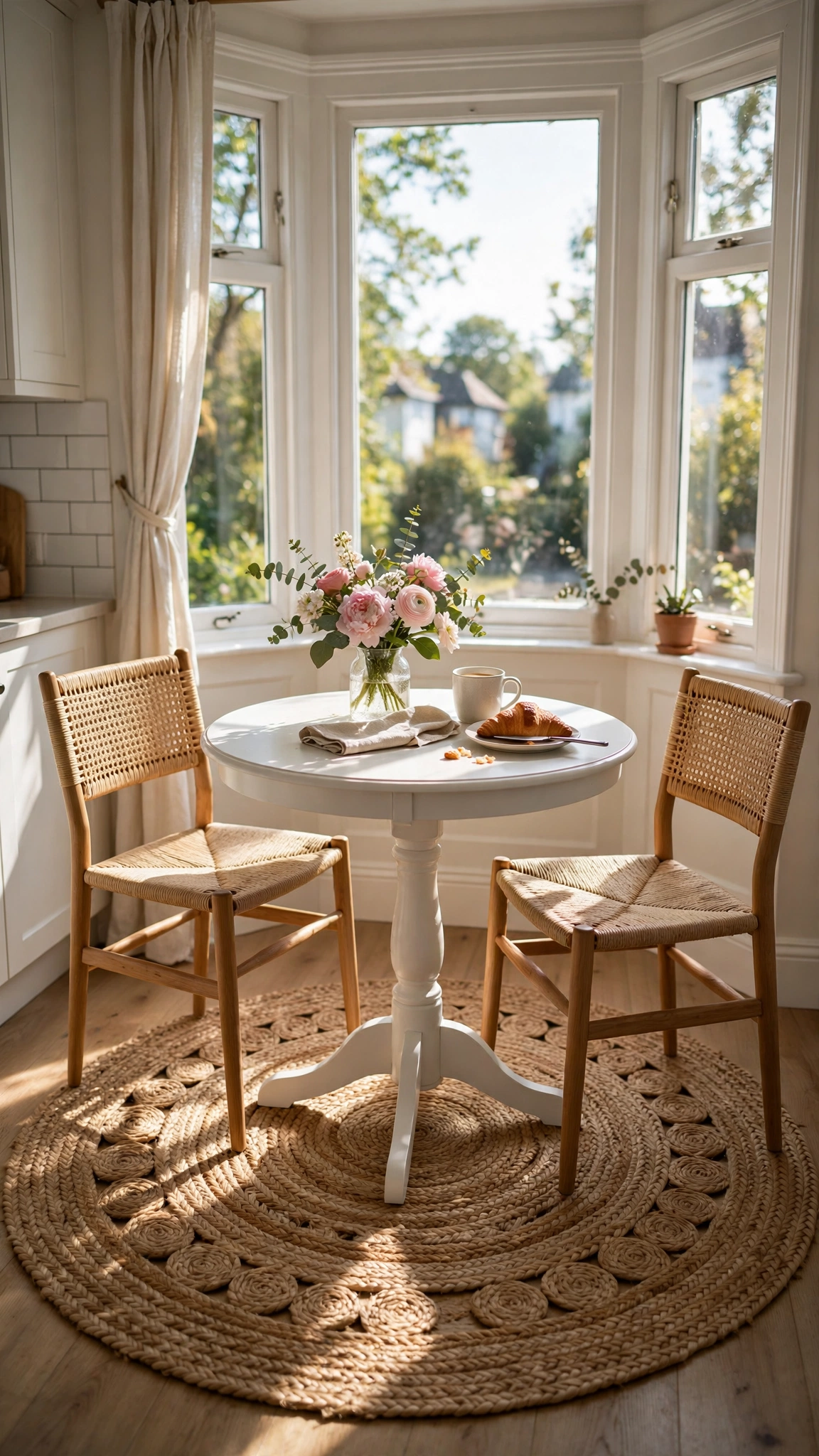
A round rug under a breakfast table instantly carves out a cozy nook, even in an open-plan kitchen. The circle shape softens the room’s straight lines and signals that this corner is for lingering, not just cooking.
Size the rug so it extends beyond the chairs when they are pulled out, usually at least a foot past the table edge on all sides. Braided jute, cotton, and flatweave rounds are all good choices because they lie flat and clean easily.
A round rug also balances a rectangular kitchen beautifully, breaking up long runs of cabinetry with a gentle curve. Add a small vase of flowers and the nook feels like a cafe corner.
Tip: Defining a small zone with a rug is the same clever move behind inspiring organized functional ideas that turn one corner of a room into a destination of its own.
10. Coordinate the Rug with Wall Colour and Art
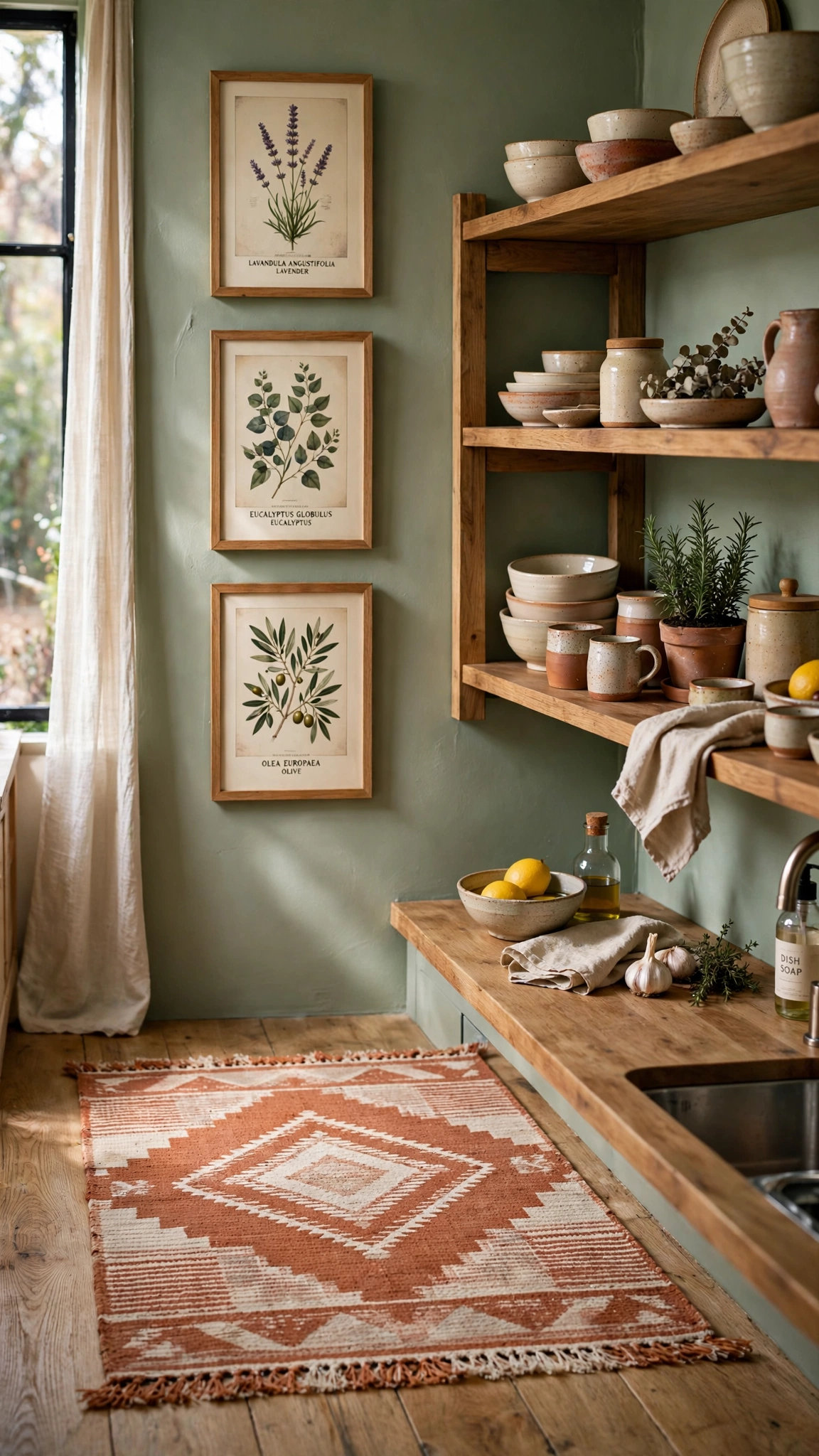
A rug that echoes your wall colour or artwork ties the whole kitchen together from floor to ceiling. When the rug, walls, and art share a palette, the room reads as deliberately designed.
Start with the dominant colour in your rug and repeat it in one other place: a painted wall, a framed print, or a set of ceramics on open shelves. Two or three echoes are enough; more can feel forced.
If your walls are neutral, let the rug be the bold piece and pick art that borrows just one of its accent colours. This keeps the room calm while giving it a clear point of view.
Tip: Treat the rug as part of the wall story, similar to how gorgeous interior wall ideas show that what goes on the walls shapes how the whole room feels.
11. Keep It Low-Profile Under Doors and Drawers
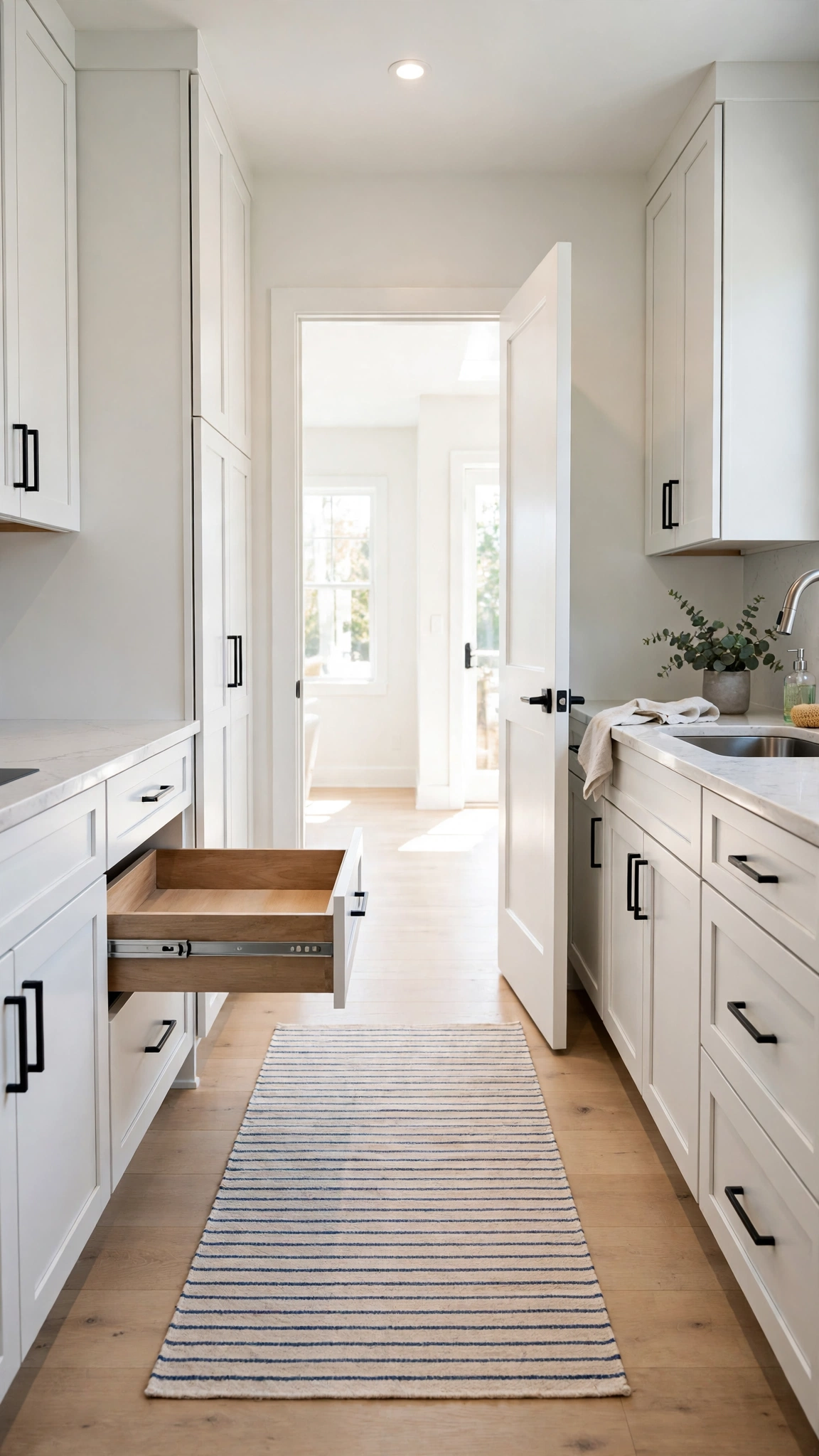
The most common kitchen rug mistake is choosing one too thick for the space. If it catches on a door, bunches under a drawer, or curls at the dishwasher, it will annoy you every single day.
Before buying, check the clearance under your lowest door and your dishwasher and bin drawers. Flatweave, kilim, and thin cotton rugs usually clear easily, while plush piles often do not.
A rug pad can add grip without adding much height, and trimming a rug to fit is rarely an option, so measure first. A rug that lies perfectly flat looks far more expensive than a thick one that wrinkles.
Tip: Measure clearances like you would plan storage, the way beautiful shelving ideas start by fitting the solution to the space rather than forcing it.
12. Rotate Seasonal Rugs for a Fresh Look
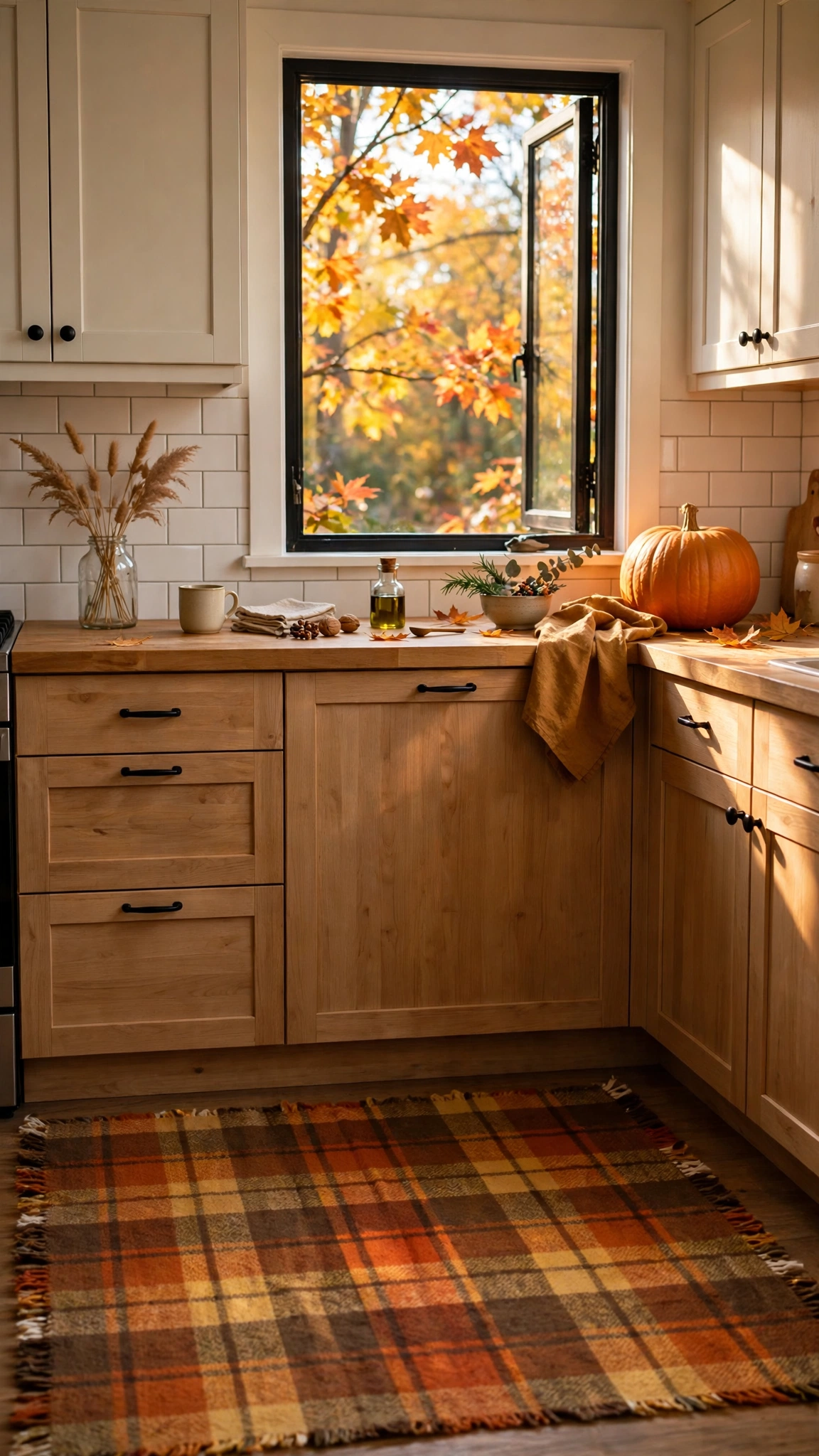
Rotating your kitchen rug with the seasons is the cheapest room refresh there is. A light cotton rug in summer, a warm wool-look rug in winter, and the kitchen feels new four times a year.
Keep two or three affordable rugs in rotation and store the off-season ones rolled, not folded, to avoid creases. Washable rugs make this especially easy, since each one gets a wash before it goes back down.
Seasonal swaps also extend each rug’s life, since no single rug takes all the wear. It is a small habit that keeps the kitchen looking cared for year-round.
Tip: A seasonal rug rotation fits a hardworking entry zone beautifully, much like creative mudroom ideas use durable, changeable layers to keep a busy threshold looking fresh.
Conclusion
The right kitchen rug does far more than cover the floor: it adds warmth, defines zones, and gives the whole room a finished, designer feel. Start with one spot, choose a rug that suits how you actually cook and live, and let it quietly elevate everything around it.