17 Stunning Kitchen Shelf Decor Ideas That Maximize Every Inch Without Feeling Cluttered
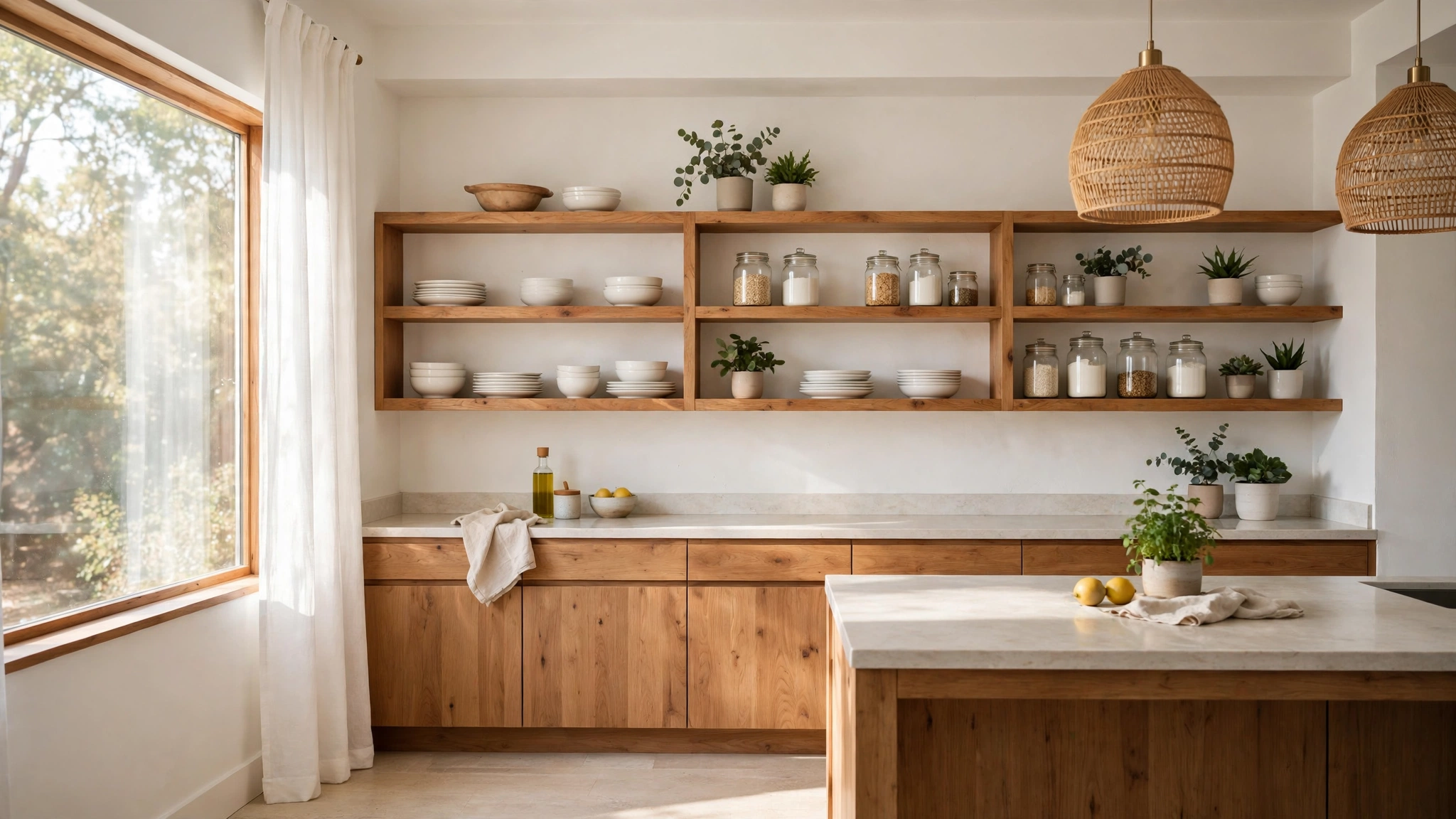
Open kitchen shelves can make a kitchen feel airy, personal, and effortlessly stylish — or they can turn into a crowded jumble in a matter of weeks. The difference is rarely about how much you own. It is about how you arrange what you love, giving every piece a clear place while leaving room for the eye to rest.
The secret is styling with intention: group thoughtfully, vary heights, mix textures, and edit often. A shelf that holds only what earns its spot looks generous, not bare. Ready to turn your shelves from cluttered to curated — without giving up a single inch of storage?
1. Anchor Every Shelf With a Tray

A tray is the easiest way to make a shelf look deliberate. Instead of items scattered along the whole length, the tray gathers them into one clear composition that reads as a single styled moment.
Choose a tray that matches your kitchen’s mood — warm wood for a farmhouse feel, marble for a polished look, or woven rattan for relaxed warmth. Keep the tray’s contents to three or four pieces at most.
Leave the rest of the shelf open around it. That breathing room is what stops the display from sliding into clutter, even when the shelf holds plenty.
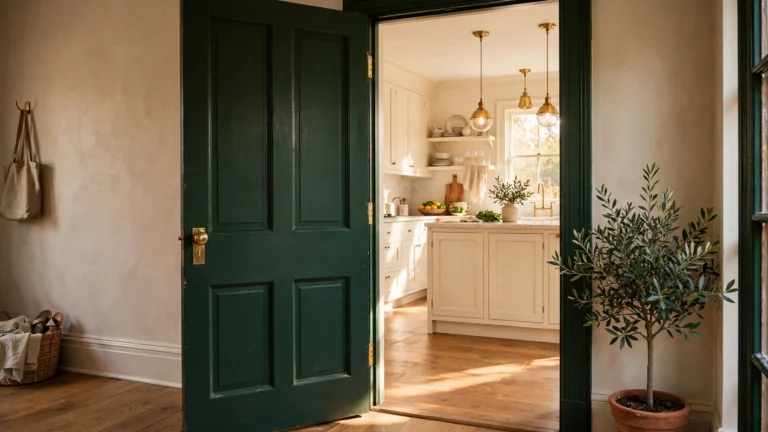
Tip: Frame your display with a single tray — just as a well-placed door frames a small-space escape, a tray gives your shelf a clear boundary so nothing drifts into clutter.
2. Soften Hard Lines With a Trailing Plant
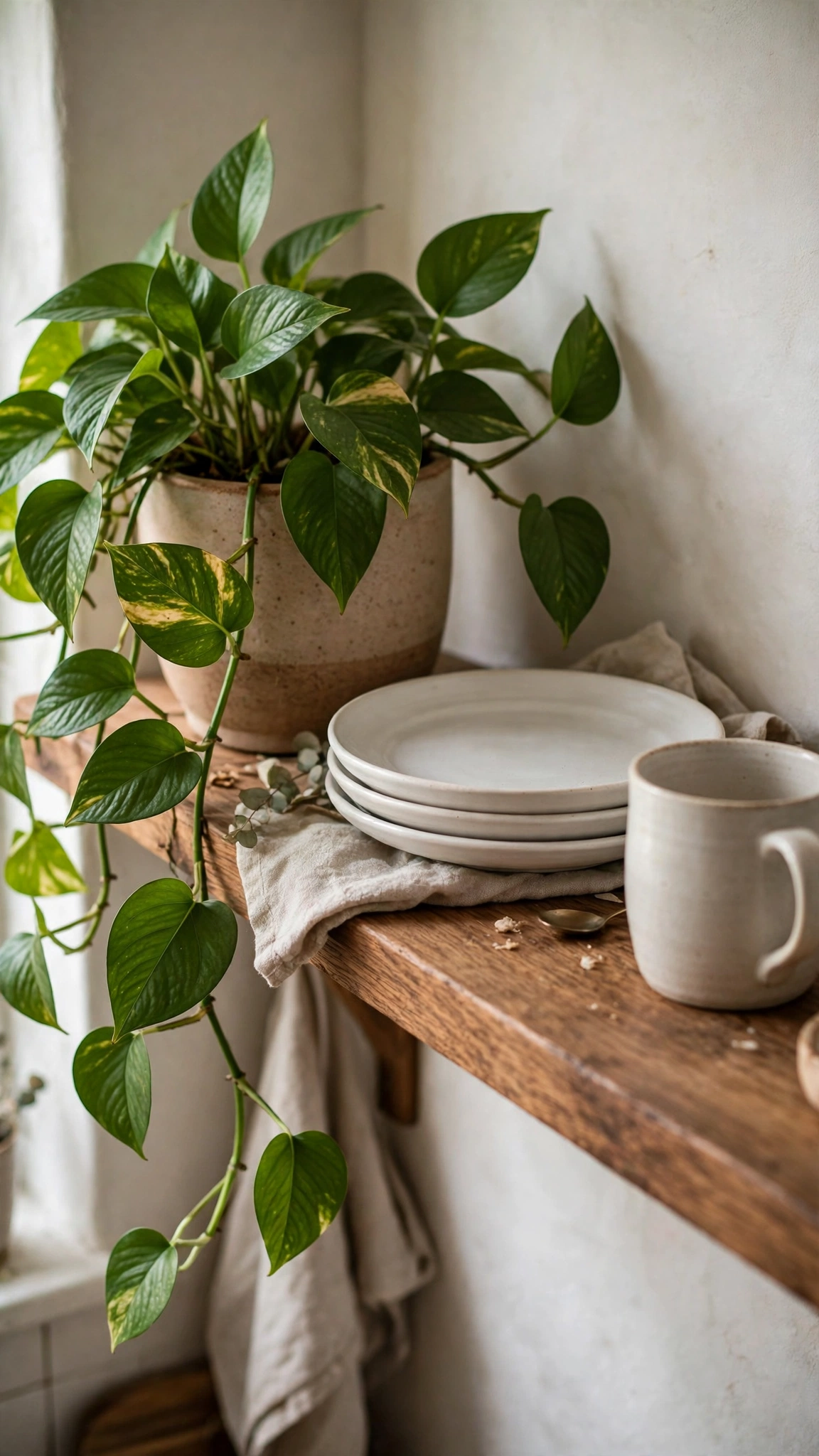
Shelves full of straight lines and hard ceramics can feel stiff. A trailing plant breaks that geometry instantly, adding movement and a touch of softness that makes the whole kitchen feel more alive.
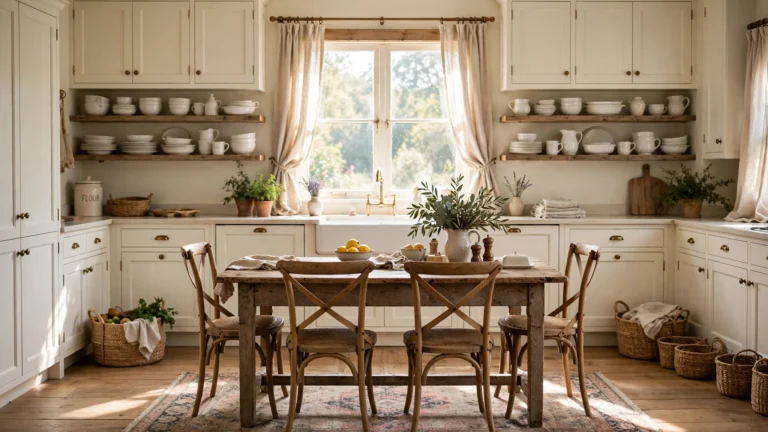
Pothos, string of pearls, and trailing herbs all thrive in kitchen light and need very little care. Place the pot at one end so the vines cascade down without covering the pieces beside it.
If real plants are not your thing, a good faux trailing plant gives the same softening effect with zero upkeep — just dust it now and then.
Tip: Borrow the hanging plants trick from small outdoor spaces — a trailing vine turns a plain shelf into a cozy, lived-in corner.
3. Style in Groups of Three

Odd-numbered groupings are a classic styling rule for a reason: the eye reads three items as a composition, while two can feel like a pair that got separated and four can feel like a row.
Mix one tall piece, one medium piece, and one small piece in each group. A tall vase, a stack of bowls, and a tiny candle is a combination that almost always works.
Repeat the rule across the shelf rather than lining everything up in a single row. Two or three small groups with gaps between them look curated; a full row looks like storage.
Tip: Small-space styling rules travel well — the same grouping ideas that make a balcony feel bigger and more inviting keep a shelf from feeling crowded.
4. Ground the Display With a Wooden Board
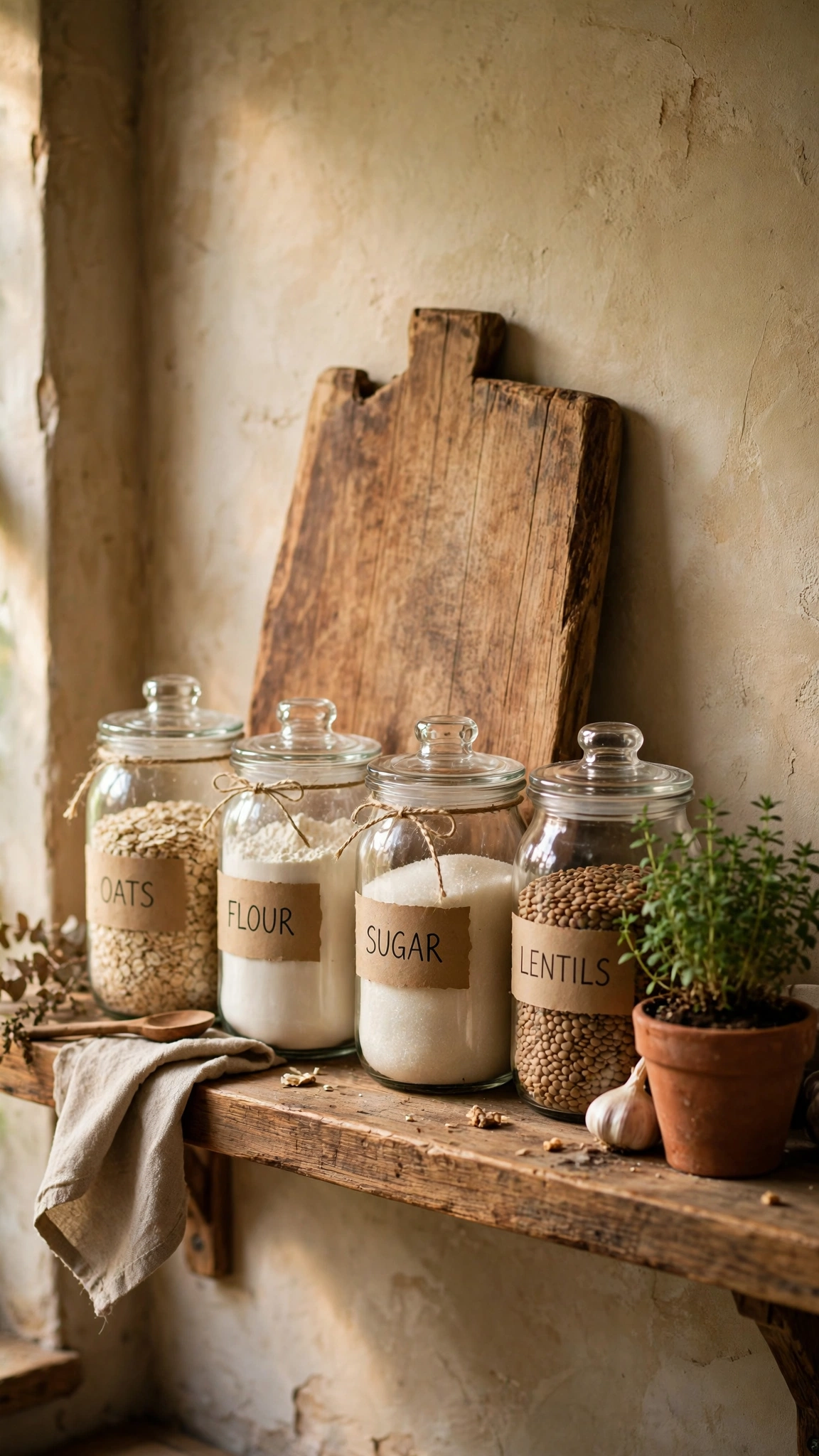
A leaning cutting board at the back of a shelf does two jobs at once: it adds warm texture and it creates a backdrop that makes everything in front of it stand out.
Choose a board with visible grain and a comfortable size — too big and it swallows the shelf, too small and it looks lost. A medium board leaning at a slight angle is usually perfect.
Layer smaller pieces in front of it, like jars or a tiny plant, so the shelf gains depth instead of sitting flat against the wall.
Tip: Just as the right floor makes a small balcony feel bigger, a board base gives a shelf a finished foundation — see how balcony floor ideas use grounding to make a tight space feel intentional.
5. Hide the Less Pretty Pieces Behind a Tall Item

Not everything on a shelf needs to be on show. Everyday containers, spice jars, and plain boxes can sit behind one tall, attractive piece that screens them from view.
A tall cutting board, a large vase, or a stack of beautiful bowls works as the screen. From the front, the shelf looks styled; from the side, it still holds everything you need.
This trick is especially useful on lower shelves, where clutter is most visible at eye level when you are standing at the counter.
Tip: Use a tall board like a privacy screen — it hides the practical pieces while the pretty ones take the spotlight.
6. Give Plants a Riser for Varied Heights

Flat shelves make everything sit at the same height, which is why they can look dull even when the pieces are lovely. A small riser or stand lifts one or two items and instantly adds rhythm.
Use a tiny wooden crate, a marble stand, or even an upside-down bowl to raise a plant or a jar. The height difference draws the eye up and down instead of letting it slide flat across.
Keep risers small and sturdy. The goal is a gentle step up, not a wobbly tower — especially above a counter where you reach every day.
Tip: Raising a plant on a stand works like a plant stand on a balcony — it gives greenery presence without taking up extra shelf space.
7. Keep a Tiny Herb Garden on the Lowest Shelf
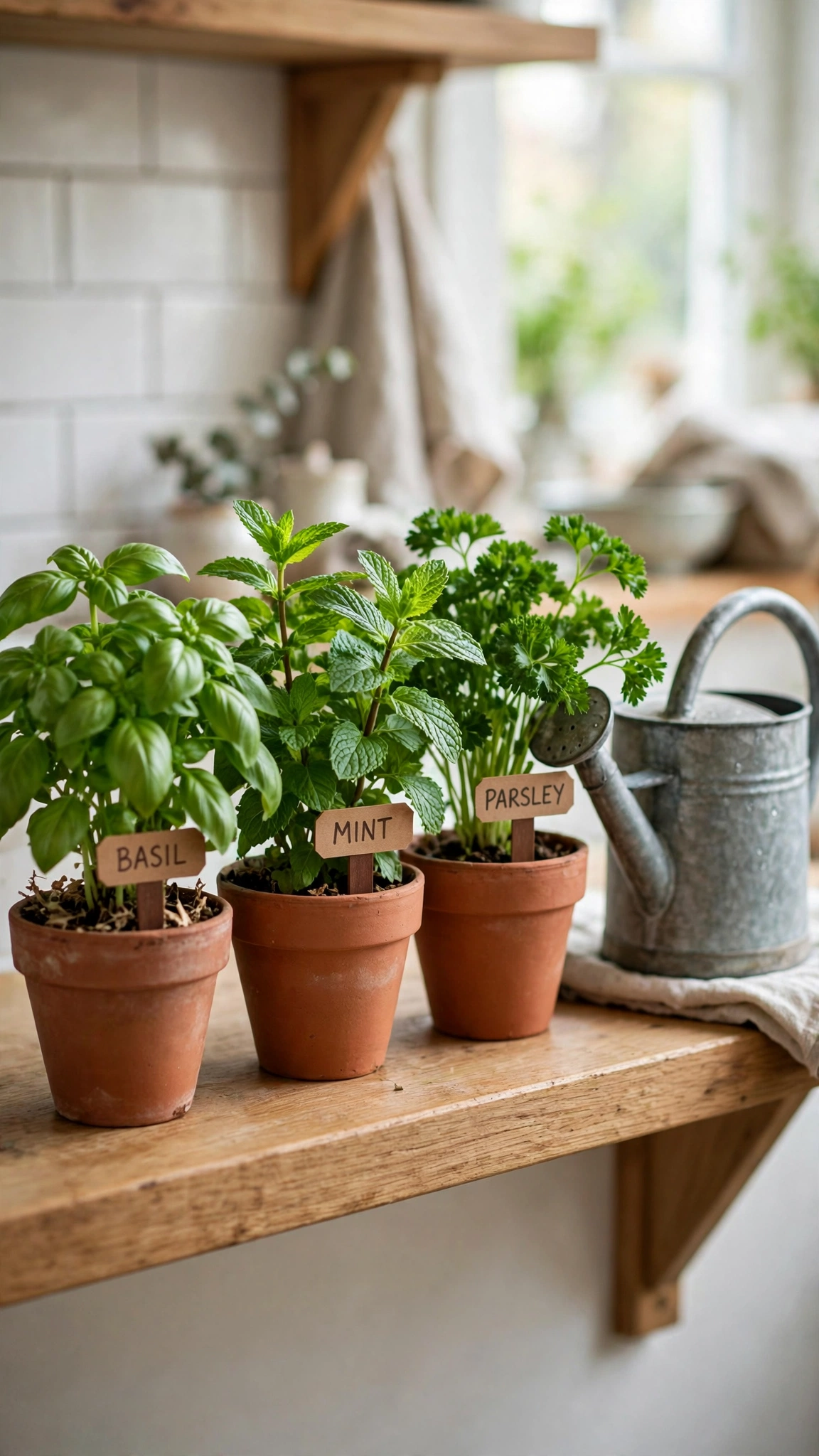
Fresh herbs on a shelf are both decoration and dinner. A row of small pots in matching containers looks intentional, smells wonderful, and puts flavour within arm’s reach while you cook.
Choose herbs you actually use — basil, mint, and parsley cover most cooking — and keep them in pots with drainage so the shelf stays dry. A small tray underneath catches any drips.
Snip regularly. Herbs that are used stay bushy and compact; herbs that are ignored grow leggy and start to look like clutter.
Tip: A shelf herb garden borrows the same joy as balcony vegetable garden ideas — a little green, grown where you can reach it, that makes the whole space feel alive.
8. Contain Small Things in Matching Jars

Loose packets and odd containers are the fastest route to shelf chaos. Decanting everyday staples into matching jars turns storage into display in one move.
Pick one jar style and stick to it — same glass, same lid, same size range. Uniformity is what makes a dozen jars read as calm rather than crowded.
Label simply, or skip labels and let the contents show through the glass. Either way, keep the jars to one shelf so the look stays contained.
Tip: Containing small things is the whole lesson of container gardening ideas — one tidy container per plant, or per staple, keeps a small space under control.
9. Add One Bold Accent Piece
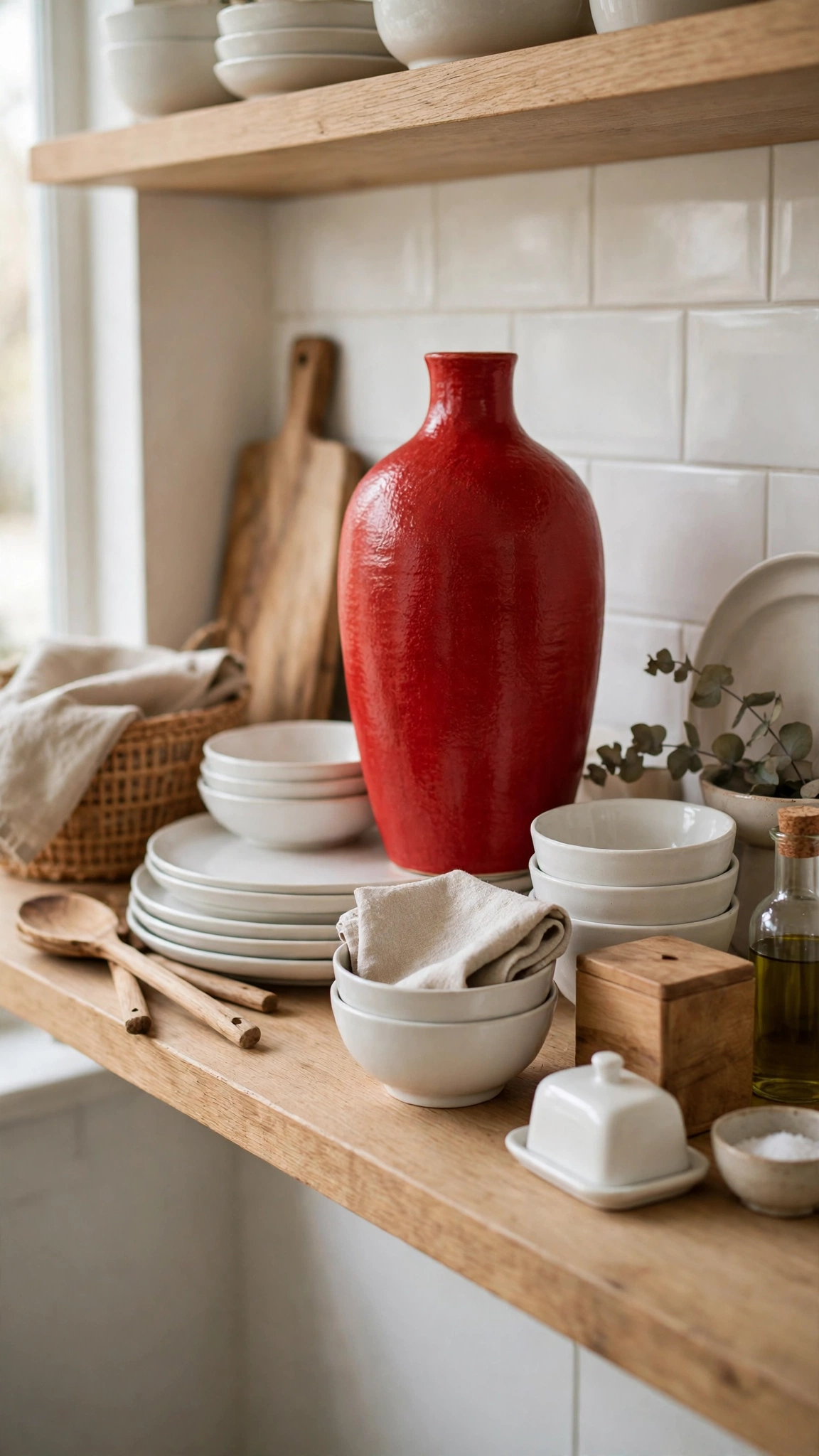
A shelf full of neutrals can feel calm but forgettable. One bold piece — a deep red vase, a lacquered box, a patterned bowl — gives the eye somewhere to land and lifts the whole display.
Keep it to one accent per shelf. Two bold pieces compete; one bold piece commands. Let the rest of the shelf stay quiet so the accent can do its work.
Move the accent around when you redecorate. A single piece in a new spot can make the whole kitchen feel refreshed without buying anything new.
Tip: One striking piece does what decorations that instantly elevate your space do — it gives an ordinary shelf a designer finish.
10. Treat the Shelf Like a Tiny Terrace

The best shelves feel like a place, not a storage unit. A candle, a small framed print, and a plant together create a little scene that invites you to pause — the same feeling a well-styled terrace gives outdoors.
Keep the scene small: three pieces are plenty. A candle adds warmth in the evening, a print adds personality, and a plant keeps it fresh.
Leave the rest of the shelf functional. One styled corner per shelf is enough; trying to style the entire length usually tips back into clutter.
Tip: Think of it as terrace design indoors — a small, cozy corner that turns a working shelf into a place you enjoy looking at.
11. Match Shelf Wood to Your Floor for a Seamless Look
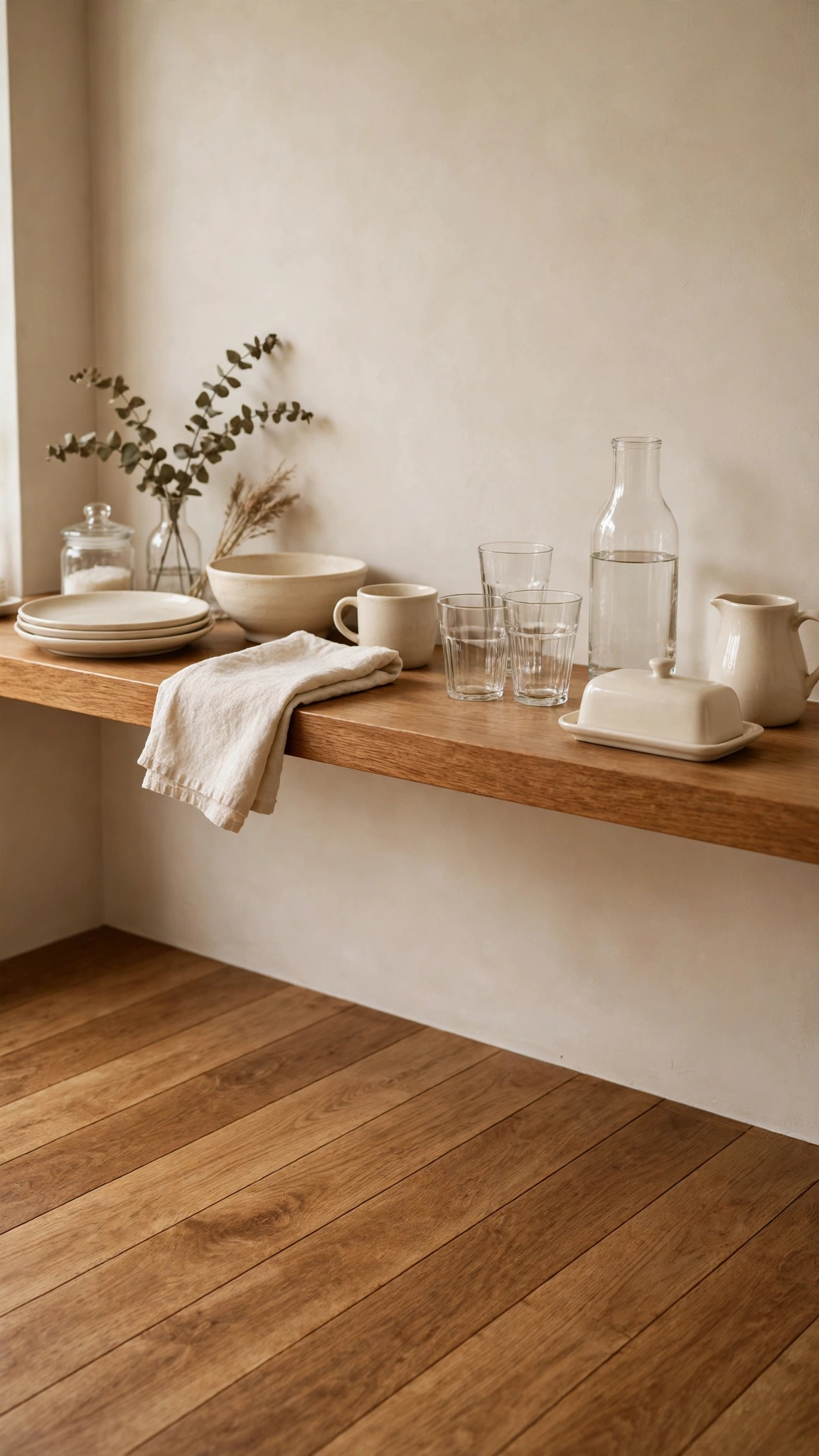
When shelf wood echoes the floor, the kitchen reads as one continuous space instead of a collection of separate parts. That visual continuity makes even a small kitchen feel larger.
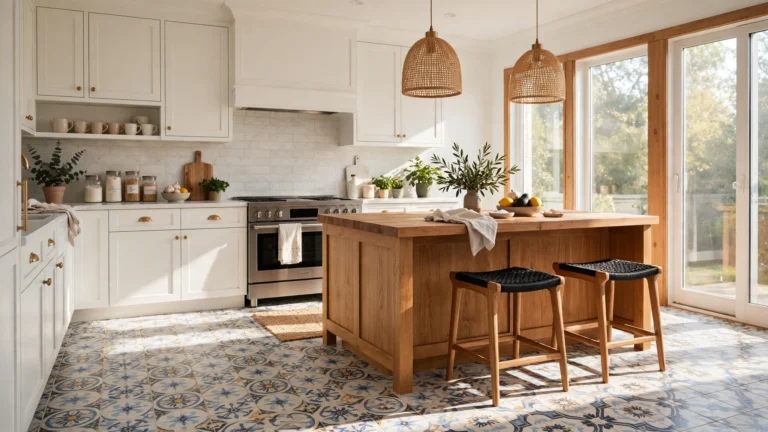
You do not need an exact match — a similar tone is enough. Warm oak shelves over warm oak floors, or pale ash over light floors, both create the effect.
If your floors are tile or stone, pick a shelf tone that appears elsewhere in the room, like the countertop or the cabinet trim, for the same seamless feeling.
Tip: Continuity is the same trick behind balcony flooring ideas — when the base tone flows, a tight space feels bigger and calmer.
12. Dress the Shelf Up for the Season

Swapping just one or two pieces with the season keeps shelves feeling fresh all year without a full restyle. A small pumpkin in autumn, greenery in winter, or a bright vase in spring is all it takes.
Store the seasonal pieces in one box so the swap takes five minutes. When the season changes, the old pieces go back in the box and the new ones come out.
Keep seasonal styling to a single shelf or a single corner. A whole kitchen dressed for a holiday quickly feels like a theme park rather than a home.
Tip: A seasonal swap is a fun, easy refresh — the same spirit as picking a festive outfit that is fun, easy, and perfect for the occasion.
13. Pair Items That Belong Together
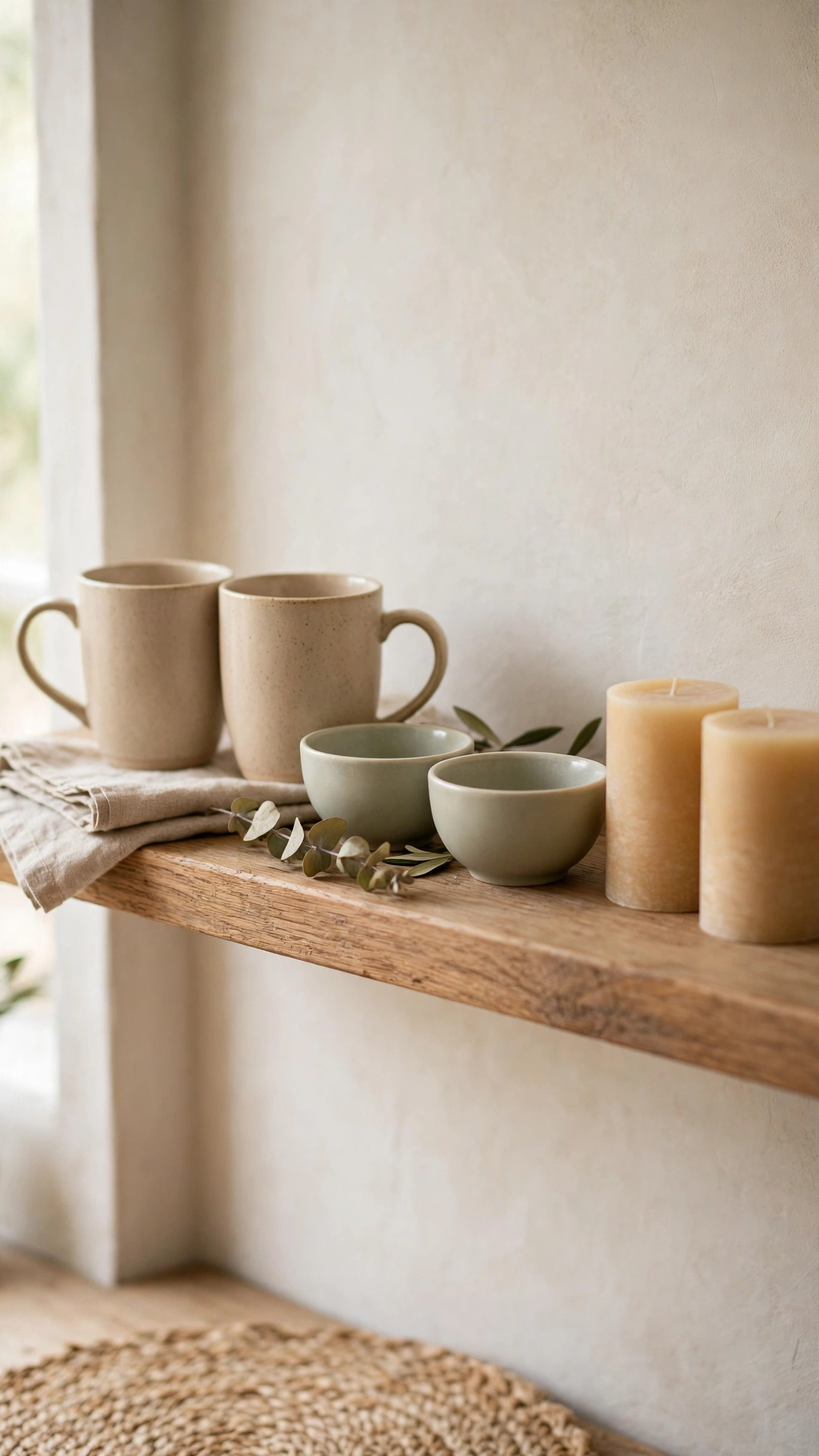
Pairs create instant harmony on a shelf. Two matching mugs, two small bowls, or two candles side by side read as a deliberate set rather than two random objects.
Use pairs to anchor the ends of a shelf, with a single taller piece in the middle. That rhythm — pair, feature, pair — feels balanced without being rigid.
Do not force pairs where they do not belong. A pair should look like it chose to be together, not like two leftovers that happened to land side by side.
Tip: The best shelf pairs work like best-friend pairings — two pieces that are fun together and stronger as a set.
14. Style in Coordinated Couples
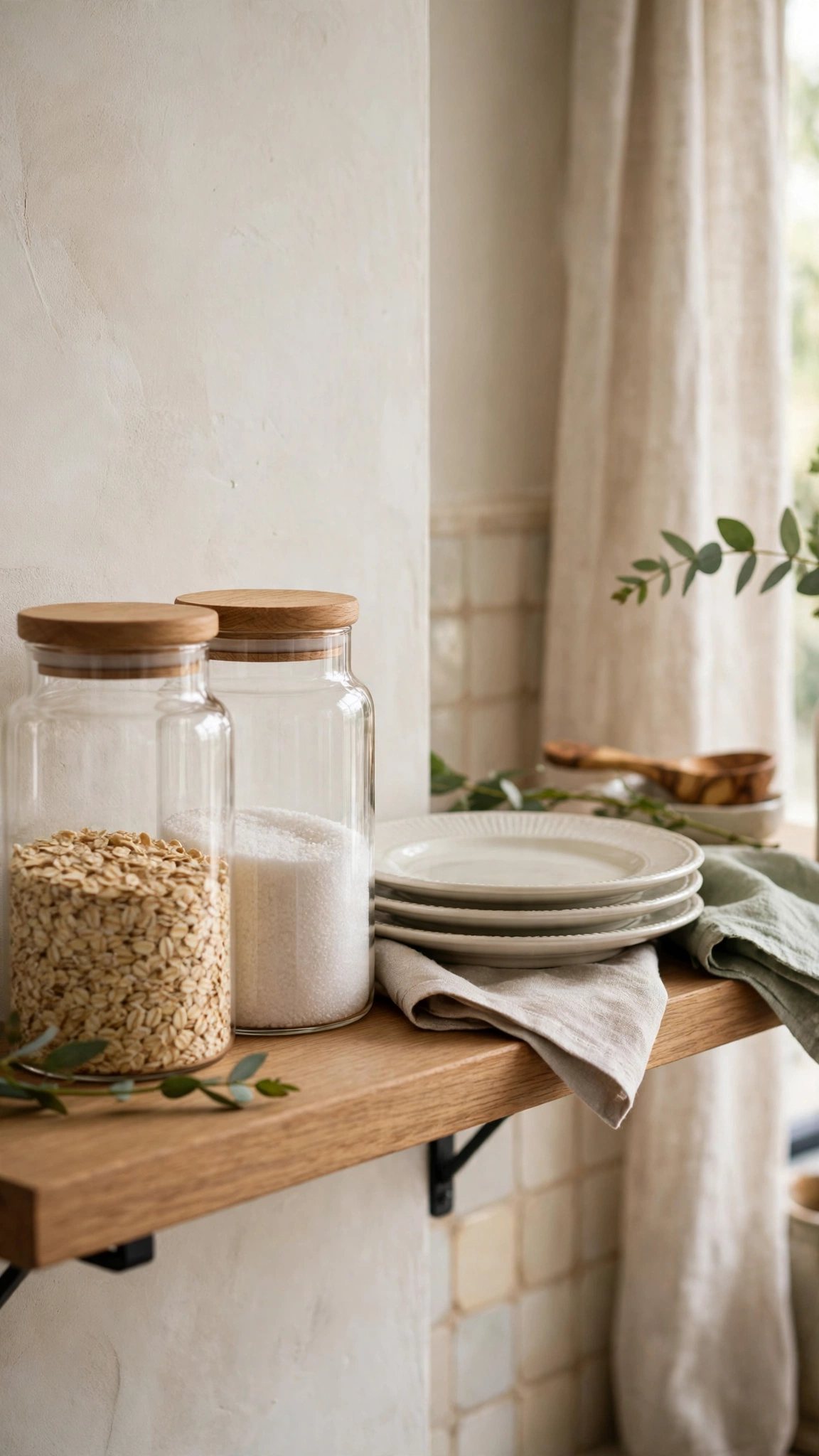
Coordinated couples go one step beyond pairs: two pieces that share a material, colour, or shape but are not identical. A glass canister and a glass vase, for example, echo each other without matching exactly.
This trick adds sophistication because it looks collected over time rather than bought as a set. The shared material is the thread that ties them together.
Limit each shelf to one or two coordinated couples, then let the remaining pieces stay simple so the couples stand out.
Tip: Coordinated couples are the shelf version of couple costumes that make dressing up way more fun — matched, but with enough difference to stay interesting.
15. Let One Colour Family Rule the Shelf
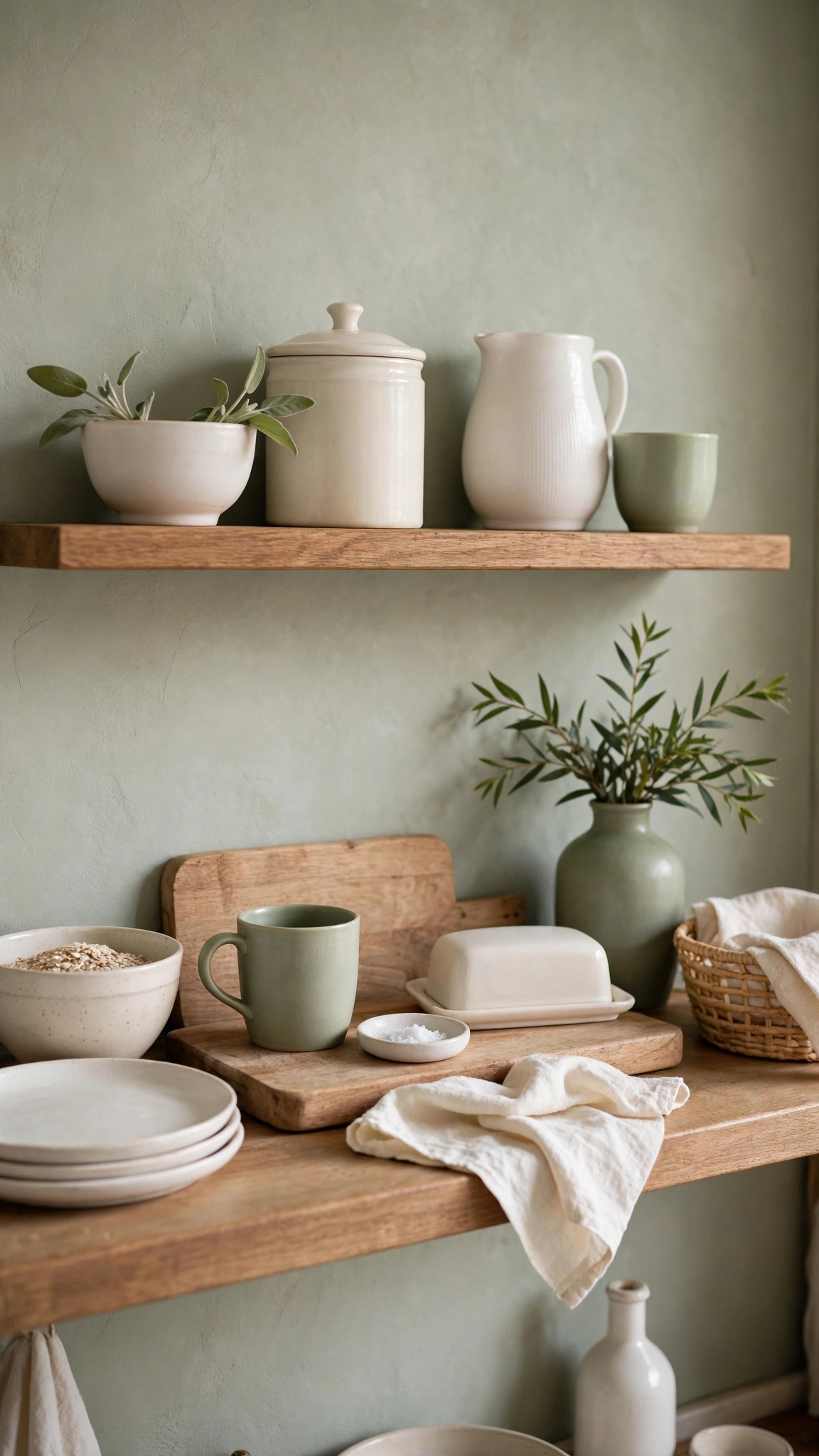
A shelf with ten colours feels busy no matter how neatly it is arranged. A shelf in one colour family — creams and sage, whites and wood tones, or blues and greys — feels calm even when it holds a lot.
Pick the family from something already in your kitchen, like your cabinet colour or your favourite dishes, so the shelf belongs to the room instead of fighting it.
One small contrast piece is still welcome — that is your bold accent from earlier — but keep everything else inside the family.
Tip: Keep the whole family of pieces in one palette, the way a family costume theme unifies a group — different pieces, one shared look.
16. Stand Out With One Unexpected Piece
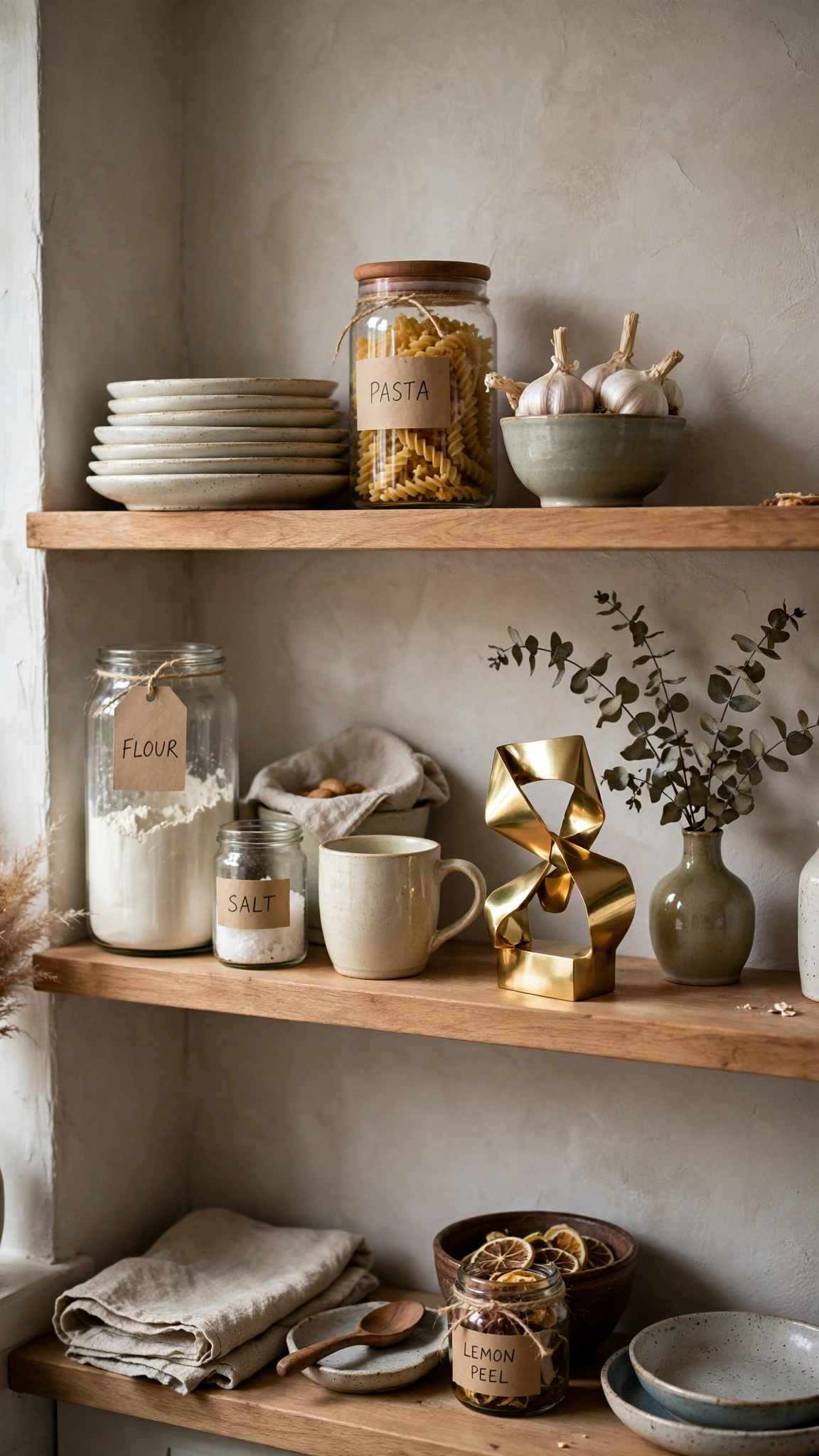
After all the rules about matching and grouping, one rule-breaking piece is what makes a shelf memorable. A small sculpture, a vintage find, or an unusual vase stops the eye and gives the shelf personality.
Place the unexpected piece where it will be noticed but not in the way — at the end of a shelf, or on the top shelf where it can be admired from across the room.
Rotate it when you get bored of it. An unexpected piece only works while it still surprises you; once it blends in, swap it for something else.
Tip: One surprising piece is what makes a shelf stand out — easy, fun, and made to catch the eye.
17. Edit Ruthlessly With a One-In, One-Out Rule
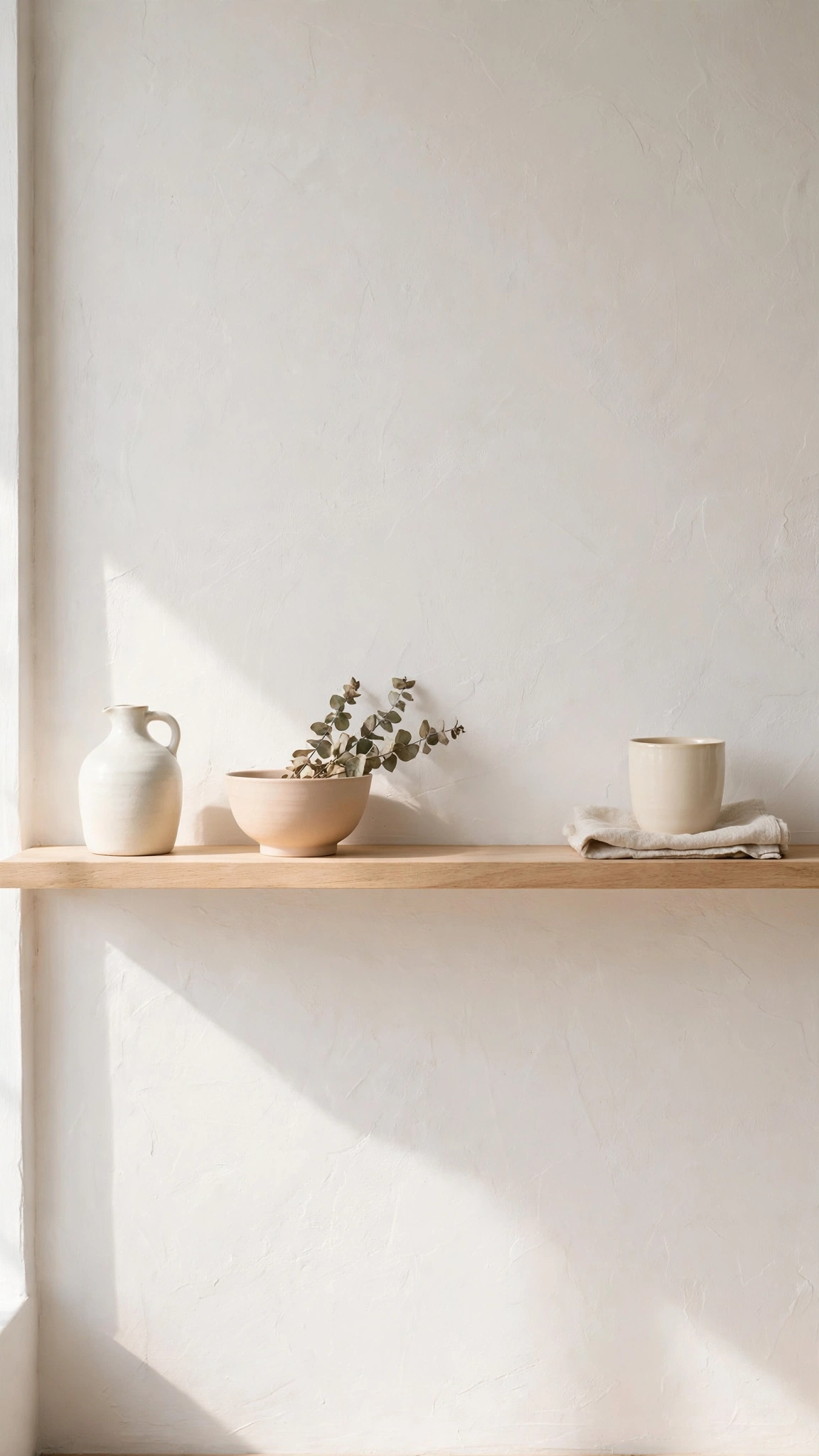
Every shelf styling system eventually fails without editing. The one-in, one-out rule keeps it simple: whenever a new piece joins a shelf, an old one leaves it.
Do a quick edit once a month. Remove anything dusty, chipped, or no longer loved, and notice how much better the remaining pieces look with room around them.
Empty space is not wasted space. It is the frame that lets each piece shine — and it is the single biggest difference between a shelf that looks expensive and one that looks crowded.
Tip: Keep the look grown-up and polished with a regular edit — easy, fun, and perfect for a shelf that stays stylish instead of sliding back into clutter.
Conclusion
Beautiful shelf decor is not about owning less or buying more — it is about giving every piece a purpose, a partner, and a little breathing room. Anchor with trays and boards, vary heights, keep one colour family in charge, and edit often. Do that, and your shelves will hold everything you need while looking like they were styled by a designer.